Here are three books I plan to read next week when we’re away for a few days.
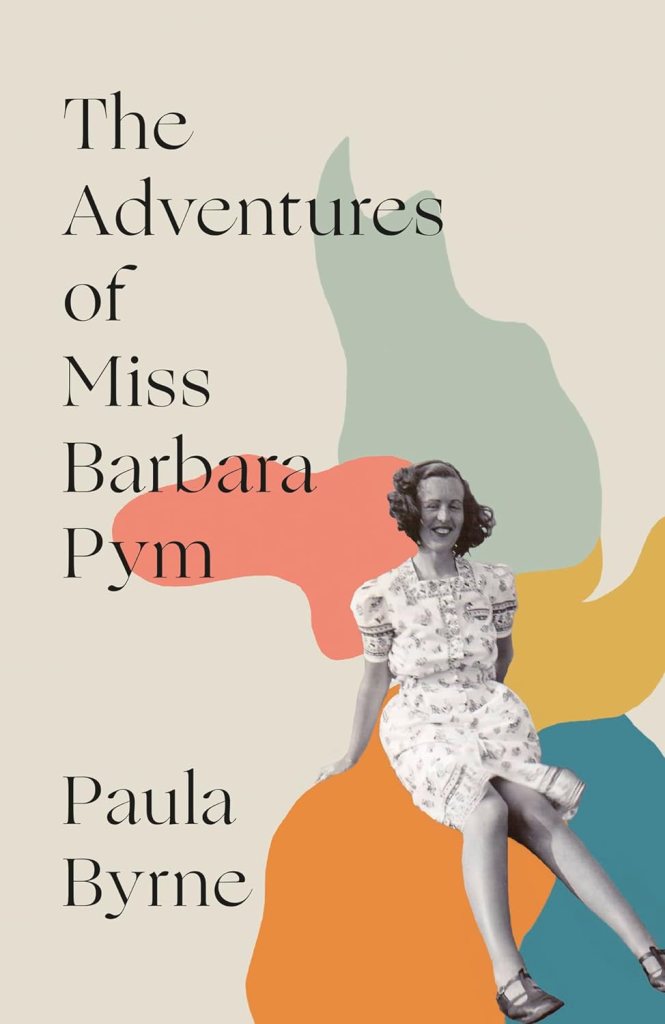
The first is The Adventures of Miss Barbara Pym. I have loved Pym’s quirky and delightful novels for years. I have read A Very Private Eye, a narrative of her life compiled from her diaries and letters by her sister Hillary and the novelist Hazel Holt, who was Pym’s executor. So I’m looking forward to this recent (2021) biography.
Queens of a Fallen World: The Lost Women of Augustine’s Confessions was a recent birthday gift. and I look forward to a new look at Augustine from the perspective of the women around him.
I read the very helpful postings of historian Heather Cox Richardson every day. Her book Democracy Awakening is in my queue. I appreciate her clear and hopeful insights.
Lars Mytting’s wonderful trilogy is set in the Gudbransdal area of Norway beginning at the end of the 19th century. He weaves a fascinating story that begins with conjoined twins born in the 17th century who learned how to weave together, making beautiful and amazing tapestries. When they die, their father has bells cast in their honor, one of each twin. Hence the name of this series. Only two of the three books are complete: The Bell in the Lake (2020), and The Reindeer Hunters (2022). The third novel is due to come out next September.
I loved these books. It is a fascinating depiction of Norwegian life as it shifted from farms in deep valleys without much outside contact to people adapting to life seemingly invaded from the outside. The key figure in the first book (and continuing) is the local pastor who works hard to bring the people into modernity. The descriptions of his observations, struggles, and changes in attitude are really good.
These are great rainy-day reads, and I heartily recommend them!
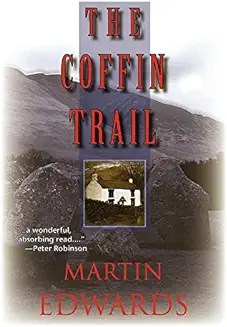
It’s time to start book sharing again – it’s only been a year! My husband and I have recently enjoyed Martin Edwards’ eight-book series, The Lake District Mysteries. Starting with The Coffin Trail, Edwards sets interesting and fairly complex stories in the landscape and history of England’s Lake District. Fans of Beatrix Potter will know the area as the location of her home, and Wordsworth aficionados will know that he is buried there. The Cold Case Review Team of the Cumbria Constabulary is front and center here, led by DCI Hannah Scarlett. Other characters include her antiquarian bookseller partner Marc Amos and the former Oxford don and TV presenter Daniel Kind.
Cold case files aren’t always about things in the past. As new revelations are brought forward in each book, we learn more about the countryside, the history, and the lives of the protagonists. These are highly enjoyable books and you’ll want to start from the beginning to appreciate how all the plot lines intertwine.
Edwards says there won’t be more of these, and he has clearly moved on to his fascinating Rachel Savernake books (see post on Mortmain Hall), as well as editing the wonderful British Library Classic Crime series. But one can hope he’ll take another turn with Hannah Scarlett and Daniel Kind sometime in the future.
Here are the books in order: The Coffin Trail (2004), The Cipher Garden (2005), The Arsenic Labyrinth (2007), The Serpent Pool (2010), The Hanging Wood (2011), The Frozen Shroud (2013), The Dungeon House (2015), The Girl They All Forgot (2021)
I thought I’d write a bit about the books I have set aside to read. There are actually a LOT of those, scattered on bookshelves throughout the house. It’s like knitting: lots of things cast on, not too many yet finished! (Knitters call these UFOs: Unfinished Objects.)
The top of the stack is always my current read, in this case, Stranger Diaries by Elly Griffiths. I’ve written a lot about her Ruth Galloway series. This is a stand-alone mystery and kind of a ghost story, too, and I am enjoying it!
The next in the stack is Becoming DuchessGoldblatt which was a birthday present from friends. It’s part imaginary, part not, and it sounds like a lot of fun!
Next is Portable Magic, A History of Books and Their Readers by Emma Smith. I wrote about this a while ago. It’s a book you can pick up any time and read a chapter or two.
The Buried Giant by Kazuo Ishiguro is one I’ve started. It takes place in early Britain and will be worth finishing.
The Adventures of Miss Barbara Pym by Paula Byrne is a huge biography of this beloved author. I’ve assigned this book to the Twelves Days of Christmas, and I look forward to it.
Next is Home Cooking by Laurie Colwin. I so enjoyed Goodbye Without Leaving that I bought this a while ago. Should be good!
Seven Fallen Feathers by Tanya Talaga is a non-fiction book about systemic racism and abuse in one First Nations area in Canada. I bought this at Mermaid Tales, our favorite bookshop in Tofino, BC.
And at the bottom of the pile is a lovely book by the artist Emily Carr, The Book of Small, also purchased in Tofino.
But the new Louise Penny just landed in my Kindle, and I bet I’ll go there after finishing Stranger Diaries. We watched the first two episodes of Three Pines on Amazon Prime last night and found it quite good. Gamache looks much as I imagined him, and the rest are pretty close as well. I guess it made an impact, as all my dreams last night were set in Three Pines!
As noted in the previous post, I took a break from Beartown and went to London for the fourth volume of Anthony Horowitz’s ingenious Hawthorne and Horowitz novels. Horowitz casts himself as himself in these books and uses the conceit of writing novels about the other character to make the story. It sounds rather convoluted, but it’s not confusing and the plots are really good.
In this one, Horowitz has to rely on Hawthorne to help him out when he’s accused of murder. It also allows Horowitz the character to learn more about the enigmatic Hawthorne. I’m sure the real Anthony Horowitz’s brain does a few cartwheels as he is putting this all together, but it makes for a great read for the rest of us!
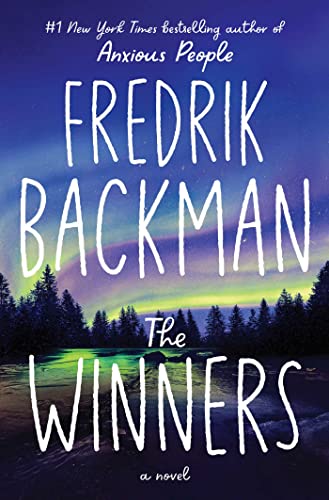
I enjoyed A Man Called Ove and Anxious People, so when this book was suggested for my book group it sounded fun. When I got into it, I wasn’t having very much fun. It’s long – 684 pages – and Backman spends a lot of time, in the beginning, introducing several stories and characters. And there is a lot of ice hockey! It just seemed very slow, and I wasn’t sure how much hockey and Swedish teenage angst I could take! So I set it aside and read the latest Anthony Horowitz. Although convoluted, it was much easier to follow.
Then I came back to The Winners determined to finish it before my group met. About halfway through the novel, there is a death that brings everything into focus. From there on out, I thoroughly enjoyed the story and all the ways in which people in the northern Sweden hockey-mad towns of Beartown and Hed work out their lives.
I finished it at 11:15 p.m. last night, and I am very glad I did. I learned in my book group today that this is the third book in a trilogy (the first two are Beartown and Us Against You) and it might have helped me get into this one if I had read those. But this is a great read, mostly for Backman’s great writing about people and for his insights into life, even if it comes with a huge serving of ice hockey!
Sometime in the 1980s, I saw a wonderful and magical television series at Christmas time. It was from the BBC and rebroadcast on PBS in the US. The images from this program stayed with me, and about thirty years ago I thought I should try to track it down. I was limited in that I could not remember the title. I inquired of the BBC and PBS to no avail. So I set my search aside, but from time to time those images appear in my memory.
So last week I’m finishing this Autumn’s edition of Slightly Foxed. I’m enjoying Brandon Robshaw’s essay on John Masefield’s The Box of Delights. But as I read I realize that this sounds vaguely familiar. By the time I reach the end I am convinced that this is the book the BBC produced for television in the 1980s, the series for which I have been searching for decades. A quick look on the internet confirmed it. There were pictures of the show and they matched those in my memory! It was a BBC series in 1984, aired in six half-hour segments finishing on Christmas Eve.
I look forward to discovering how to stream it and watch the magic unfold once again. The book is still in print, and I plan to add it to my Christmas book collection. In the meantime, there is Slightly Foxed, our quarterly “box of delights.” If you’re not a subscriber to this amazing literary quarterly, here’s the link:
The name of this blog, The Incomplete Reader, came from a book I started to read 50 years ago and have still not finished! I’m sure we all have books like that on our shelves, books in which we lost interest part way through, or that just needed a different time or context.
I’ve enjoyed the Robert Galbraith (J.K. Rowling) Cormoran Strike novels and was looking forward to reading the latest, The Ink Black Heart. I started and I have stopped. The plot revolves around a chat on Twitter and other platforms and the chat string is in the book just like you’d see it online. It is really hard to read and, as I found out by googling around, it’s particularly hard on an e-reader like Kindle. The book is 1000+ pages and that seems like a long way to go with a difficult-to-read text. So I employed the Nancy Pearl rule: if you are 50 or younger, read 50 pages and then change to another book. If you are over 50, subtract your age from 100 and then go ahead and shift. I actually made it to p. 155 (26 would have been my magic number). And I quit.
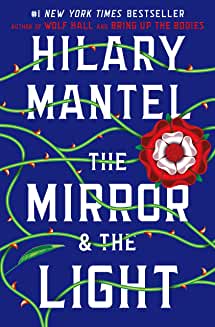
So this led me to another started but not finished novel, The Mirror and the Light by Hilary Mantel. Mantel sadly died on September 22 at age 70 following a stroke. I had started this volume 3 of her Thomas Cromwell series (Wolf Hall and Bring Up the Bodies are the first two) a couple years ago and then set it aside for one reason or another. But I am very happy to be back in the court of Henry VIII with Cromwell and the rest. She writes this amazing description of Henry after a meeting with his courtiers on the possible fate of his daughter Mary: Now the same prince, dragging away from the council chambers wraps his gown about himself, the fine calf visibly bandaged, his face puffy and pale. Henry is the site, his body the locus, the blood and bile and phlegm; his burdened and oppressed flesh the place where all arguments come to rest. (pp. 97-98) This is a book to finish.
This is such a good book about life and friendship. In fact, it’s so good I have already given away three of them to friends in my life. This is a long book – 576 pages – and each time I set it down I could hardly wait for the moment when I could pick it up again. This is a book about love and loss, about families of privilege, about finding rest and fulfillment throughout all of life’s days.
This is a story of friendship, of Agnes and Polly who are friends through the long relationships of their wealthy Philadelphia families who have made a retreat in Maine. It is a story of children’s summer joy and of all the ways our lives are intertwined with each in expected and unexpected ways. This is a story that has unexpected discoveries along with the steady trajectory of long, rich lives.
Stories from the unformed, undated pandemic blur are starting to show up in fiction. Two of my recent reads were both set from the beginning of the lockdown requirements, one in England, one in the US. The first is the latest installment of Elly Griffith’s terrific Ruth Galloway series. (My husband is reading these right now and has barely come up for air!) When I began reading The Locked Room I wasn’t sure I wanted to delve into that weird time. I was surprised by my reaction. But as I got into it I noted that it was helpful to fictionalize the experience, and I appreciated how Elly Griffiths did that.
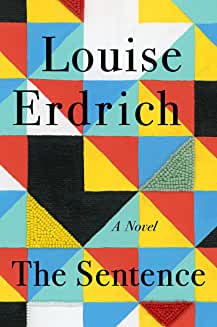
The other book is The Sentence by Louis Erdrich. I always think that reading Erdrich is like sitting beside a gently flowing river; it just flows along with such beautiful writing. The Sentence is no exception. It’s the only book Erdrich has written in the present, and it is wonderful. The pandemic is like a background character for the story, and the story itself described everything from ghosts to the struggles of a small bookstore and the daily lives of its staff. It also takes place during the terrible killing of George Floyd in Minneapolis and chronicles the participation in grief and solidarity of the tribal people of that city.
Both these books offer perspective on the unusual time in which we are still living, and they are great reads!






 The Incomplete Reader