Books and Travel, Part 5: Mull, Iona, and The Scottish Hymnary (4th Edition)

There were a lot of ferry trips to make this all work. Leaving Campbelltown we went to Kennacraig for the ferry to Islay and then returned there. Then it was off to Oban to catch the ferry to Craignure on Mull. Mull was interesting driving as all the roads on one lane with passing places – roads we have come to call “sausage link roads” for the way they are depicted on the paper maps. We stayed in a lovely B and B in Fionnphort. It was just a short walk from there to the ferry to Iona.

Iona’s claim to fame is St. Columba coming from Ireland to support and sustain Christianity in Western Scotland. His cathedral is there, and it is interesting to see it and the history that surrounds it. Iona has become a real tourist attraction because of the St. Columba story and because of the Iona Community. This is their story: The Iona Community was founded in Glasgow and Iona in 1938 by George MacLeod, minister, visionary and prophetic witness for peace, in the context of the poverty and despair of the Depression. From a dockland parish in Govan, Glasgow, he took unemployed skilled craftsmen and young trainee clergy to Iona to rebuild both the monastic quarters of the mediaeval abbey and the common life by working and living together, sharing skills and effort as well as joys and achievement. That original task became a sign of hopeful rebuilding of community in Scotland and beyond. The experience shaped – and continues to shape – the practice and principles of the Iona Community.

This ecumenical community has greatly influenced ecumenical work over these last 80 years or so, most notable through its music. John Bell has written songs that are part of Christian worship worldwide. It was interesting to note that he was the chair of the committee that formed the latest hymnal of the Church of Scotland – The Church Hymnary (4th Edition) 2007. It is a mark of his influence that he was invited to this task.

We enjoyed our day on Iona, although I did not find it a moving faith experience. It’s a beautiful place, but overrun with tourists from around the globe, and I wasn’t totally impressed with everyone’s clarity about the history. It appears to have just become another “place to go.” But I am grateful for the ministry and music of John Bell, and the continuing witness to peace and reconciliation by the Iona Community.

Books and Travel, Part 4: Islay and Book Festivals

The Isle of Islay was our next stop. I noted right away that they have a book festival – The Islay Book Festival (!) at the end of August. Edinburgh is festival-central in August: The Edinburgh International Festival, the Fringe Festival, and the Edinburgh International Literary Festival. In 2015 we attended a King’s Singers concert at the Cumnock Tryst, a music festival in Cumnock in East Ayrshire. The organizer of that, James MacMillan, was being celebrated at the Edinburgh Festival for his 60th birthday. And there’s another book festival each year in late September, early October in Dumfries and Galloway called the Wigtown Book Festival. It’s founded is Shaun Bythell, author of The Diary of a Bookseller. (I’ve not reviewed this, but I do recommend it.) And so it goes round. On seeing the advertisements for the Islay Book Festival I started thinking it would be fun to do a northern UK book festival – and other festivals – tour one year and go to all these events.

But we were in Islay to continue our history and whisky discoveries. Islay is particular noted for its peaty whiskies, like Laphroig. But there are many others, and we had some specifics to check out. We stayed in Bowmore, which has one of the oldest whisky distilleries in Scotland. But the whole island is also noted for its peat, that source of heat that warms and flavors whiskies throughout Scotland. One night we had dinner at the Peatzeria! It was good pizza, and we loved the name.

All through the north of Scotland there are lots and lots of neolithic remains and the very interesting history of the peoples of this place which goes back to 8000 BCE. On Islay we visited Finlaggan Castle, the ancient home of the Lord of the Isles. It was a fascinating look at all the connections, especially stretched across the north of Scotland to Norway and the Vikings. On Islay there was a battle for the Lord of the Isles title between the MacDonalds and the Campbells. The Campbells eventually won and were the rulers for many centuries. The title “Lord of the Isles” is held today by HRH the Prince of Wales. Not sure he gets up there very often!

Our visit to Finlaggan led us to another fascinating place: the castle of Dunyvaig. Conveniently placed right by the Laphroig and Lanavulin Distilleries, this is an active archaeological site that is a fairly recent discovery. We walked down among the University of Reading students working there and the head of the project came up to us. He spent 45 minutes telling us the history and what all they are doing and finding. It was a fascinating time.

In between all this history, we managed to squeeze in a few distilleries! The drive out to Bunnahabhain was gorgeous, going along the NE coast of Islay with wonderful views to Jura. (Here’s another book note: Jura is where George Orwell wrote 1984!) We stopped at Kilchoman, which is a newer distillery where they do everything at the same site: peat, barley, distilling. And we went to Bruichladdich where we didn’t taste scotch, but learned about their now famous gin, The Botanist. Our tour included learning how to make two cocktails, and it was a lot of fun!

We got in on some local history as well And while we were there everyone on the island, it seemed, went to a memorial service for a wealthy German landowner, Bruno Schroder who had live on Islay for a long time. He has a large estate there, and we learned he has always been very generous in the community. When I went into the church, a cool, round church (called The Round Church!) at the top of Bowmore’s main street, I found a copy of the bulletin on the organ. It had a lot of hymns (this is the Church of Scotland!) and I found one lovely text set to the tune of The Skye Boat Song. The refrain goes:

Spirit of God, unseen as the wind,
Gentle as is the dove.
Teach us the truth and help us believe,
Show us the Saviour’s love.
-Margaret Old, 1932-2001

But back to the Islay Book Festival. The main attraction this year is Ian Rankin. I had not yet read his very popular John Rebus novels, so I took this opportunity to start. Knots and Crosses is the first one, and it is very good indeed. I’ve begun the second, Hide and Seek, which has an interesting post-publication prologue from Rankin. I’ll review this all at a later date. His Wiki article notes that he lives in the same neighborhood in Edinburgh as Alexander McCall Smith, J.K. Rowling, and Kate Atkinson. Must be the water.

My favorite journal, Slightly Foxed, has a wonderful podcast each month. This month (August, 2019) they talked about book festivals. Do have a listen!

https://foxedquarterly.com/category/podcast/

Books and Travel, Part 3: Campbeltown, Whisky, and Paul McCartney

This moves off books, but stays with reading.

The reading part is from Food and Wine magazine and is about Canlis, a Seattle restaurant that is very special to us. Here is the Food and Wine article: https://www.foodandwine.com/articles/searching-scotland-for-the-ultimate-barrel-of-whisky

The story has a happy ending. An owner of a Springbank cask read the article and agreed to see his cask to Canlis. For US customs, they had to empty the cask, put in in an aluminum version, and ship the whole arrangement by boat to Seattle. Mark Canlis took us down to their wine cellar and showed us the place where the cask was going to be placed, and gave us samples from their cask sample bottles. We both had to name something we would do to amend our lives before we drank. Wonderful. This is how they serve this whisky. It’s a very special thing.

We had booked the full tour at Springbank in Campbeltown and we were not disappointed. It was a four hour tour of everything about the place. We know Canlis well, and we totally agree that Springbank and Canlis are cut from the same cloth. I especially appreciated the casual way they dealt with the “whisky safe.” This is where the finished product moves into production.. In many distilleries the safe – always made of brass- is highly polished and secured with a big padlock. At Springbank it could have used a polish, and it was wide open waiting for the distiller to check and see if they had what they wanted. Canlis is a classy restaurant with nothing out of place, but it’s feel is like the whisky safe at Springbank. My mentor, Carroll Hinderlie, used to call this “casual excellence.”

When in Campbeltown we also learned that Paul McCartney bought a place here early in his career and he and Linda and their children came there every summer. Nobody paid them any attention, so it was totally relaxing for them. Linda was really involved the in the community. When she died of cancer, they made a memorial garden behind the old library. Paul contributed a commissioned sculpture of Linda sitting and bench holding a sheep. It’s a lovely place.

Paul also wrote a song about Campbeltown, The Mull of Kintyre. Here’s a YouTube video of him singing it: https://www.youtube.com/watch?v=EH7I-WV0LZA

Books and Travel, Part 2: Alexander McCall Smith and Edinburgh

Alexander McCall Smith is an amazingly prolific writer. His #1 Ladies’ Detective Agency books are big hits all over the world. Although he lived and worked in Botswana and clearly loves the place and its people, I enjoy him most, I think, when he writes about his beloved Edinburgh. Year ago I picked up The Sunday Philosophers’ Club and have followed Isabel Dalhousie’s adventure since. When we were headed to Edinburgh on this trip, I found I still had two to read: #11 A Distant View of Everything and #12 The Quiet Side of Passion. So I downloaded those to my Kindle and we made our way to Auld Reekie.

It took us a bit to get there from Birmingham. What should have been a straight-forward 4 hour train trip became slightly more complicated. There had been heavy rain and flooding and this made much of the rail track in the north of England impassable. So, we started out in Birmingham and then had to leave the train in Preston. We got on another train to Glasgow and then had to leave that train in Carlisle. A mad, escorted dash through the Carlisle train station (luggage in tow) got us on another train to Glasgow. We finally arrived there and then got a train to Edinburgh. The same tickets applied throughout, and Virgin Trains has refunded our entire ticket price as well.

In Edinburgh we met our friends Eileen and Wally Powelson. They made their way from Lancashire where Eileen was born, where they’d had a good visit with family. Our time in Edinburgh started well with a good pub dinner. Then, on Sunday, we headed out to see the town. After a good tour of Edinburgh Castle, the rain finally caught up with us. It poured! We kept on down the whole Royal Mile, and then found a taxi by Holyrood House. The ride back to the hotel was a welcome relief!

We had dinner at a very good Indian/Pakistani restaurant (Resom) in an early celebration of Eileen’s birthday the next day, On that day we went to Princes Street and shopped a bit, had a good lunch at the Conan Doyle Pub, and then went to the Royal Botanic Gardens. We really enjoyed these magnificent gardens, and learned some things about the Flow Country in the north of Scotland. We’ll be there in a week.

That night we went to the Edinburgh Tattoo, something I’ve wanted to do for years. It was amazing and wonderful. We began with a lovely dinner in the Amber Room at the Scotch Whisky Experience. It was very good,, and we had delightful dinner companions. Colin from Nottingham was traveling to Scotland with his mother from Hull. They were great to talk with, and we learned much about the joys and sorrows of their lives.

The Tattoo was as wonderful as expected. I thought often of my father, who loved British military bands and pipe bands, and how much he would have loved this. I thought also of Isabel Dalhousie and her Edinburgh life, her bassoon-playing husband and her young sons, and all the ways in which she thinks and evaluates her life and the lives of those around her. I learn a lot from her (thank you Mr. McCall Smith) and take her reflections into my own remembrances of Edinburgh.

Here are the Isabel Dalhousie novels in order:
The Sunday Philosophy Club (2004)
Friends, Lovers, Chocolate (2005)
The Novel Habits of Happiness (2006)
The Right Attitude to Rain (2006)
The Careful Use of Compliments (2007)
The Comfort of a Muddy Saturday (2008)
The Lost Art of Gratitude (2009)
The Charming Quirks of Others (2010)
The Forgotten Affairs of Youth (2011)
The Uncommon Appeal of Clouds (2012)
A Distant View of Everything (2014)
The Quiet Side of Passion (2018)

Books and Travel, Part 1: Birmingham and J. R. R. Tolkien

We’re on a month-long trip in the UK, mostly in Scotland. The trip started with books, those of J. R. R. Tolkien. My husband is a long-time Tolkien fan, often about the less-read items by “The Professor” as he’s often called, and especially the scholarly pieces about language and maps. Three years ago or so I gave him a membership in the Tolkien Society. This year the society celebrated its fiftieth anniversary with the Tolkien 2019 festival.. About 400 people from all over the world gathered in Birmingham. It was an interesting adventure. We heard lectures from Tolkien scholars of all varieties. There was a wonderful presentation of Tolkien’s little book about life, death, and friendship titled Leaf by Niggle. We heard a concert from The People’s Orchestra, an amateur group of musicians from all over the West Midlands. They played parts of the scores from The Lord of the Rings films.

One fun item was doing three-minute bits for an audio archive at Marquette University. Many years ago Marquette (in Milwaukee, Wisconsin) bought all of Tolkien’s papers and so has been the stewards of them ever since. The archivist thought it would be fun to have a record of how people first got to Tolkien and why they enjoy his writing. The goal is to have 4000 entries, a match with one story in the Ring books. There were three questions: When did you first read Tolkien? Why do you enjoy it? What does it mean for you? I talked about the winter of 1971-1972 in Minneapolis when several of us read The Fellowship of the Ring aloud by a fire with great cups of tea. My ongoing interest in Tolkien has mostly to do with his connection with the group known as “The Inklings”: C. S. Lewis, Charles Williams, Owen Barfield, Gervase Matthews and, although she did not meet with them regularly, Dorothy L. Sayers. Sayers is my main interest, but it is fascinating to read and learn all the ways they connect. I also named how they have all influenced me theologically in my life as a Lutheran pastor.

Although everything was very interesting, there was a kind of “in-crowd” feel to it. That’s to be expected, I think, with any committed volunteer group that has, at its heart, people with a passion for a particular thing. All the meetings and events take place in the UK, so those of us who don’t travel for those are a bit on the outside. That changed for us at the banquet on Friday night. The table at which we sat included a couple from Lincolnshire who were 40-year members of the society and who had first met at a society meeting. And we had a wonderful conversation with a delightful young couple who are more recent members. They both are at the University of Birmingham, he on the staff and she as a professor of economics. She had moved to Birmingham from France for this job, and then discovered the Tolkien Society. She had first read the books when she was 9 and had continued her interest. They were such fun to be with, and the banquet gave us a new sense of inclusion among this very interesting group of people. I mentioned the “in-crowd” feel, and the young woman had an interesting observation. There are lots of “fandom” groups these days for almost every actor, singer, movie and book series. She said that many of those groups divide into particular interests: costumes for acting role, fans of the text/story, fans of the presentation (song, book, film), and that there isn’t a lot of connection or crossover. She noted that, in contrast, the Tolkien Society is completely inclusive, and that’s one thing she likes about it. I think that fits with the world of Middle Earth that Tolkien created, where Hobbits, Elves, and Dwarves learn how to live and work together in fellowship.

Robert Galbraith

Today is J.K. Rowling’s birthday, so it’s a good opportunity to write about her wonderful detective fiction, written under the pseudonym Robert Galbraith. I just finished the fourth book, Lethal White. These are really good reads. Rowling has created two characters: Cormoran Strike and Robin Ellacott who are so compelling and human that you want to keep going to see how things work out. The plots come out of the sadness and despair of our times, and do so in way that makes you think of even the vilest criminal with some sympathy. I think that is a good way to function. It doesn’t change the need to enforce criminality and incarcerate the offenders. But if we don’t think about everyone as part of our shared humanity, we fail at every level.

The four Robert Galbraith novels are: Cuckoo’s Calling (2013) The Silkworm (2014) Career of Evil (2015) Lethal White (2018)

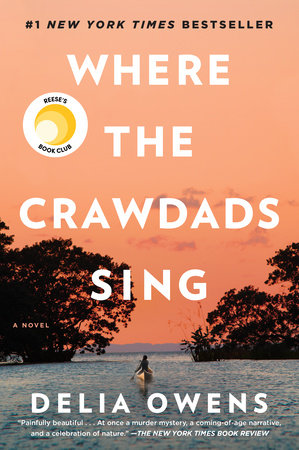
Where the Crawdads Sing

Where the Crawdads Sing has been at the top of all the bestseller lists for months. This novel by Delia Owens tells a story of an abandoned, abused and increasingly isolated girl-to-woman, Kya. It takes place in the remote and eerie Outer Banks off the North Carolina coast. Going back and forth in time, we are invited into the mystery of a life and a death and, most importantly, about the continuing sadness of human prejudice and judgment.

It’s also the story of how a gifted girl with no schooling and no opportunity can learn, and then use the art and intelligence she has to make a better world for herself. I was reminded throughout, in odd ways, of the Tara Westover’s memoir Educated as much of this story of fiction matches her real life experience.

Although I thought Delia Owens writing about the natural world was wonderful, I did not like this book as I thought the plot was rather contrived. There are a lot of jumps in Kya’s life and growth that just don’t make sense. One of the poems she reads from the anthology her mother left behind couldn’t have been in that volume as the poem was published later. But then it was difficult to track the back and forth time in the novel. Regarding the mystery, if you’ve paid close attention the ending is not a surprise, but again it is a rather difficult to go back and put the pieces together.

This is an easy and quick read, a good one for summer. I can see why it is so popular, as it is a compelling story. But I don’t think it is a great novel.

Rereading

I’ve been thinking a lot lately about rereading books. I have had a regular practice of annual returns to favorites, such as all the Dorothy L. Sayers Lord Peter Wimsey novels in order. And every time there’s a presidential election I read J. B. Priestley’s The Image Men.

In August my husband and I are going to the UK and will attend a Tolkien conference in Birmingham. So I’ll start rereading The Lord of the Rings very soon.

Other books on my mental reread list are all the Barbara Pym novels, the hilarious Angela Thirkell books, and perhaps Susan Howatch. Friends had been in London and saw a play called “Jude” that’s loosely based on Thomas Hardy’s Jude the Obscure. That put in mind that rereading Hardy would be a lovely thing.

Rereading can be comforting when we need to escape into something familiar and loved. Rereading reminds us why we like certain genres and certain characters. Rereading makes good use of our physical and digital libraries and refreshes our literary senses.

Summer is a great time to reread something. What’s on your list?

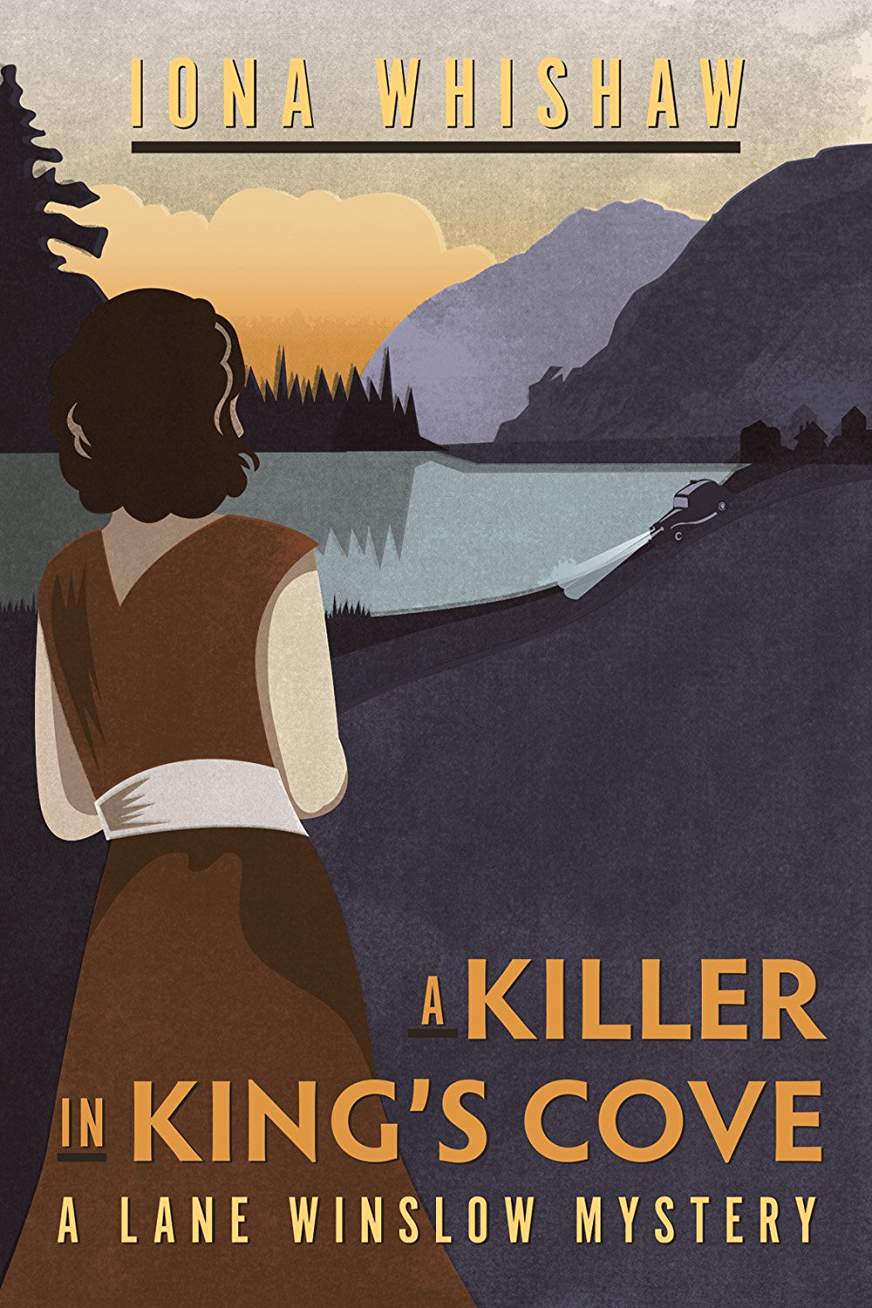
Iona Whishaw’s Lane Winslow Mysteries

I picked up the first of these, A Killer in King’s Cove when we were in our favorite vacation place, Tofino B.C. There’s a little bookstore called Mermaid Tales, and we always go in and buy a book or two. I always like reading books with local interest, and this series by a Vancouver, B.C. author intrigued me.

It seems I’m reading a lot of books these days set in the 1950’s, from James Runcie’s Grantchester mysteries, Kate Atkinson’s Transcription, and these books set in the B.C. Interior. I was caught right away by Whishaw’s ability to describe and invoke the area – what they call the Kootenay (after the lake of the same name) in and around Nelson. She lived there when she was a child, so these books have a deep place in her own life and memory. I’ve also always loved this area. We traveled there when I was a child, and I’ve been through there many times since. So the geography itself was enough to get me started.

The protagonist, Lane Winslow, is an English young woman who comes there to begin anew after a secretive career during World War II and at the end of a bad romance. It’s not totally clear why she chose Canada, and it’s described as a random, capricious choice, but one that seems to fit perfectly as the story unfolds. She’s lives in King’s Cove, a small community a ferry ride across the lake from Nelson and another 30 mile ride up the road. Whishaw does a wonderful job of describing the people in the small community, and the terrible effects of the war are still powerfully present.

I’m so taken with these that I am reading book four – haven’t hardly come up for air! The stories are good, the characters are splendid and well-defined, and the writing is excellent. I do think she needs a better proof-reader/editor. Both books one and three have characters referred to wrongly, and book four has at least one serious misspelling. And I was disappointed by a kind of cheap trick in A Killer in King’s Cove where it is obvious who “the director” is but she hides it away until Lane uncovers it. I think the book would have been better to name the person when first using that character. But in all these are well worth the read, especially if you love the wonderful expanses of western Canada as I do.

Here’s the list:
A Killer in King’s Cove (2016)
Death in a Darkening Mist (2017)
An Old, Cold Grave (2017)
It Begins in Betrayal (2018)
Sorrowful Sanctuary (2018)
A Deceptive Devotion (2019)

There There

I just finished There There by Tommy Orange, a remarkable novel set in Oakland, California. It is multiple stories of many different Indians and their families. It’s hard to read, because of all the sadness and loss and addiction. It’s hard to read because of the history you learn. He writes a Prologue that details the history of the Indians in our country, and he writes an Interlude that gives more details for the current time. It’s hard to read because, even knowing all those things, having them put together with the “real” lives of his characters is hard to read.

Story is such an important part of Native culture, and this is a book about story. Last week my husband and I attended a lecture at the Seattle Art Museum that was about how one Northwest Native mask can make its way into different tribes and places, adding different pieces to its composition. The two speakers made one important point: The reason all this exchange can happen is because the piece is not what’s important; it’s the story that’s told behind it. And each story is sacred and particular to each tribe.

At the beginning of There There the character Tony Loneman reflects on reading and story. Tony was born with Fetal Alcohol Syndrome and the first chapter about him has him realizing that his face tells the story of that disease. He calls it “The Drome.” His mother is in jail and he lives with his “Grandma” Maxine. He says, Maxine makes me read to her before she goes to sleep. I don’t like it because I read slow. The letters move on me sometimes, like bugs. Just whenever they want, they switch places. But then sometimes the words don’t move. When they stay still like that, I have to wait to be sure they’re not gonna move, so it ends up taking longer for me to read them than the ones I can put back together after they scramble. Maxine makes me read her Indian stuff that I don’t always get. I like it, though, because when I do get it, I get it way down at that place where it hurts but feels better because you feel it, something you couldn’t feel before reading it, that makes you feel less alone, and like it’s not gonna hurt as much anymore. One time she used the word “devastating” after I finished reading a passage from her favorite author — Louise Erdrich. It was something about how life will break you. How that’s the reason we’re here, and to go sit by an apple tree and listen to the apples fall and pile around you, wasting all that sweetness. I didn’t know what it meant then, and she saw that I didn’t. She didn’t explain it either. But we read the passage, that whole book, another time, and I got it.

This is a book will get you to that place “where it hurts but feels better because you feel it… .” And Orange is a terrific writer – no wasted words. The title comes from a Radiohead song by the same name. The last lines of the lyrics are: We are accidents waiting Waiting to happen, and those words are poignant and powerful as this book moves to its inevitable conclusion.