The Fourth Day of Christmas Books

The superb mystery author P. D. James was often asked to write a short story or novella that was published at Christmas and other times in various magazines and collections. The Mistletor Murder and Other Stories, published after her death in 2014, was the first collection of four of these stories to appear in book form. It is a delightful grouping, with all the plotting skill, humor, and exceptional writing that marked her career. There is nothing like a good murder mystery at Christmas time, and here are four great ones!


                            THE MISTLETOE MURDER by P.D. James

The Third Day of Christmas Books

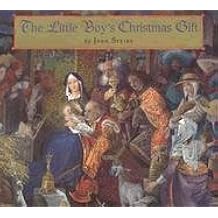
The books for children are among the most wonderful in this season. A particularly beautiful one is The Little Boy’s Christmas Gift by John Speirs. The artwork is amazing, and the story lovely. A little boy, son of a garderer, follows the Magi to see the baby Jesus. He brings a little tree in a small sack. Each beautifully decorated part of the story reads like this: And so they journeyed on … The wise men with their richly laden camels, the nomads with their brightly woven rugs, the herdsmen with their goats, and the olive growers with their jars of oil. Nobody noticed the boy with the small brown sack trudging along behind them in the dust and shadows.

The ending magical, and this is a great book to read to children of all ages!

Product Details

The Second Day of Christmas Books

The Oxford Book of Christmas Poems is one of my favorite Christmas books. It is still available in a variety of formats. A favorite poem is this one by John Betjeman:

The bells of waiting Advent ring,
The Tortoise stove is lit again
And lamp-oil light across the night
Has caught the streaks of winter rain.
In many a stained-glass window sheen
From Crimson Lake to Hooker’s Green.

The holly in the windy hedge
And round the Manor House the yew
Will soon be stripped to deck the ledge,
The altar, font and arch and pew,
So that villagers can say
‘The Church looks nice’ on Christmas Day.

Provincial public houses blaze
And Corporation tramcars clang,
On lighted tenements I gaze
Where paper decorations hang,
And bunting in the red Town Hall
Says ‘Merry Christmas to you all’

And London shops on Christmas Eve
Are strung with silver bells and flowers
As hurrying clerks the City leave
To pigeon-haunted classic towers,
And marbled clouds go scudding by
The many-steepled London sky.

And girls in slacks remember Dad,
And oafish louts remember Mum,
And sleepless children’s hearts are glad,
And Christmas morning bells say ‘Come!’
Even to shining ones who dwell
Safe in the Dorchester Hotel.

And is it true? and is it true?
The most tremendous tale of all,
Seen in a stained-glass window’s hue,
A Baby in an ox’s stall?
The Maker of the stars and sea
Become a Child on earth for me?

And is it true? For if it is,
No loving fingers tying strings
Around those tissued fripperies,
The sweet and silly Christmas things,
Bath salts and inexpensive scent
And hideous tie so kindly meant.

No love that in a family dwells,
No carolling in frosty air,
Nor all the steeple-shaking bells
Can with this single Truth compare –
That God was Man in Palestine
And lives to-day in Bread and Wine.

IMG_2077

The First Day of Christmas Books

I am back again, having decided that this blog is a worthwhile endeavor for me. I used this last year as an opportunity to explore the method, and I have found it it to be a good way to share my thinking and to improve my skills as a book reviewer of sorts.

So, to end this year and get us into the next, I’ll write about Advent and Christmas books. I have collected them for decades. Some are good, some aren’t so good, but they all bring interesting and often refershing perspectives.

Usually I buy a new Christmas book each year, but I did not do that this season. So I have taken a harder look at the books I do have. Perhaps among the most interesting are the Christmas Annuals, a Norwegian tradition that made it’s way into the immigrant experience here. But there are many books that reflect the wonder, the mystery, and often the puzzle, of this holy season.

So here is my whole list of Advent and Christmas books. During Christmas they live in great baskets on the living room floor so that a book can be picked up and enjoyed at random. Perhaps you will see some on this list that are familiar, or some that you would like to know more about. I’ll try to acquaint you all with some of my favorites in the eleven days following. Merry Christmas!

Advent and Christmas Books:
An Advent Pilgrimage, Agnus Dei Lutheran
Advent: Prepare to Be Surprised, Nancy Monelli
Advent Sourcebook, LTP
Advent Story Book, Antonia Schneider
Angels – blue book
Angels and Other Strangers, Katherine Paterson (2)
The Best Christmas Pageant Ever, Barbara Robinson (2)
A Book of Christmas: Readings and Reflections
A Cat’s Christmas, Stephanie Semek
Cat in the Manger, Michael Foreman
The Cat Who Knew the Meaning of Christmas, Marion Chapman, Gremmels
The Christmas Alphabet, Robert Sabuda
Christmas Annuals, Historic (some in Norwegian)
Christmas Annual – vol. 64, 1994
Christmas Annual, vol. 65, 1995
Christmas Annual – vol. 66, 1996
Christmas Annual – vol. 67, 1997
Christmas at St. Olaf Bulletin, 2005
Christmas at Thompson Hall, Anthony Trollope
Christmas Eve at Phinney Ridge Lutheran Church, sermons by Bev Piro
Christmas in Customs, Shirley Ann Lockhart
Christmas Is a Time of Giving, Joan Walsh Anglund
The Christmas Mystery, Jostein Gaarder
Christmas Pudding, Nancy Mitford
The Christmas Reader, Godfrey Smith
A Christmas Sampler, ed. E. A. Crawford
Christmas Sourcebook, LTP
Christmas Stories – Everyman’s Pocket Classics, ed. Diana Tesdell
Christmas Stories, Edna Hong
A Christmas Treasury, Dell Comic
Cinco Annunciaciones, Adolfo Sarabia
Come, Lord Jesus, Susan Briehl
The Crippled Lamb, Max Lucado
Expectant: Verses for Advent, Jim Cotter
The Family Christmas Book, Barbara Rinkoff
Fancy Nancy’s Splendiferous Christmas, Jane O’Connor
Feast and Seasons, 4 issues
The Festival of Christmas, Mary Hinderlie, 1954, 2009 (10 copies 2015)
Fling Wide the Doors, Craig Mueller
The Fireside Book of Christmas Stories, ed. Edward Wagenknecht
For All the World, Helen Earle Simcox
God with Us, ed; Greg Pennoyer and Gregory Wolfe
Goodness and Light, Orbis
Henry and the Christmas Cat, Mary Calhoun
An Irish Christmas Feast, John B. Keene
An Irish Country Christmas, Patrick Taylor
Jesus, Heart’s Light – Holden
The Last Noel, Michael Malone
Light upon Light, Compiled by Sarah Arthur
A Literary Christmas, Anthology
The Little Big Book of Christmas, Lena Tabori
The Little Boy’s Christmas Gift, John Speirs
Making Room for Christmas, Herbert Brokering
Maigret’s Christmas, Georges Simenon
The Man Who Invented Christmas, Les Standiford
Manger in the Mountains, James Arne Nestingen
Martin Luther’s Christmas Book, Roland Bainton
May Your Wildest Christmas Wishes Come True, Flip book
The Mistletoe Murders and Other Stories, P. D. James
The Mystery of Holy Night, Dietrich Bonhoeffer
Mystery in White, J. Jefferson Farjeon
The Nativity, Julie Vivas
O Come All Ye Faithful, Joanie Erickson Tada
O Come, Emmanuel, Gordon Giles
O Holy Night, ed. A. Jean Lesher
One Night in a Stable, Guido Visconti
One Winter’s Night, John Herman
The Oxford Book of Christmas Poems, ed. Michael Harrison
The Physics of Christmas, Roger Highfield
Pocket Posh Christmas Crosswords
Revealing the Star of Bethlehem
Room for a Little One, Martin Waddell
A Rumpole Christmas, John Mortimer
Shepherd’s Abiding, Jan Karon
Sherman the Sheep
Sherman the Christmas Sheep
Silent Night, Mary Higgins Clark
Silent Night, Stanley Weintraub
Skipping Christmas, John Grisham
Stocking Stuffer, Flip book
Stories for Christmas, Allison Uttley
Stories of Christmas Time, Charles Dickens
This Year It Will Be Different, Maeve Binchy
The Twelve Days of Christmas, Robert Sabuda
The Twelve Days of Christmas Cats, Don Daily
Village Gentry Come Meet the Baby Jesus, Roger Ferlow (article, 2 copies)
Watch for the Light, Upper Room
A West Coast Christmas, Anne Tempelman-Kluit
Wishin’ and Hopin”, Wally Lamb
Word and World Christmas, Fall 2007
Wreath of Light, Nancy Vignec

Exit West, by Mohsin Hamid

This is Man Booker Shortlist #4. A while in coming. I hope to be writing more!

All the Man Booker Shortlist books are about the fragmenting of society in all sorts of ways. This one is quasi-dystopian,  using current societal issues (nativism, nationalism, xenophobia and so on) to describe what might occur in another place and another time.

The conceit the author uses is of doors that open onto another geographical place where people can go to begin again, find another (not necessarily better) life, or just remove themselves from the terror that approaches where they are. I was reminded of C.S. Lewis’ Narnia books, where entrance to the new world was through the door of a wardrobe. And, like Exit West, every time the children go through the wardrobe door into Narnia, they arrive in a different place.

Exit West gives us a good perspective (sometimes too close) into the hazards and difficulties of our own times. Here is an example:

Returning to where they had been born was unthinkable, and they knew that in other desirable cities in other desirable countries similar scenes must be unfolding, scenes of nativist backlash, and so even though they discussed leaving London, they stayed. Rumors began to circulate of a tightening cordon being put in place, a cordon moving through those of London’s boroughs with fewer doors, and hence fewer new arrivals, sending those unable to prove their legal residence to great holding camps that had been built in the city’s greenbelt, and concentrating those who remained in pockets of shrinking size. Whether or not this was true there was no denying that an ever more dense zone of migrants was to be found in Kensington and Chelsea and in the adjacent parks, and around this zone were soldiers and armored vehicles, and above it were drones and helicopters, and inside it were Nadia and Saeed, who had run from war already, and did not know where next to run, and so were waiting, waiting, like so many others.

[Hamid, Mohsin. Exit West: A Novel (pp. 136-137). Penguin Publishing Group. Kindle Edition.]

This passage toward the end of the novel is central to its themes:

She had always had carp in a mossy pond in the back of her house, carp that her granddaughter called goldfish, and she had known the names of almost everyone on her street, and most had been there a long time, they were old California, from families that were California families, but over the years they had changed more and more rapidly, and now she knew none of them, and saw no reason to make the effort, for people bought and sold houses the way they bought and sold stocks, and every year someone was moving out and someone was moving in, and now all these doors from who knows where were opening, and all sorts of strange people were around, people who looked more at home than she was, even the homeless ones who spoke no English, more at home maybe because they were younger, and when she went out it seemed to her that she too had migrated, that everyone migrates, even if we stay in the same houses our whole lives, because we can’t help it. We are all migrants through time.

[Hamid, Mohsin. Exit West: A Novel (pp. 208-210). Penguin Publishing Group. Kindle Edition.]

“We are all migrants through time,” and I commend Exit West to you.

Exit West: A Novel by [Hamid, Mohsin]


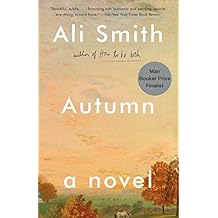
Autumn, by Ali Smith

I suppose this book attracted me because of the title – it is the season! But I do so wish it had won the Man Booker prize. It is such a lovely bridge between present and past. There is only a bit of hope for the future, but its wisdom is in the descriptions of culture and relationship.

As I noted above, there are these great lists in the book, lists or paragraphs of statements and puzzles. Here is one, spoken by one protagonist, Elizabeth.

That’s not what I mean, she says. I’m tired of the news. I’m tired of the way it makes things spectacular that aren’t, and deals so simplistically with what’s truly appalling. I’m tired of the vitriol. I’m tired of the anger. I’m tired of the meanness. I’m tired of the selfishness. I’m tired of how we’re doing nothing to stop it. I’m tired of how we’re encouraging it. I’m tired of the violence there is and I’m tired of the violence that’s on its way, that’s coming, that hasn’t happened yet. I’m tired of liars. I’m tired of sanctified liars. I’m tired of how those liars have let this happen. I’m tired of having to wonder whether they did it out of stupidity or did it on purpose. I’m tired of lying governments. I’m tired of people not caring whether they’re being lied to any more. I’m tired of being made to feel this fearful. I’m tired of animosity. I’m tired of pusillanimosity.

[Smith, Ali. Autumn: A Novel (pp. 56-58). Knopf Doubleday Publishing Group. Kindle Edition.]

And here’s another:

I’m what’s below. I’m what’s above. I’m the fly. I’m the descendant of the fly. I’m the descendant of the descendant of the descendant of the descendant of the descendant of the descendant of the fly. I’m the circle. I’m the square. I’m all the shapes. I’m geometry. I haven’t even started with the telling you what I am. I’m everything that makes everything. I’m everything that unmakes everything. I’m fire. I’m flood. I’m pestilence. I’m the ink, the paper, the grass, the tree, the leaves, the leaf, the greenness in the leaf. I’m the vein in the leaf. I’m the voice that tells no story.

[Smith, Ali. Autumn: A Novel (p. 192). Knopf Doubleday Publishing Group. Kindle Edition.]

Elizabeth grows from childhood to adulthood in these paragraphs, engaging her own thought with that of her neighbor Mr. Gluck. Their exchanges are amazing and full of wonder. And it makes me wonder how Elizabeth might have grown and learned without her conversations with Mr. Gluck, when she was a child and when she sat at his death bed in the nursing home.

One more paragraph:

All across the country all the things from the past stacked on the shelves in the shops and the barns and the warehouses, piled into display units and on top of display units, spilling up stairs from the cellars of the shops, down stairs from the attic rooms of the shops, like a huge national orchestra biding its time, the bows held just above the strings, all the fabrics muted, all the objects holding still and silent till the shops empty of people, till the alarms play their electronic beeps at the doors, till the keys turn in the locks in the thousands of shops and barns and warehouses all across the country. Then, when darkness falls, the symphony. Oh. Oh, that’s a beautiful idea. The symphony of the sold and the discarded. The symphony of all the lives that had these things in them once. The symphony of worth and worthlessness. The Clarice Cliff fakes would be flutey. The brown furniture would be bass, low. The photographs in the old damp-stained albums would be whispery through their tracing paper. The silver would be pure. The wickerwork would be reedy. The porcelains? They’d have voices that sound like they might break any minute. The wood things would be tenor. Yes, but would the real things sound any different from the reproduction things?

[Smith, Ali. Autumn: A Novel (pp. 219-220). Knopf Doubleday Publishing Group. Kindle Edition.]

Product Details

Man Booker #2, 3, and 4

Lincoln in the Bardo by the American George Saunders has won the Man Booker Prize 2017. It is the weirdest book. It is an odd combination of narrative, maudlin cemetery wanderings, and historical captions that just didn’t do it for me. I might get back to it sometime but, after about 30 pages, I gave up. It is so hard to follow.

Lincoln in the Bardo


I had hoped Autumn by Ali Smith might win. What a lovely book. It’s wonderful musings on contemporary life – terrific lists – really engaged me. I bookmarked a lot of pages on my Kindle, and I’ll write about it next.

Autumn

I’m reading Exit West, by Mohsin Hamid now, which is also very good. The author weaves the magic of a new relationship into the horrors of a city torn apart by violence, and does it very convincingly.

Exit West

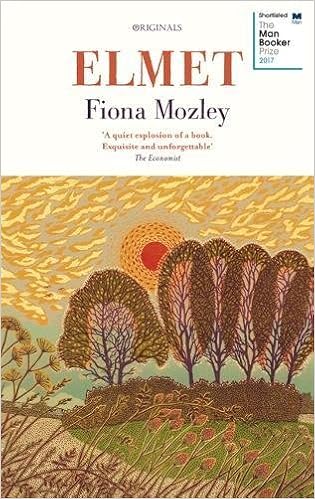
2017 Man Booker Prize Shortlist #1: Elmet

I’m not sure I’m going to make it through four books before October 17 (I’m not reading 4321 right now because it has 900 pages), but my first one off this year’s shortlist was well worth it. I ordered it from England as it’s not yet available in the US. (It will be on December 5.) The foreword is a quote from Remains of Elmet by the poet Ted Hughes: Elmet was the last independent Celtic kingdom in England and orignally stretched out over the vale of York … But even into the seventeenth century this narrow cleft and its side-gunnels, under the glaciated moors, were still a ‘badlands’, a sanctuary for refugees from the law. One of the interesting mysteries of this book is that it takes a while, at least it did for me, to know exactly when the story takes place. I definitely knew by the end, but I won’t give it away as ascertaining the time is one of the pleasures (and puzzles) of this book.

Mozley is a very fine writer. She has a good way of writing the West Riding accent, and quickly draws us verbal pictures of the Yorkshire landscape and how people see it and live in it. There are lots of memories of past times and descriptions of the vast changes that have come to every landscape and community. Part of the story is the struggle of one community against a more than difficult landlord. They all come together one day for food and conversation to see what they do as a community. One character, Ewart, says this of the gathering: I don’t know folk around here like I used to. I can’t tell how they feel any more, or how they think. Sometimes I think it’s still there, just resting its eyes. A lot of those here are sons and daughters of men that worked with me up at the pit. So many passed away before their time. They drank too much and smoked too much and ate too much of this meat. We all did. But I do see something here of that old world. People are as poor now as they ever were, and as tired. And bringing people together of an evening is easier than keeping them apart. And by that same token, bringing a community back together is easier than setting people and families at odds. It’s just that’s where all effort’s been this last ten years and more. (p. 171)

This is neither an easy book nor a pleasant one. You kind of know all along how it will turn out. But each page brings hope that it might turn out differently than you expect. I think that kind of hope is what the author is describing in this often dark, but quite profound novel.

https://images-na.ssl-images-amazon.com/images/I/51Hy65ZUDnL._SX313_BO1,204,203,200_.jpg

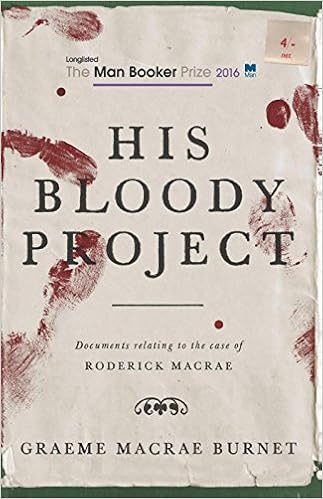
His Bloody Project

A friend loaned me this book by Graeme Macrae Burnet a while ago, and I finished it yesterday. It is an interesting and troubling novel about murder in the Wester Ross area of Scotland in the late 19th century. Right from the start you know who did it, as the whole first section of the book is a written narrative by the murderer describing his life, family, village, and the circumstances leading up to the three murders. He freely states his guilt in this matter.

After his narrative, there is a section on the medical reports with the big question being the murderer’s sanity, and then the trial. Although there is a particular inevitability in the whole book, the story is compelling and there is enough intrigue to hold your attention. And the writing is very good, especially the murderer’s narrative. The author did an exceptional job writing with the language and patterns of the time. As the protagonist is Roderick Macrae, one almost wonders if there is a link. But is this indeed fiction.

https://images-na.ssl-images-amazon.com/images/I/51tx30BCH7L._SX321_BO1,204,203,200_.jpg

This book was short-listed for the Man Booker prize is 2016. I’ve always been intrigued by this prize, as I often like the books selected as the finalists and the winners. This year’s short list was just announced, so I’ve decided to try to read them all before the winner is announced on October 17. Well, except for the one titled 4321 because it has 900 pages!

Here’s a link to this year’s shortlist:http://themanbookerprize.com/news/man-booker-prize-announces-2017-shortlist

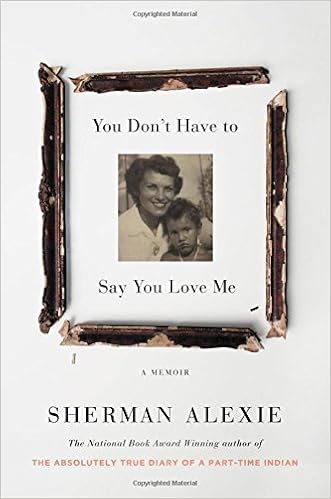
Sherman Alexie

A few days ago I finished Sherman Alexie’s memoir, You Don’t Have to Say You Love Me. It is an amazing and powerful book, mostly about his memories and experience of his mother, a member of the Spokane Tribe. She was a maker of quilts, and the book itself is a quilt of story, grief, and anger in sections of narration and poetry. Alexie, as he does in all his writings, draws us into the difficult and painful complexities of the history and present of our indigenous sisters and brothers and our relationship to all of that, and helps us laugh with him and at ourselves along the way. His own story of moving away from the “rez” is a strong one, but I came away wanting the “rez” life to be equally as strong and feeling his deep sorrow that it is not. He is a wonderful writer, so all the poems and narration are clear and beautiful even when the truth of the story is hard to absorb. And there are many parts that are emotionally hard to read in this book.

There are multiple ways in which we white people of privilege can find some pathway into our racism, and this book is one small way to think seriously about all of that. But Alexie’s book tells of the powerful force of racism in every culture, even Indian to Indian and Indian to white folk. Dealing with racism is a common topic in our culture right now, from many perspectives, and it should be. But this memoir, at least for me, has helped think about that for myself in new and profound ways. I am grateful to Alexie for allowing us this look into his life that helps us look well into our own.

But this book is mostly about grief, about his grief for his often difficult mother, for the loss of so much all the time on the reservation, for the loss of ways of life, and the gift of salmon. In a chapter entitled “Harvest,” Alexie writes about going to the funeral of one of his white high school classmates who was killed in a car wreck. My entire class, all fifty of us, went to Donny’s funeral. I sat in a back pew and cried for a while. I liked Donny. I would miss him. He died so young . And because I’d already been to a dozen wakes and funeral, it felt as if all of the separate grief had become one ever-growing grief, as if each grief was worse than the previous grief because of exponential math. So it felt like my grief for Donny was the same size as all the rest of my grief combined, plus one. But I stopped crying when I noticed that very few people were being openly emotional. I’d never seen that many stoic people at a funeral. I’d never experienced a silent and polite funeral. My tribe doesn’t bury our dead that way. We wail, weep, and tell dirty jokes at graveside. … That was the first time I truly understood that I was a foreigner. I might have been indigenous to the land I itself, but I was a first generation cultural immigrant to the United States. I was now living in a place where people did not grieve like me. Later, back at school, I was even more shocked to learn that it was the first funeral that most of my classmates had attended. Donny Piper was their first death. I thought they were kidding. But, no, it was true. My white classmates knew very little about death. We didn’t keep a tally, but based on the stories I remember from that day, I think I might have attended more funerals than all of my white classmates put together. [Sherman Alexie, You Don’t Have to Say You Love Me, Little Brown and Company, New York, June, 2017. p. 217]

Often memoirs ask for the reader’s applause. This one asks for our participation, as we are invited into Alexie’s life and grief and journey.

https://images-na.ssl-images-amazon.com/images/I/41%2Bo9MxhaTL._SX329_BO1,204,203,200_.jpg