William Tyndale

I’m preparing to teach a class on Sunday, 15 January, at Phinney Ridge Lutheran Church: http://www.prlc.org. In October the congregation began a one-year commemoration of the 500th anniversary of the Reformation. My class, which is titled The Bible in English, is about the history and sources of the bibles we use and read now.

Martin Luther is famous for his translation of the Bible into German from the original Hebrew and Greek. He not only gave access to the book to every reader, speaker, and hearer of German, he also shaped that language for its future. But Luther was not the only reforming translator of the era. In England John Wycliffe, an Oxford professor, did a translation into English, although only from Latin Vulgate, in 1380. William Tyndale was the real star of this reformation. He was the first person to publish a New Testament in English. This wasn’t a popular activity with the powers that be, and he was eventually arrested in 1535 and a year later strangled and his body burned at the stake. (John Wycliffe was so annoying that, after he had been dead for 44 years, the then pope had his remains dug up and all his bones smashed into powder.) Tyndale, not unlike Luther with German, is often called the “Architect of the English Language.” The choices he made for his bible translation shaped phrases and word definitions that are still in use today.

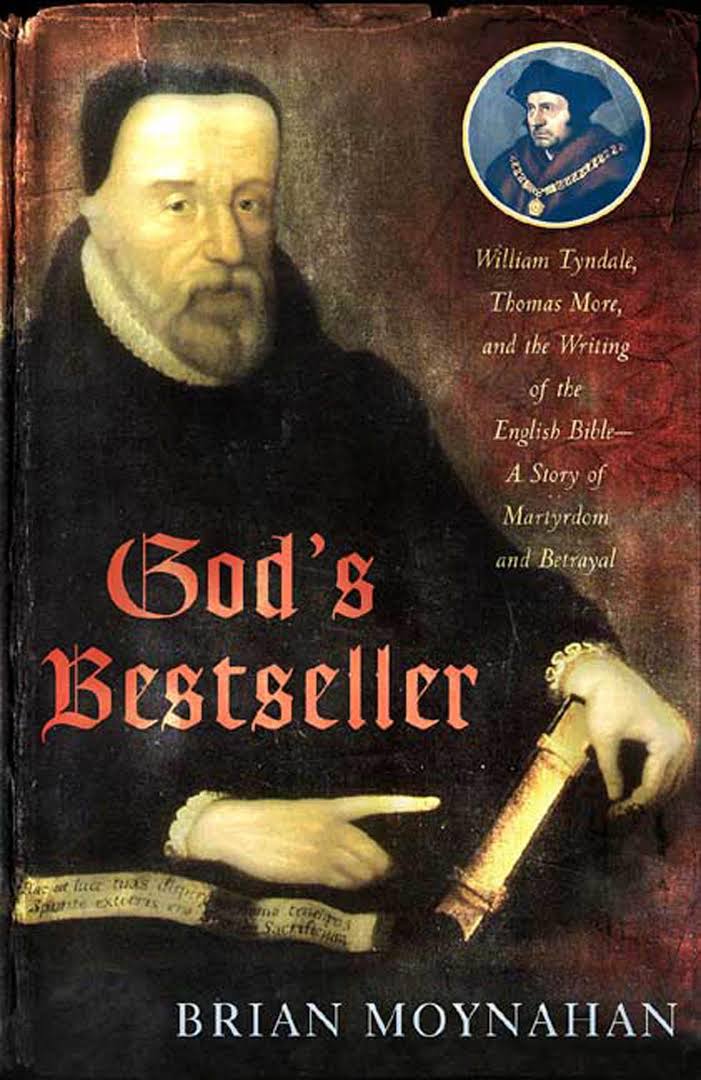
There is a terrific book about Tyndale titled God’s Bestseller by Brian Moynahan. Published in 2003, it is out of print so look for it on used book sites and at the library. Google Books has sites for it as well, and there is an ebook available there.Tom Ahlstrom recommended this a few years ago and  it has remained a big favorite.  It is such an amazing story full of intrigue and plotting and spies and betrayal and everything else that makes for a great read. The parts about Tyndale’s translation work are fascinating. Even though you know what will happen to poor Tyndale in the end, this is excitement page after page! Sir Thomas More is the one who is out to get Tyndale. I remember how much I loved the movie A Man for All Seasons when I was in college. God’s Bestseller (and Hilary Mantel’s Thomas Cromwell novels) rather changed my opinion of More! So there’s lot of history to be learned here as well and a real appreciation of language and words and how the seemingly simple, faithful use of them can be a real threat to those in power.gods-bestseller
Chief Inspector Armand Gamache

I had heard about Canadian author Louis Penny’s series set in Quebec, but I hadn’t started reading them until just before Christmas. Then I couldn’t stop! I think I was intrigued by the Quebec setting. One of my favorite books as a child was Mystery in Old Quebec by Mary C. Jane. It is a great story about the adventures of children, as was another favorite, Snow Treasure by Marie McSwigan. That one is about Norwegian children carrying gold bullion in their sleds as they play, keeping it away from the Nazi occupiers in World War II. (There seems to be a pattern here: thinking of current reads and being reminded of reading long ago.)

When I started the first Louise Penny novel, Still Life, I was impressed right away with her terrific writing and the fact that her detective is pretty much a normal person – one with great gifts for his job, but a nice guy in a good marriage who enjoys lots of things in life. Although he is based in Montreal, the stories are all related in some way to the small village of Three Pines. It’s not on any map; you have to go there to find it, almost like Brigadoon! In Three Pines he meets a wonderful array of characters that continue through all the novels. Three Pines is close enough to Montreal for the officers of the Sûreté du Québec to get there quickly and even get back home – if they want to go back home! The village is at once idyllic and yet full of the normal – and abnormal – range of human emotions and foibles. A favorite character is Ruth Zardo who is a poet who has won the Governor General’s Prize for Poetry. Her poems are beloved of Gamache, who knows many of them by heart, and odd conversations with poetry fragments continue through the stories. Ruth is a foul-mouthed cantankerous old woman, so much so that Gamache is astounded when he figures out who she is! She is just part of the complex set of relationships in the little village of Three Pines.

You can learn more about these novels at Louise Penny’s excellent website: http://www.louisepenny.com. On the tab that indicates the Inspector Gamache novels she lists them all in order, and they should be read that way. Her own story is very interesting and I commend it to you. She has been in recovery since she was a young woman and,  although addiction figures fairly prominently in a couple of the novels, she does it in a way that is never preachy nor do all the details of recovery processes overwhelm the story. Like all the novels, this part of presented just as part of what happens to humans and how people and communities deal with it. Very well done indeed.

Not every novel is equally as good. The last one I read was sort of what I call the Dan Brown style of plot by question and answer: What is that? It’s a painting. What’s it called? The Mona Lisa. Why is she smiling? and so on. Penny does that in The Long Way Home. But it’s a powerful and poignant story. And maybe the questions and answers were the only way to make it work.

One really consistent thing in every book is food. The food and drink descriptions are terrific, and you just want to sit down with them all at the table in Olivier’s Bistro or wherever they are and tuck in!

So I hope that, if you haven’t already, you’ll “tuck in” sometime to Louise Penny’s Chief Inspector Armand Gamache novels. Just make sure you have a lot of reading time ahead of you!

Reading Mysteries

This started out to be a confession of my obsessive reading of all the Louise Penny Inspector Gamache novels over Christmas, but it made me think about my lifetime passion for reading mysteries and the kind of influence they have had. A few years ago a friend was taking a class about Nancy Drew (really!). She asked me if I had read Nancy Drew when I was young – she had not – and could I write something about that for her to share in her class. Here is that piece:

I was probably first drawn to these books because my name is Nancy. I don’t precisely remember when I started reading them, but I would guess I was 7 or 8. I think they were probably my first mystery books. I had begun reading at 3 and read everything I could get my hands on.

I lived in a neighborhood with a lot of girls about the same age and we did lots of fun and creative things together all the time. We also shared our books, and I may have first heard of Nancy Drew from my friend Marilyn who was a grade ahead of me in school and often told me about new things she had learned. My parents were also avid readers who took me to the library all the time, and they may have given me the first book for a birthday or Christmas gift. My friends and I  read all the Nancy Drew books that were available, and we were always excited when a new one came out. It became very important to me to read them in order of publication, a habit that has stayed with me for all my reading, especially of mystery fiction.

The characters, especially the three girls, were fascinating and important to us as young girls. We were already strong, independent girls, and these books simply made sense to us. I think having these young women as models encouraged us in school and in our other interests. We learned  from these books what we already seemed to know in our own lives, that women could be strong and intelligent, leaders and creative thinkers, and have lasting friendships. Our imaginative play included acting out these stories, and I wasn’t always Nancy! We didn’t always follow the plot lines, but often developed our own stories.

I know that these books certainly sparked my lifetime passion for mystery fiction, especially with strong, independent women as central characters. As I write this, I know there is some link here between Nancy Drew and Dorothy L. Sayers, especially as my favorites Sayers novels are the Harriet Vane stories. The other connection there is the time. Both the Nancy Drew novels and the Dorothy L. Sayers books were mainly written in the 1930’s, although the Nancy Drew books went on long after that. I think the decades between the World Wars are fascinating for the history of women, and I think that both these authors, from very different perspectives and very different audiences, reflect the many changes happening in western society in that time. I know that for myself and my childhood friends, meeting Nancy, George, and Bess encouraged our own growth and development through the wonderful and mysterious process of reading.

As I think of the mysteries to which I am drawn these days – books about women clergy – I wonder if we all continue to find connection in stories that mirror our own lives in some way. I know that the Nancy Drew books were important entries for me into the world of mystery fiction and into the real life world of 20th-21st century women.

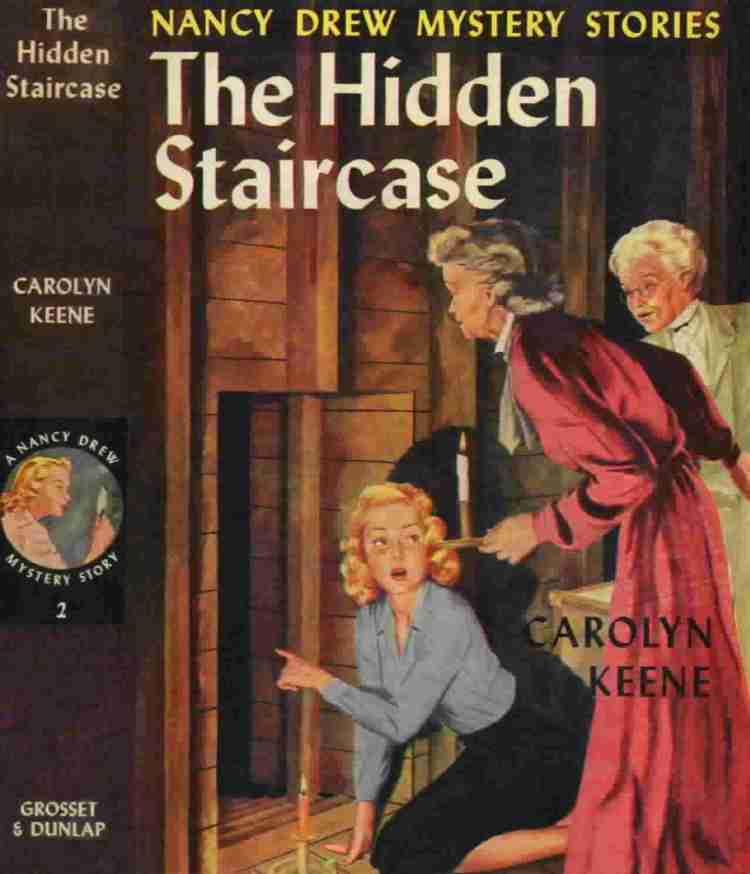
I believe I read my favorite – The Hidden Staircase – something like 13 times, revealing another life-long pattern of reading favorites over and over again! Who else read Nancy Drew, and what do you think?

I’ll get to Louis Penny tomorrow!

drew2wrapdj


Books for Advent and Christmas

When I was a child we always had books of art and stories at Christmastime. Part of it was the Norwegian tradition of the Christmas Annual, a compilation of art and music and stories for the season. And I was often given a book unique to Christmas. So, as an adult, I have bought a book for Advent and Christmas each year. I put the collection out in baskets by the tree, and it’s wonderful to just pick one up a read a story or a poem. There are many favorites, one being The Oxford Book of Christmas Poems, a lovely collection from a variety of sources. It doesn’t appear to still be in print, so it would be good to look for it at used bookstores.

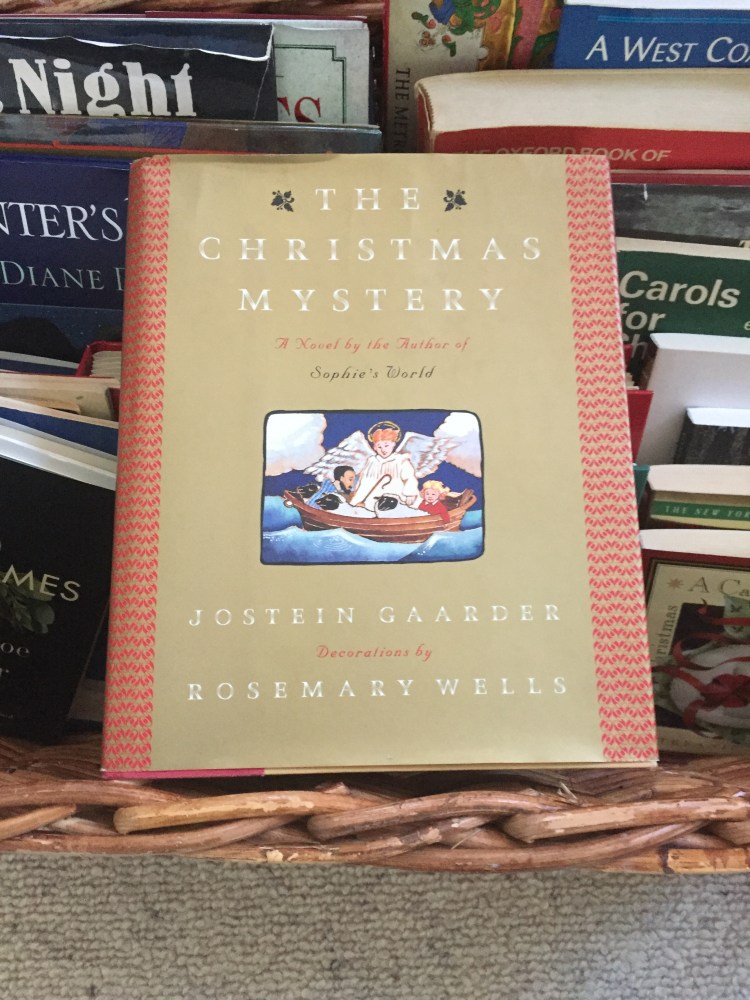
Another out-of-print book that is an Advent favorite is The Christmas Mystery by Jostein Gaarder. Gaarder is Norwegian teacher and author probably best known for his novel about the history of Western philosophy,  Sophie’s World. The Christmas Mystery follows Joachim, who discovers a magic Advent Calendar in an old bookstore, a calendar that is the story of a little  girl named Elisabet. It is a fascinating story through the days of Advent, helping you think about the world and the universe and all. A quick look at several sites shows it to be available, although it may not still be in print.img_1450

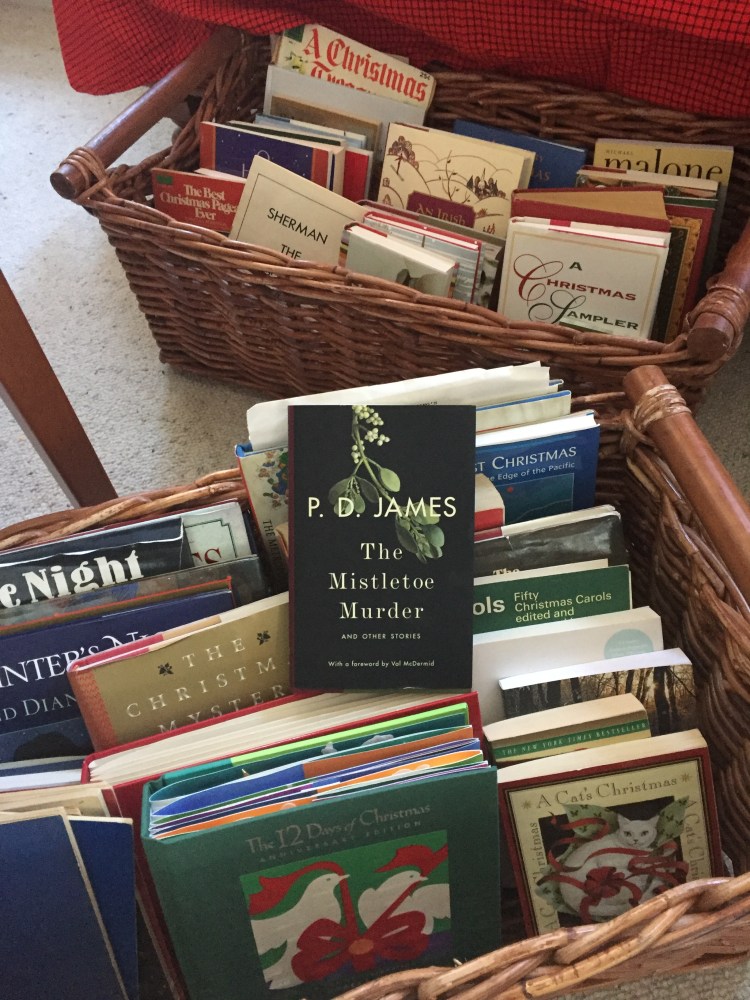
This year I bought a small collection of four stories by P.D. James. Often heralded the best mystery writer of the last century, she died in 2014. This little book is both a lovely set of Christmas crimes as well as a tribute to this wonderful writer. img_1451

Happy New Year and happy reading!


Starting and Finishing

I’ve been reading The Well at the World’s End by William Morris since 1972.

img_1394

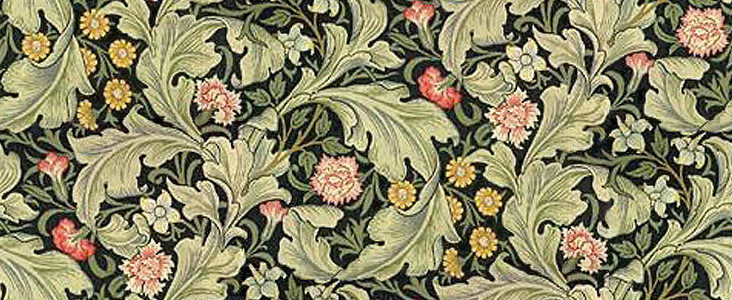
I’m only at chapter 5 of this fantasy and, even though I look at it once in awhile (with several years between), I always seem to be able to track what’s happening. Morris’ book was influential for C. S. Lewis and J. R. R. Tolkien for their stories in the worlds of Narnia and Middle Earth, and those are certainly more accessible than the world Morris creates. Morris’ is at once medieval and contemporary, living on a foundation of ancient myths and the dreamy world of late-Victorian culture. (The book was first published in 1896.) Like Morris’ wonderfully rich and complex decorating designs, the story is dense and complicated. (Below is one of Morris’ wallpaper designs.)morris-wallpaper

But even the complications sort themselves out as the story evolves. And I might even finish it one of these days.

My decades-long, interrupted reading of this book led to the creation of this blog. I love reading and talking about reading. I’ve spent most of my life – even as a child –  recommending one book or another to friend and stranger. Just the other day I was waiting for the ferry from Seattle to Bainbridge Island and I noticed that the woman across from me was reading Jeanette Haien’s wonderful Matters of Chance. So I asked her if she was enjoying it (she was), and recommended Haien’s lovely little novel The All of It. And I’ve always thought it would be fun to write reviews.

So this is what I hope to do in this blog. It won’t be a patterned thing. I’ll either write about what I’m currently reading or whatever book on my shelf catches my eye on a given day. It will mostly be fiction, and certainly a lot of mysteries, but there will probably be some historical fiction, biography, and theology in there as well. I hope this will also be a conversation, so I look forward to your comments about my reading and about your own.