Foreign Affairs: A Novel, by Alison Lurie

I made myself a New Year’s promise to get back to writing this reading journal. Over these last four months or so my reading hasn’t been particularly focused, and I certainly chose books that I could cruise through without much further attention. Hilary Mantel’s The Mirror and the Light sits at my bedside with a bookmark still at about page 30 where I left it when I put it down in March. Thomas’s Cromwell’s ongoing politics just didn’t quite fit my mood in these anxious days.

I am currently reading Alison Lurie’s Foreign Affairs, for which she won the Pulitzer Prize in 1984. It’s the next selection of my book group. Lurie, who died on December 3, 2020, is a wonderful writer who draws you right into the heart of this story about two academic colleagues from the same college who are both on sabbatical in England. One, Fred, is a 28 year-old man. The other, Vinnie, is a 54 year-old woman. The story is a good one and quite funny.

There was one section at the beginning that really spoke to me. I love England, and especially London, where I can walk for hours and hours. Just stepping onto a London sidewalk infuses me with energy, sometimes to the detriment of people who are walking along with me! When I read these words about Vinnie’s love of England I totally identified with them. So I leave this for your pleasure and invite you to read Foreign Affairs.

“England, for Vinnie, is and has always been the imagined and desired country. For a quarter of a century she visited it in her mind, where it had been slowly and lovingly shaped and furnished out of her favorite books, from Beatrix Potter to Anthony Powell. When at last she saw it she felt like the children in John Masefield’s The Box of Delights who discover that they can climb into the picture on their sitting-room wall. The landscape of her interior vision had become life-size and three-dimensional; she could literally walk into the country of her mind. From the first hour England seemed dear and familiar to her; London, especially, was almost an experience of déjà vu. She also felt that she was a nicer person there and that her life was more interesting. These sensations increased rather than diminished with time, and have been repeated as often as Vinnie could afford. Over the past decade she has visited England nearly every year—though usually, alas, for only a few weeks. Tonight she will begin her longest stay yet: an entire six months. Her fantasy is that one day she will be able to live in London permanently, even perhaps become an Englishwoman. A host of difficulties—legal, financial, practical—are involved in this fantasy, and Vinnie has no idea how she could ever solve them all; but she wants it so much that perhaps one day it can be managed. Many teachers of English, like Vinnie, fall in love with England as well as with her literature. With familiarity, however, their infatuation often declines into indifference or even contempt. If they long for her now, it is as she was in the past—most often, in the period of their own specialization: for the colorful, vital England of Shakespeare’s time, or the lavish elegance and charm of the Edwardian period. With the bitterness of disillusioned lovers, they complain that contemporary Britain is cold, wet, and overpriced; its natives unfriendly; its landscape and even its climate ruined. England is past her prime, they say; she is worn-out and old; and, like most of the old, boring. Vinnie not only disagrees, she secretly pities those of her friends and colleagues who claim to have rejected England, since it is clear to her that in truth England has rejected them. The chill they complain of is a matter of style. Englishmen and Englishwomen do not open their arms and hearts to every casual passerby, just as English lawns do not flow into the lawns next door. Rather they conceal themselves behind high brick walls and dense prickly hedges, turning their coolest and most formal side to strangers. Only those who have been inside know how warm and cozy it can be there. Her colleagues’ complaints about the weather and the scenery Vinnie puts down to mere blind pique, issuing as they do from people whose native landscape is devastated by billboards, used-car lots, ice storms, and tornadoes. As for the claim that nothing much ever happens here, this is one of England’s greatest charms for Vinnie, who has just escaped from a nation plagued by sensational and horrible news events, and from a university periodically disrupted by political demonstrations and drunken student brawls. She sinks into her English life as into a large warm bath agitated only by the gentle ripples she herself makes and by the popping of bubbles of foam as some small scandal swells up and breaks, spraying the air with the delightful soapy spume of gossip. In Vinnie’s private England a great deal happens; quite enough for her, at least.”

Lurie, Alison. Foreign Affairs: A Novel (pp. 18-19). Open Road Media. Kindle Edition.
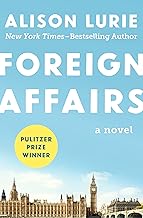
Foreign Affairs: A Novel

The Nickel Boys by Colson Whitehead

This was the selection for my book group months ago. We had chosen not to meet on Zoom once the gathering restrictions started, so we met in person in my backyard at the beginning of this week. (We’re a small group – just five of us – so it’s easy to meet and talk at a safe distance.) It was really good to catch up and talk about how these months have been.

Even though we had this book on the list for months, I started reading it on Saturday night and hadn’t quite finished on Monday. I had been a little wary of this book because it is about the brutality at a “school” for teenage boys who had been arrested for crimes they did, or in the case of the black protagonist, didn’t do. But I am so glad I read this book. Although the descriptions are horrific, it is just another piece of sorrowful knowledge of the power of systemic racism.

At the beginning I was trying to identify the time frame. Then the author mentioned the Cassius Clay/Sonny Liston fights, and I noted that happened in 1964-1965. I was a teenager then just like these boys. It really brought the dismal truth home to think about it that way.

Although this is a novel, it is based on a real school in Florida, the Dozier School for Boys in Marianna. The story came out when a group of archaeology students from the University of South Florida came upon a bunch of unmarked graves at the former school site. Just that knowledge itself is enough to clue you in on the terrible tragedy of such a place.

This is a shortish – 224 pages – and Whitehead is a wonderful writer. The book won the Pulitzer Prize and I can certainly see why. This is a fine book.

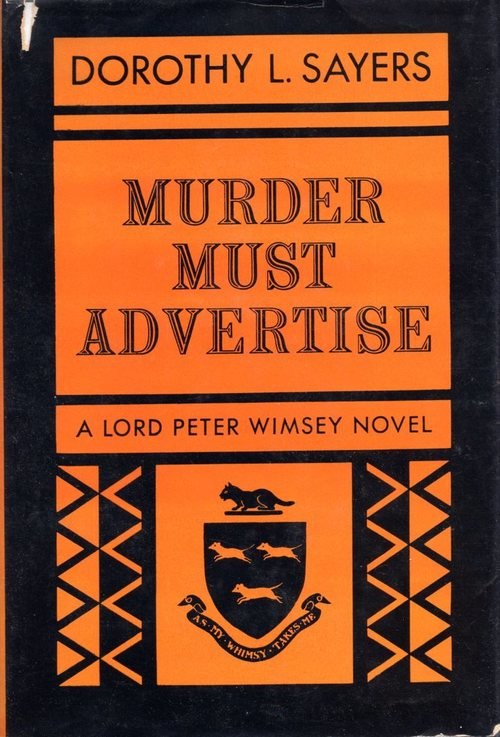
Murder Must Advertise by Dorothy L. Sayers

I’m continuing my journey through all eleven Lord Peter Wimsey novels and last night I finished Murder Must Advertise. This one is always a favorite, as Sayers draws on her ten-year experience as a copywriter for an ad agency. In this reading I was particularly intrigued by her lists of advertising slogans. They parody the work of Pym’s publicity in the book and set up the parallel narrative of the criminal activity being investigated and the sweeping cultural changes of the 1930’s.

Here is one of the lists, from the end of the novel:

Tell England. Tell the world. Eat more Oats. Take Care of your Complexion. No More War. Shine your Shoes with Shino. Ask your Grocer. Children Love Laxamalt. Prepare to meet thy God. Bung’s Beer is Better. Try Dogsbody’s Sausages. Whoosh the Dust Away. Give them Crunchlets. Snagsbury’s Soups are Best for the Troops. Morning Star, best Paper by Far. Vote for Punkin and Protect your Profits. Stop that Sneeze with Snuffo. Flush your Kidneys with Fizzlets. Flush your Drains with Sanfect. Wear Wool-fleece next to the Skin. Popp’s Pills Pep you Up, Whiffle your Way to Fortune.… Advertise, or go under.

[Sayers, Dorothy L.. Murder Must Advertise (The Lord Peter Wimsey Mysteries Book 10) (p. 210). Open Road Media. Kindle Edition.]

N.B.: The Kindle editions numbering includes the collections of short stories. And again, the picture is the one in my collection from the 1970’s. The title is very available in many formats.

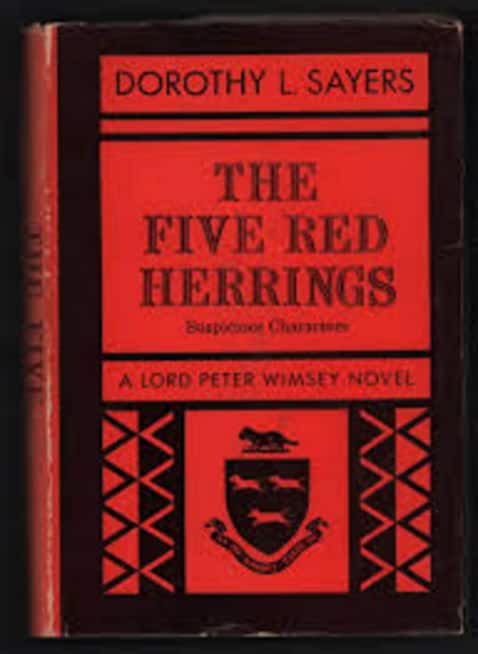
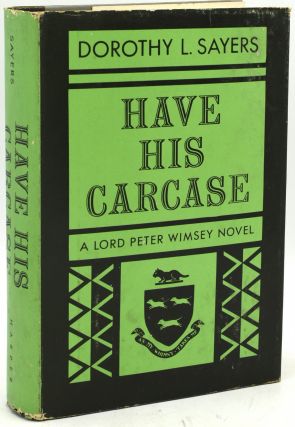
The Five Red Herrings and Have His Carcase by Dorothy L. Sayers

On June 13, Sayers’ birthday, I wrote about starting to read her novels with Gaudy Night in 1971. My lifetime appreciation of her work has expanded to a rereading of all 11 novels almost every year. Now, during this pandemic shut-down time, I started again a few months ago. Sayers is comfort reading for me!

I made my way through the first five: Whose Body?, Clouds of Witness, Unnatural Death, The Unpleasantness at the Bellona Club, and Strong Poison. Then I came to the place on the list that I don’t find particularly comforting. Without a doubt, The Five Red Herrings is my least favorite of the novels. Sayers and her husband went to Scotland every year, staying in Galloway in Gatehouse-of-Fleet and Kirkcudbright. Their landlord kept urging Sayers to set one of her books in that most lovely area, and The Five Red Herrings is her response. The area is known for its artists, and when one is found dead in a creek not far from his unfinished painting, Lord Peter and the rest start checking it out. This is a complicated story of missed opportunities, shady dealings, missing persons, and way too many railroad timetables!

My husband and I visited this area a couple years ago and checked out all the Sayers’ sites. I thought perhaps my acquaintance with the towns and geography would help my appreciation of the novel. I did enjoy seeing it all again through Sayers’ writing, but the novel really didn’t improve very much.

Have His Carcase is just a step up from The Five Red Herrings in my thinking. This is the second Harriet Vane novel. Harriet is escaping from the notoriety of her trial for murder by doing a walk on England’s southwest coast. She does come upon a body, Peter trundles down from London to help, and the story continues. This novel also contains way too many (IMHO) railway timetables and other schedule issues. But I think, with these novels, Sayers got that bug out, showing herself, her readers, and no doubt the members of The Detection Club that she was just as good as any other crime writer at developing a timetable-dependent mystery. But they are both worth reading (in order with the others) and totally enjoyable despite the schedules!

[N.B.: Books are still totally available. The pictures are from the Harper and Rowe editions published in the US in the 1970’s. It’s the set I own.]

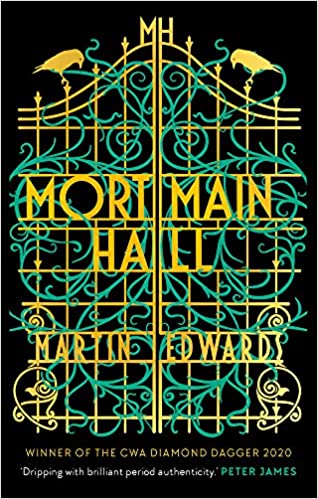
Mortmain Hall by Martin Edwards

As noted in the previous piece about Gallows Court I did indeed get the second book, Mortmain Hall. Martin Edwards, who is the acknowledged expert in all things Golden Age mysteries and the crime novel genre in general, sets up a fascinating story around murderers who have apparently gotten away with their crimes.

His knowledge of England, especially London, in the first third of the twentieth century really gives this story its color and feel. I rather enjoyed being brought right into 1930 and following Jacob Flint, Rachel Savernake, and the Truemans around as they untangle this particularly complicated plot. He nicely brings in the characters introduced in Gallows Court so that it seems as though you just turned the next page from the end of that novel. So yes, you should read Gallows Court before you begin Mortmain Hall.

I won’t say more about Mortmain Hall here, as even the tiniest revelation could spoil the whole adventure! But I did find this one a bit more satisfactory in terms of following all the clues to the resolution. At the end, Edwards adds information from his research about the Golden Age by inserting “clue finders” into the novel, and then listing them and explaining about it in an appendix. A really fun thing to learn!

Gallows Court by Martin Edwards

I learned about this book from a recommendation in a recent Dorothy L. Sayers Society newsletter. It sounded intriguing, so I decided to get a copy a try it out. As it’s set in London in 1930, I at least knew that the time and location would totally appeal to me.

The author, Martin Edwards, is a highly regarded writer and student of the Golden Age mysteries. He is also currently president of the Detection Club, that august group started in 1930 that included G. K. Chesterton as its first president, and listed Dorothy L. Sayers, Agatha Christie, and Margery Allingham as members. (Sayers also served as president.) Mr. Edwards has written a very interesting book indeed. The plot has more twists and turns than a normal plot should have, but it keeps you interested and keeps you guessing. It’s the kind of story where the solutions sort of sneak up on you and you say, “Aha! I knew it all along!” But then there is at least one item of complete surprise.

The story follows a young reporter named Jacob Flint who writes for The Clarion newspaper and who covers a story that also complicates and endangers his own life. The main character is a wealthy young woman named Rachel Savernake. Again, the story is so convoluted (in the best way) that it would be too revealing to say much more about it. One small warning: some of the criminal acts are pretty unpleasant, but Edwards does a good job of making them totally readable, even for the squeamish.

I really liked this book and I have ordered the second one even though it’s only available in hardcover! And, for the record, Rachel Savernake mentions reading Dorothy L. Sayers, and one of the characters makes a brief stop in Mecklenburgh Square.

Gallows Court is available on Kindle and in paper. Do find a copy to read it.

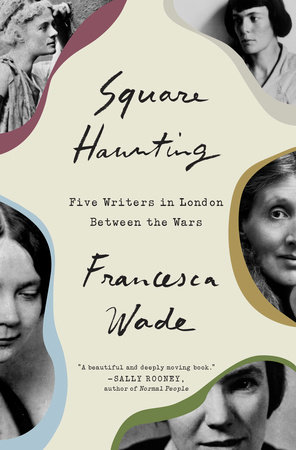
Square Haunting: Five Writers in London Between the Wars by Francesca Wade

This is about Dorothy L. Sayers. It is also about Hilda Doolittle (H. D.), Jane Harrison, Eileen Power, and Virginia Woolf. It’s about a place – Mecklenburgh Square in London – and about a time – various years from the 1920s to the 1940s. This is about a remarkable and amazing book that links these often disparate authors with their history, and how each of them shaped the world and work of women for all who followed.

Francesca Wade began this work when she was walking through the current Mecklenburgh Square and saw only one of the famous blue plaques that identify the former residence of an important person. Hilda Doolitte – H. D. – was the only one of these women that were so identified. But Wade knew the other four had also lived in this Square, and she set out to write this story that links them together not only by geography but also by thinking and writing.

H.D. lived at #44 from 1916-1918. Dorothy L. Sayers also lived at #44, from December 1920-December 1921. The historian and archaeologist Jane Harrison lived at #11 from 1926-1928. Economist Eileen Power lived there the longest, at #20 from 1922-1940. Virginia Woolf moved to #37 at the beginning of World War II – August 1939 until her death in October 1940. For each woman, the time living in this place was significant in shaping their life and thought and gave them freedom and context to both begin and continue their work.

For Sayers, it was a time when her personal life was in some turmoil. She was in a relationship with John Cournos, and her sense of that was different in many ways than his, but she continued to be with him. It’s interesting how, in this book, the same people show up in all kinds of relationships with the others, and John Cournos is one of those who seems to be everywhere! Sayers was just 27 when she lived in Mecklenburgh Square, but she loved the place and was very sad when her landlady asked all the tenants to leave in 1921.

One of my attractions to Sayers’ work over the years has been trying to get a better sense of this time between the wars, and of being fascinated with its implications for women. I believe women in the rest of the West owe a great deal to the British women of this time. Their writing has left us a legacy and a foundation that has allowed women everywhere to use their gifts to the fullest extent and to carve out a place in our male-dominant culture that eventually changes it. Wade effectively uses Virginia Woolf’s A Room of One’s Own as a conceit throughout to show how important a place to be and the freedom to be there was for these women.

Toward the end of the book, Wade talks about a book of “common history” that Woolf was writing, a book that borrowed much from the writing of other inhabitants of the Square. Woolf wanted a history that didn’t value war and victory, but “emphasize(d) peace and community over authority and power.” Wade writes, “Not only was Woolf conjuring for readers a different sort of past, founded on the values of peace and cooperation so sorely needed in the present, but she was also placing herself in a tradition of Mecklenburgh Square women resetting the boundaries of history.”

Read Square Haunting and place yourself in Mecklenburgh Square with these remarkable women.

Square Haunting

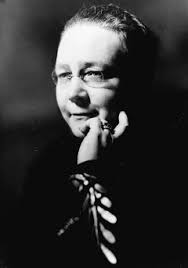
Dorothy L. Sayers

Dorothy L Sayers

Today, June 13, is the birthday of Dorothy L. Sayers (June 13, 1893-December 17, 1957). The first book I read was Gaudy Night. In 1971 picked it up in off a table at a friend’s house and became a life-time devoted fan of Sayers and all her writing. Gaudy Night is the 10th book in her very famous series of mysteries featuring Lord Peter Wimsey and also Harriet Vane. In many ways, I’m glad I read Gaudy Night first as it gave me such insight into Sayers and her thinking as well as the ways in which women struggled for academic and literary recognition at the beginning of the 20th century. The year after I read Gaudy Night I started seminary and, like Sayers, I was one of a very few women there. Sayers was also a theologian and a really exceptional one. Along with her detective fiction, she wrote essays, plays, and poetry. I’ve wondered when in this blog I would start writing about Sayers. I think the time has come.

I’ve recommended her novels for decades now to many, many people. Even though I started late in the list, they do need to be read in order, especially the four featuring Harriet Vane. Here’s the list:

Whose Body? (1923)
Clouds of Witness (1926)
Unnatural Death (1927)
The Unpleasantness at the Bellona Club (1928)
Strong Poison (1930) (Harriet Vane #1)
The Five Red Herrings (1931)
Have His Carcase (1932) (Harriet Vane #2)
Murder Must Advertise (1933)
The Nine Tailors (1934)
Gaudy Night (1935) (Harriet Vane #3)
Busman’s Honeymoon (1937) (Harriet Vane #4)

I’m a member of the Dorothy L. Sayers Society, and their website is a great place to learn more about her: www.sayers.org.uk

Happy Birthday, Dorothy!

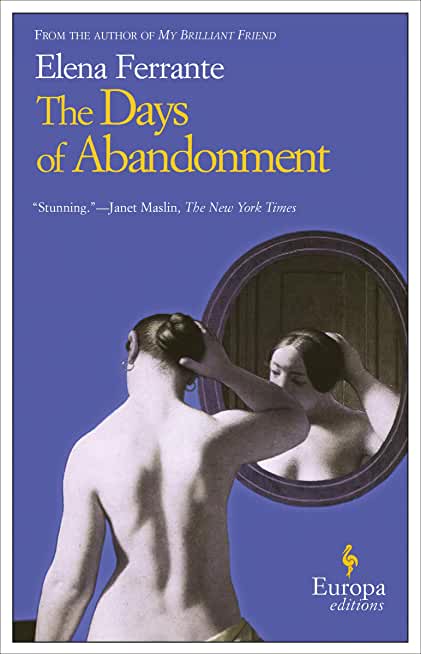
Elena Ferrante: The Days of Abandonment

I have had this book on my shelf for quite a while. Elena Ferrante is an interesting and mysterious author. She hides in a shadow of anonymity, apparently not wanting pictures or details of who she is to get in the way of the story she is telling. Of course, people keep trying to get her to show up and let the world know who she is. A while ago there was a bit of a flap over the fact that she might indeed be a man. So as I was taking in all that I was a bit put off about actually reading her books.

But then a friend told me that she was reading Ferrante’s Neapolitan novels and could not get enough of her writing. So that encouraged me to pull The Days of Abandonment off the shelf. It’s a short book, less than 200 pages, but it is really intense. The story of a woman sinking into despair after her husband leaves her is accentuated with long, furious sentences. The description of her thinking and her actions gives the reader a real sense of life turned over into a never-ending eddy of swirling emotions. It’s a very hard book to pick up and a very hard book to put down. As the narrative continued I had this growing dread, increasingly thinking that this was not going to end well. Fortunately, it does end and it does not end badly. Phew!

The writing is amazing, so I assume it is so in Italian as well. Applause here must go to the translator who gives us Ferrante’s brilliance in equally brilliant English. I will look forward (I think) to reading more of her writing especially the Neapolitan novels: My Brilliant Friend, The Story of a New Name, Those Who Leave and Those Who Stay, and The Story of the Lost Child.

The Days of Abandonment


Books and Paper

I really enjoy the work of the amazing paper company, Cambridge Imprint. You can look at all their beautiful projects on their website: www.cambridgeimprint.co.uk.They also do a wonderful blog which you can access there. A recent post talked about the writers and artists retreat in Sussex called Charleston Farmhouse. It was the retreat of the early twentieth century Bloomsbury Group of writers and artists. Cambridge Imprint has a whole set of products designed from Charleston Farmhouse, and they wanted to call attention to this place and its financial need in the pandemic. You can find out more at www.charleston.org.uk.

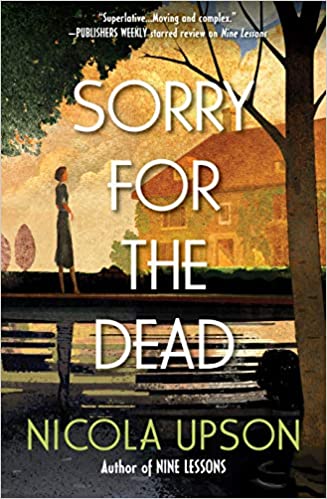
Immediately after reading the blog post, the next book I picked up to read (well, opened my Kindle to read) was Nicola Upson’s latest Josephine Tey novel, Sorry for the Dead. And it is set at Charleston Farmhouse! One character that appears briefly is the ballerina Lydia Lopokova. (Upson does a wonderful job of incorporating real people and places in her novels.) Lopokova was the wife of the King’s College, Cambridge, economist John Maynard Keynes. When I was at the King’s College Archive Center in March 2019, another woman in the room was researching – wait for it – Lydia Lopokova’s letters!

Upson’s latest novel is as good as the others. I appreciate her skill at not only bringing in the real places, facts, and people of the early 20th century but also inviting us into the thoughts and feelings of people finding their way in new relationships. The plot in this book is quite intriguing, and the conclusion was rather surprising to me, although you can trace it all back.

I totally recommend Nicola Upson’s novels featuring a fictionalized Josephine Tey. Tey, writing in the early part of the 20th century, was most famous for her mystery The Daughter of Time. Upson has done a great job of bringing us Josephine Tey as a very sympathetic character as she makes her way through all the changes and the wars of the time. You’ll also meet familiar people like Alfred Hitchcock!

Here are Upson’s books in order (should be read that way) with a picture of the latest.

An Expert in Murder (2008)
Angel with Two Faces (2009)
Two for Sorrows (2011)
Fear in the Sunlight (2012)
The Death of Lucy Kyte (2014)
London Rain (2016)
Nine Lessons (2017)
Sorry for the Dead (2019)


51hO3DP53uL._SX325_BO1,204,203,200_