G. K. Chesterton’s Father Brown

I’m sure many of you enjoy the now many seasons of the BBC’s adaptation of G.K. Chesterton’s Father Brown stories. Gilbert Keith Chesterton (1874-1936) was an interesting person who was also an articulate Christian apologist in the early 20th century. Two of his books about Christian theology, Orthodoxy and The Everlasting Man are still regarded as significant in understanding the core principles of Christian faith. Chesterton himself, as he delved more deeply into it all, eventually moved from the Church of England to Roman Catholicism. It is thought that the parish priest the Rt Rev. Msgr. John O’Connor, who was significant in Chesterton’s shift in 1922, was the priest upon whom Father Brown was modeled.

Chesterton really enjoyed writing about this priest who could see clearly the good and evil in people and circumstance, and so sort out the situations. If you’ve watched the television series, you know how closely Father Brown observes everyone and everything. The humor in these stories, and the excellent mystery plots are all part of Chesterton’s broad view of life and the world.

He was the first president of The Detection Club, a group formed in 1930 that included Agatha Christie, Marjorie Allingham, and Dorothy L. Sayers, to name a few. Chesterton, who was a very large man, wore flowing robes and had new initiates place their hand on a skull and recite this oath: Do you promise that your detectives shall well and truly detect the crimes presented to them using those wits which it may please you to bestow upon them and not placing reliance on nor making use of Divine Revelation, Feminine Intuition, Mumbo Jumbo, Jiggery-Pokery, Coincidence, or Act of God? Despite the tomfoolery, these authors were deadly serious about their craft, and they did it very well.

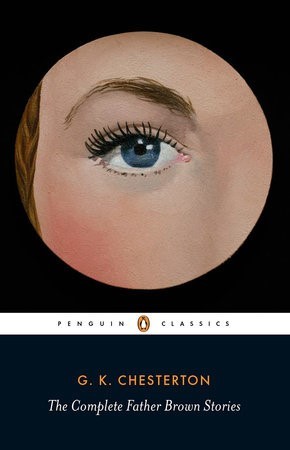
Reading the Father Brown stories is a real treat, and would certainly be an anecdote to the current world crisis. There were five volumes and many stories. Penguin still publishes a collection of all the stories.
Anthony Trollope

Another well-remembered read from my bookshelves are the novels of Anthony Trollope (1815-1882). Besides being a prolific writer – novels, essays, letters – he was also a civil servant. His perspective on English manners allowed him to gently critique his society and at the same time keep them laughing.

The Barsetshire Chronicles are particularly enjoyable, focused on the created county of Barset and centered on its cathedral and clergy. The model is probably Salisbury and, if you have traveled to that wonderful cathedral, you’ll certainly see the parallels in Trollope’s descriptions.

The BBC did a wonderful television series, The Barchester Chronicles in 1982, which was also broadcast on PBS. I believe I started reading Trollope after watching this series. They are delightful books and great fun to read. The Barchester Chronicles is still available. You can buy the DVDs or rent them on Netflix. There also appear to be a few YouTube renditions. When I was looking for all these, I also saw that there are some more productions based on Trollope’s books, including some Barsetshire reprises.

Here is a New Yorker article from 2015 about what is clearly a Trollope trend: https://www.newyorker.com/magazine/2015/05/04/trollope-trending

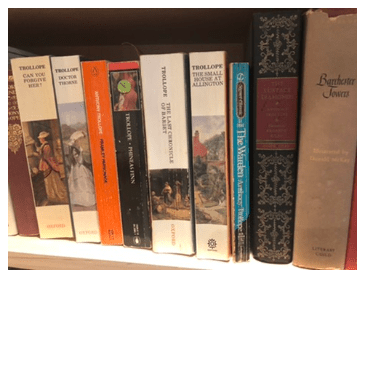
These are the 6 Barsetshire Chronicles in order. Following is a photograph of my Trollope shelf.

  • The Warden (1855)
  • Barchester Towers (1857)
  • Doctor Thorne (1858)
  • Framley Parsonage (1861)
  • The Small House at Allington (1864)
  • The Last Chronicle of Barset (1867

Ongoing Series

Today’s I received two new ebooks I had ordered a few months ago when their publication dates were announced. One is the latest Simon Serrailler novel from Susan Hill, The Benefits of Hindsight. The other is the new Julia Spencer-Fleming book about the Episcopal priest Clare Fergusson, Hid from Our Eyes. Both of these are great serials set in England and New England. The estimable Susan Hill gives us a real life erudite and human detective, and Spencer-Fleming does a good job of describing the real daily life of of a priest. I love both of these series, and am happy to continue to get to know these wonderful characters, Reading novels that follow on one another with excellent character development is lots of fun, and you feel like you really get into the place and the people.

Iris Murdoch

I did manage to finish the book reorganization yesterday, so now I’m continuing to highlight old friends I encountered in the process.

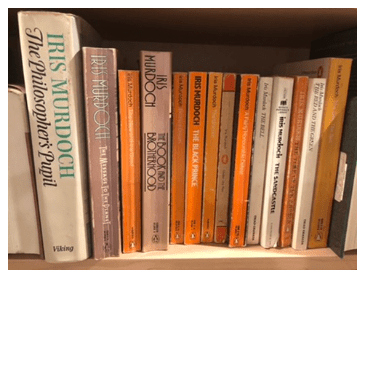
Iris Murdoch (1919 – 1999) was an English philosopher and novelist. Her area of philosophy was ethics, with a particular emphasis on virtue. Her many novels focused on the power and effect of love and relationship. She once wrote: Love is the extremely difficult realisation that something other than oneself is real. Love, and so art and morals, is the discovery of reality. [From “The Sublime and the Good”, in the Chicago Review, Vol. 13 Issue 3 (Autumn 1959) p. 51.]

One thing that has always impressed about Murdoch’s novels, which are complex but very enjoyable, is her amazing ability to write pages and pages of dialogue without any name reference, and you always know who is talking. My favorites among her novels are A Word Child, The Sea, the Sea (for which she won the Booker Prize), and The Black Prince. There are 26 novels, the last being Jackson’s Dilemma which she wrote when she was in the early stages of Alzheimer’s. There is also a lovely film about her journey through that disease with her husband, John Bayley, called Iris.

Here is an excellent recent article about her fiction: https://www.nytimes.com/2019/01/03/books/in-praise-of-iris-murdoch.html

Iris Murdoch on my bookshelf.

Virginia Woolf

In 1972 I traveled to England for the first time. It was Spring, and we were there over an early Easter – April 2. I was with a couple different groups of friends, but I also spent a wonderful week on my own in Oxford. It was toward the end of the trip – April into May – and my meager funds were running low. I found a great B&B – Mrs. Lawfull’s in Pembroke St. – for £1 a night. The English Bach Festival was happening, and every day I had my breakfast, went to the Festival box office and bough very cheap tickets for two concerts, one in the afternoon, one in the evening. Then I went to Blackwell’s Bookshop and bought a Penguin edition of one of Virginia Woolf’s novels. I spent the rest of the day going to the concerts, reading my book, having tea (my other meal of the day) at The Nosebag and then going back to Mrs. Lawfull’s and starting all over again. It was a terrific week that I’ve never forgotten.

Virginia Woolf was just the right read for this 24 year-old on an adventure. Her famous A Room of One’s Own set the exact mood for me as I thought of my own future and how one can determine that on one’s own. All of us who became adults in the 1960′ and 1970’s were given a rich and inviting scope of ideas and opportunities. Reading Woolf every day for a week was a grand way to immerse myself in England, in ideas, in learning about life.

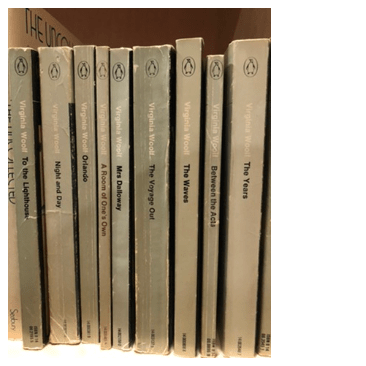
My favorite Woolf novels, after the long essay that is A Room of One’s Own are To the Lighthouse, The Voyage Out, and Mrs. Dalloway. Here are all the novels I read that week:

The Firelight Girls by Kaya McLaren

I spend a lot of time in archives these days. My husband is the archivist for Holden Village, a remote mountain retreat in the North Cascades of Washington State. We go there two or three times a year to work, and he puts in about 20 hours each week on that collection when we’re at home. For a project of mine I recently spent five days in two visits in the Archive Center at King’s College, Cambridge. And last summer, for the same project, I spent a week in the ELCA (Evangelical Lutheran Church in America) Archives in Chicago.

But one of my favorite archive activities is meeting almost once a month with some very dedicated volunteers working with the archives at Camp Sealth on Vashon Island. Camp Sealth is a special and important place for all of us. Through our time there as campers and on staff (for me, 8 years as a camper and 5 summers on staff) and in the Camp Fire program, we were shaped, taught, challenged, and given remarkably rich opportunities as girls and young women. The friendships we forged there are lifelong treasures. As we work with the Sealth and Seattle Camp Fire memorabilia, we regularly give thanks for every part of what we experienced. And we laugh a lot!

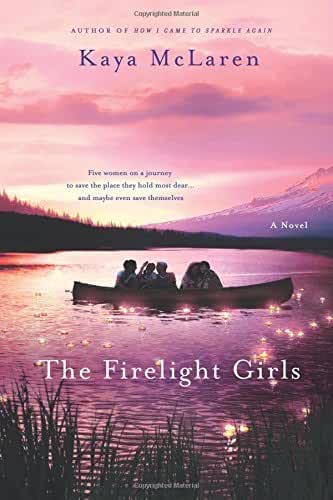
The Firelight Girls by Kaya McLaren is a novel that relates experiences much like ours. The camp is Zanika on Lake Wenatchee. The book, dedicated to the author’s friends from camp, tells the story of women old and young and their deep attachments to the place that formed them and gave them a sense of home and worth. The plot is about a few of the former campers and staff gathering one last time before the property is sold. The author goes back and forth with each character from her younger days to 2012, the time of the novel. These old friends also welcome an essentially abandoned teenager into their relationships and give her a new sense of purpose and value.

As I read this book, I identified a lot with the descriptions of their activities and reflections. Many of the rituals they loved and the songs they sang were the same as Sealth. There’s another story here, as Camp Sealth, 100 years old this year, is the mother camp for Camp Fire camps all over the Pacific Northwest. Whether this kind of experience is in your history or not, The Firelight Girls is an enjoyable and worthwhile read. When several of my Sealth friends have finished reading it, we’re going to have our own book discussion and, once again, laugh and give thanks for our heritage.

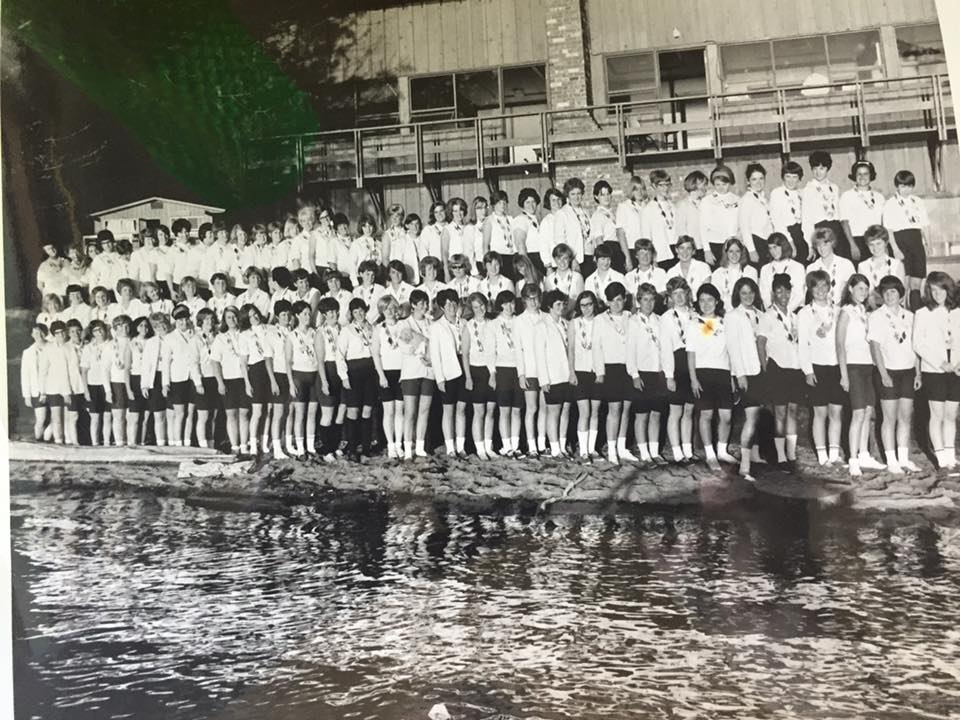
Below the book cover is a picture of the Sealth staff of 1966.

Camp Sealth Staff, 1966

Books and Dust

One of my enforced stay-at-home projects is reorganizing our bookshelves of fiction and mysteries. This covers two almost full walls in our downstairs area. The books haven’t been moved at all, except for adding and removing for reading purposes, for years.

I started last week by shifting three shelves of music books, mostly hymnals and similar items to their new home on a free-standing shelf. Then I started on the rest. Moving the music had freed up three shelves, so I started moving my alphabetized fiction forward. I dusted the shelves as they became empty. I soon learned that my sinuses didn’t like the dust at all, so when I re-engage this process I’ll wear a mask! Masks protect us these days from many things.

Although I have culled these books from time to time, most of them are books I read and enjoyed, and some are yet to be read. It has been just delightful to pick up a book and say, “Oh, that is really good!” There are also those collections of books from a beloved author, or a series I especially enjoyed. So I thought that, during this time, I’ll write about my new discoveries of my old books, read and unread.

Barbara Pym (1913-1980), wrote charming and beautifully written novels about life in England in the mid twentieth century. These are great reads for a such a time as this, as her characters often reflect on how their lives were changed by World War II.

If you’ve never read Pym (named by one reviewer as the most underrated novelist of the 20th century) Excellent Women is a good place to start. It’s the book that gained her some notoriety. But they are all delightful.

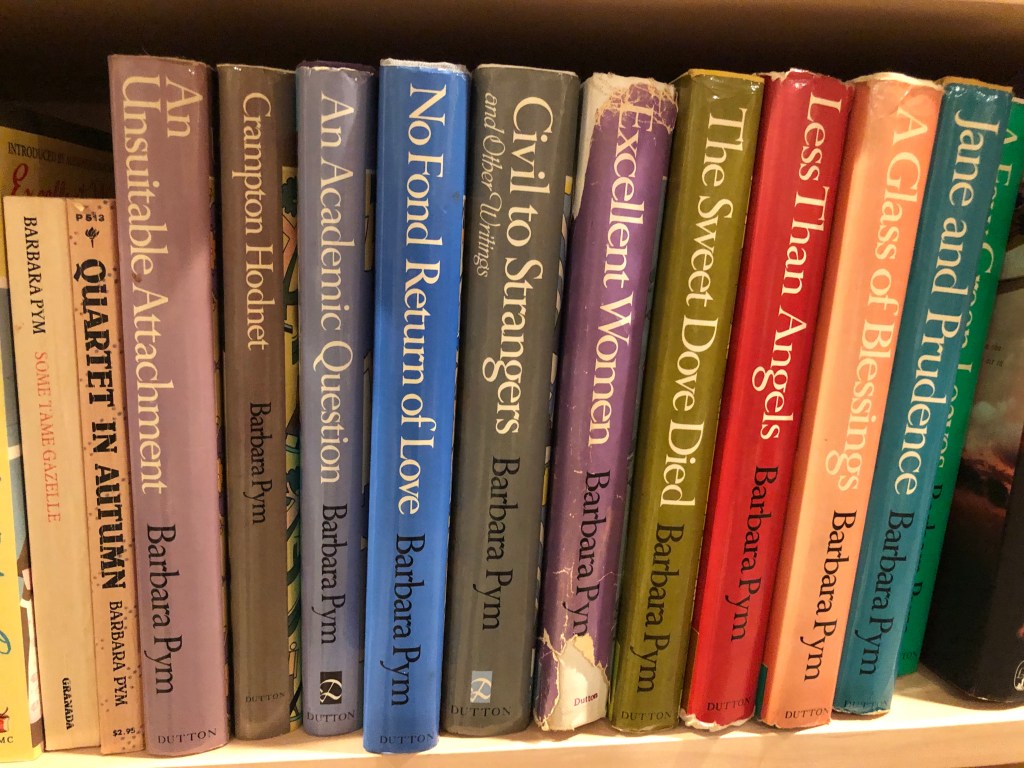
Here’s the list, with my “Pym” shelf pictured below:

Some Tame Gazelle (1950)
Excellent Women (1952)
Jane and Prudence (1953)
Less than Angels (1955)
A Glass of Blessings (1958)
No Fond Return of Love (1961)
Quartet in Autumn (1977)
The Sweet Dove Died (1978)
A Few Green Leaves (1980)
An Unsuitable Attachment (written 1963; published posthumously, 1982)
Crampton Hodnet
(completed circa 1940, published posthumously, 1985)
An Academic Question (written 1970–72; published posthumously, 1986)
Civil to Strangers (written 1936; published posthumously, 1987)

Books about Houses While Housebound

In February and March my book group read books about houses. The first, The Yellow House by Sarah Broom is about one family’s connection to a house in East New Orleans. Broom uses the house as the protagonist, almost a narrator, in a complicated, intriguing, and often sad story of her family. The book is in the style of a memoir, but it also chronicles not only this family, but also an entire neighborhood, including the devastation of Hurricane Katrina. This is a fascinating book, and the writing is wonderful. It won the 2019 National Book Award.

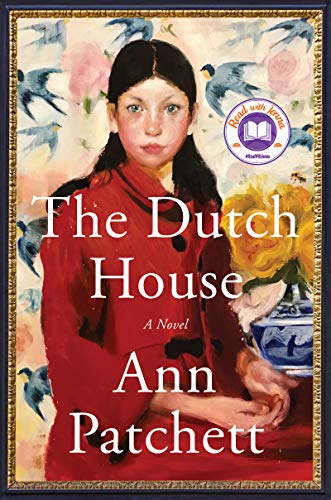
The March book was the latest by Ann Patchett, The Dutch House. This novel, not unlike the memoir by Broom, has the house as the central character. Patchett’s tale of family dysfunction and siblings trying to make their way in the world is a poignant, sometimes funny, and most often sad account. The house itself, bought by the family’s father with all the furnishings included, has its own story of the Dutch family who first lived there. Their portraits hang over the new inhabitants as viewers watching this family’s story unfold. Ann Patchett is a wonderful writer, evoking all the depth and promise of the people attached to this house through the whole narrative. Another perfect read in this time when we are all becoming very attached to our houses!

Deep River

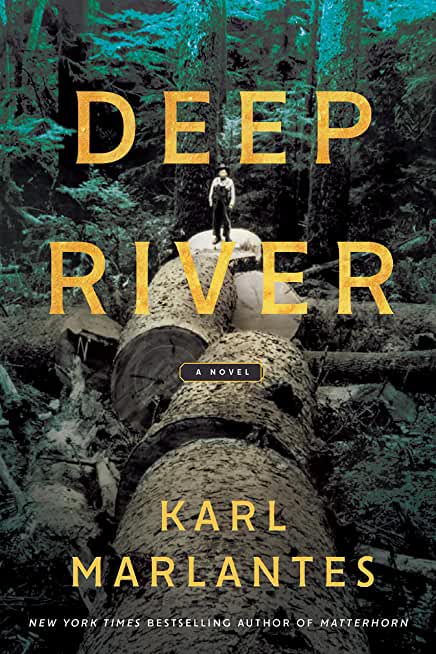
This 717 page book is a wonderful read. The story is of the Finnish immigrants (and some Swedes and Norwegians) who settled in southwestern Washington State at the beginning of the 20th century. It begins in Finland, and reading about the conditions in Russian-ruled Finland is both horrifying and illuminating.

Marlantes, who grew up in this area, does a spectacular job of writing about work. His descriptions of logging are really amazing. I thought I was standing in the woods watching the choker set the equipment and standing with the loggers as we all watched and heard the tree fall. And it isn’t just logging. People came to fish and to support both industries.

The loggers had very difficult working conditions with almost no relief or free time. The dangers were immense, and almost every accident meant a death. A core part of the novel is the description of the attempts to organize the workers to get better conditions and better pay. This is the era of the Wobblies – The IWW: International Workers of the World. Socialism was their structure, and with the accusations of being communists, they had great difficulty making headway. It was interesting to note that many of the immigrants had already been part of the IWW in Finland. The main character, Aino, is a woman of high ideals. She works tirelessly for others at the expense of her own life and relationships, and has a naïveté that is both endearing to those who know her but that gets in the way of her effectiveness.

This could be a novel just about union organizing and the Wobblies and harsh working conditions, but it is really about every aspect of how these immigrants literally carved out a life in the forest and from the river and sea. Marlantes details the struggles between workers and mill and processing owners, and nicely shows how they needed to come together for the benefit of all, and about how the cultural, national, and international circumstances effected all of it.

This was the best book I read in 2019 and I cannot recommend it more highly.

Little Women

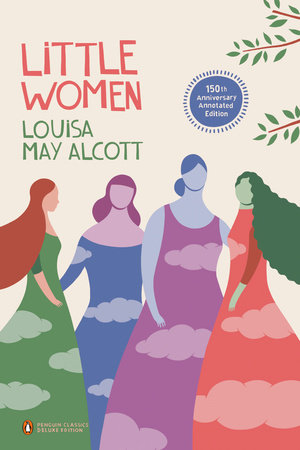
My book group decided to read Little Women in December, and we’ll go together to see the movie on January 6. We’re all in our 60’s and 70’s , so the book is familiar and dear in so many ways. A couple people still had the editions they read when they were young girls. I couldn’t find mine, so I bought a 150th anniversary edition in paperback. I highly recommend it. It has an excellent forward by the singer Patti Smith about the importance of this book in her own maturing. It has excellent notes and comments, and a very helpful glossary to get you through Alcott’s late 19th century turns of phrase and word uses.

We all agreed that this is wonderful book. It never diminishes its beloved characters as “just girls” or thinks them unusual in their pursuits. We all had our identifier – Jo is mine – and each of us could well describe why that character gave us particular hope and courage when we were young. We were, on this reading, completely impressed with the way Alcott described the cultural and relational challenges of the time. And we agreed that not having everything work as perfectly as we might wish is exactly the perfect thing to do. This is a novel is about real people in real situations.

Do read Little Women for the first or the tenth time. See the movie – I understand it’s perfect in every regard.

Here is the edition I recommend. It was published in 2012 by Penguin Random House.