James Runcie’s Grantchester Novels

I would guess many of you have seen the television series Grantchester. It follows the daily life – and occasional sleuthing – of local vicar Sidney Chambers. Set in the 1950’s, the characters lives are set against the aftermath of World War II. Grantchester is a real-life picturesque village just a tiny bit southwest of Cambridge, England. Chambers, with his growing friendship with Detective Inspector Geordie Keating, takes on matters of life, love, death, and God in good style.

The television series is based on the Grantchester novels by James Runcie. Runcie is the son of Robert Runcie who was the Archbishop of Canterbury from 1980-1991, so he is well-acquainted with the strengths and vicissitudes of the Church of England and its local representatives. He does an excellent job of setting out the daily routine of the parish priest while at the same time letting us in on Sidney’s struggles and joys. Here’s the list:
Sidney Chambers and The Shadow of Death (2012), Sidney Chambers and The Perils of the Night (2013), Sidney Chambers and The Problem of Evil (2014), Sidney Chambers and The Forgiveness of Sins (2015), Sidney Chambers and The Dangers of Temptation (2016), Sidney Chambers and The Persistence of Love (2017)

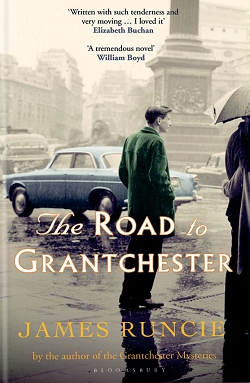
The newest is The Road to Grantchester, which is a prequel to the others. It just came out recently in England and I was happy to purchase a copy when I was in Cambridge at the end of March. This is a powerful story about the effects of war on individuals and relationships. From this we learn a lot about why Sidney’s memories from the war are so troubling (as presented in the other books) and also about his intense relationship with Amanda Kendall. I found Runcie’s descriptions of the soldiers in World War II to be particularly powerful. It will be available in the US on May 7.

I’m torn about recommending reading the prequel first. I don’t think you should. Dive into the others first – in order, of course! – and then pick up this book so you can pick up the pieces Sidney Chambers left behind in the other stories. These are very good reads!
Tana French

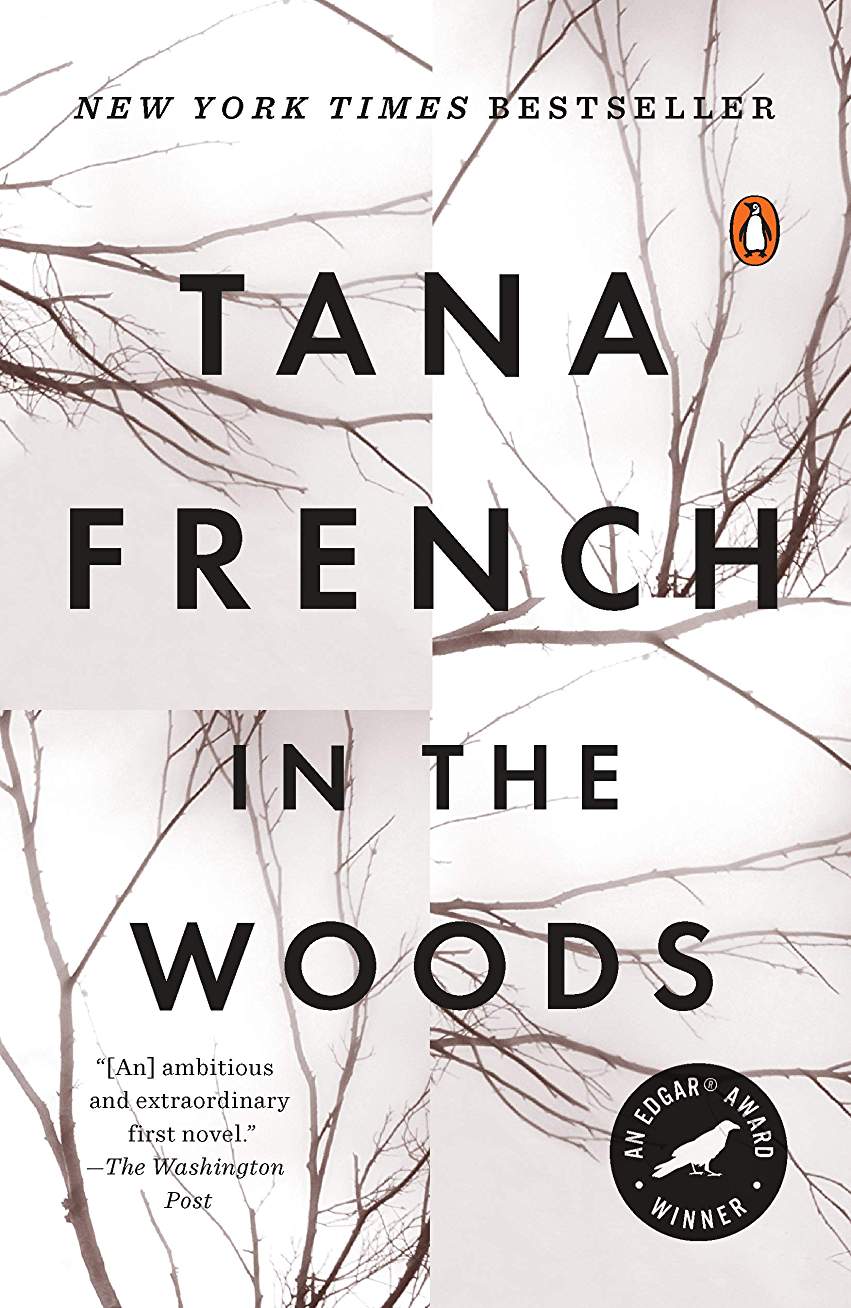
A friend recommended the crime/mystery novels of Tana French. I’ve read two so far – In the Woods, and The Likeness. I’ve enjoyed them both, although I found them both rather hard to start. Each one begins with a sort of prologue that gives hints to the rest of the story, but I found each prologue less than helpful. Neither made me want to continue reading the book! Because I totally trust the recommendations of my friend, I kept going and was rewarded both times with wonderfully complex and profound stories. And the writing is really good.

The books follow the Dublin Murder Squad, and I like the way she presents the detectives and others in some depth. I like most of the characters and, when they screw up (which they do) I cringe right along with everyone else in the story who is feeling the effects of the errors in judgment.

In the Woods is a particularly frightening story about families and loss, told in such a way that we’re sure we know these people. The Likeness begins with the main detective seeing a body that looks exactly like her. Part of this story requires a little suspension of disbelief, I think, but it’s still gripping and engaging.

These are big, dense books, so they’ll keep you occupied. I’m looking forward to reading them all. And my friend loaned them all to me! Thanks, Pamela!

Here’s the list: In the Woods, The Likeness, Faithful Place, Broken Harbour, The Secret Place, and The Trespasser.


This Is How It Always Is

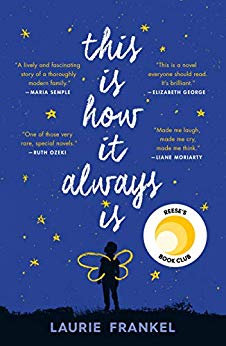
Among the many great things about Laurie Frankel’s novel This Is How It Always Is are the chapter titles. Each one makes you wonder how the story will unfold. From the first “Once Upon a Time Claude Was Born,” each title gives a little clue as the next part of the story. My favorite is “Annus Mirabilis.” The chapter begins like this:

Penn found himself thinking a lot about John Dryden. Dryden was one those poets you read in graduate school but not in life. No one’s email signature was a Dryden quote. Anyone whose email signature was a Dryden quote hadn’t read the rest of the long, dry verse it came from. But Dryden had a poem: “Annus Mirabilis.” The year of wonders. It was a poem about England in 1666. England in 1666 was decidedly not having a year of wonders. England in 1666 had war, plague, and a three-day fire that destroyed most of London, plus Isaac Newton invented calculus, thereby making the lives of mathematically ungifted students immeasurably worse forever. But Dryden’s poem was about what a great year it was because it could have been worse. They lived to see 1667 after all. At least, everyone who read the poem did. [From This Is How It Always Is by Laurie Frankel, p 163]

This is a story about a family’s experience with their transgender son/daughter. Their joys, sorrows, struggles, and conversations are those of any family working through any particular issue. The gift of this novel is how it shows the care, love, and ease with which even the most unusual and seemingly difficult matters can be lived.

This is a funny, poignant, and powerful book, and I highly recommend it. Frankel takes this au courant topic and makes it part of all of our daily lives and culture.

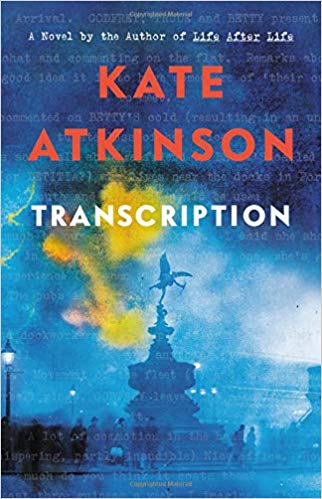
Kate Atkinson’s Transcription

I read this book a couple weeks ago and enjoyed it very much. I hadn’t read Atkinson before, but I think I’ll take a look at Behind the Scenes at the Museum soon.

Transcription is about a young woman who, like so many others in World War II in England, gets hired to do war work. For her it was transcribing the conversations of suspected spies who meet in a room that has been tapped for sound. She and others are in the adjoining apartment, and a real feature of the plot is the interesting interactions on the street of both sets of people, as well as the things they both know and guess about each other. The story gives a good perspective on the conditions in London during the war, and the many different things people stepped up to do for the “war effort.”

Juliet Armstrong, the protagonist, is a seemingly normal young woman for the time, trying different things and caught up by the flattery of others. Her own story – bought up by a single mother who has died at the beginning of this novel – adds to the background here. I never quite grasped who Juliet is as I read the book. She seemed rather ephemeral, and some of her actions didn’t quite add up. Even when I got to the very surprising end (no spoilers here!) she just didn’t quite make sense to me.

Even with that, the book is well worth reading, especially if you’re interested in England during World War II. I think if you like the TV series Foyle’s War, you’ll enjoy this novel.

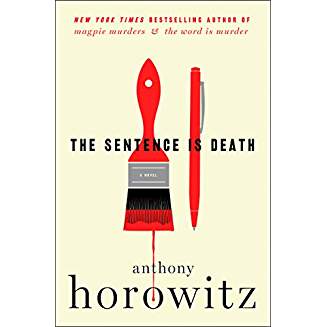
The Sentence Is Death

I was a little uncertain about Anthony Horowitz’ last detective novel featuring himself as one of the characters. (See post on The Word Is Murder.) I picked up the second installment – The Sentence Is Death – when I was in London in December. This book totally convinced me.

Once again Horowitz is following the consulting detective Daniel Hawthorne as he assists the police in solving a murder or two. This murder happens in London’s wealthy Hampstead neighborhood, and is an intriguing story of friendship, betrayal, and the sport of caving. But in these two books it is the relationship between Hawthorne and Horowitz that makes the story. Interspersing the invented story with his real life, Horowitz gives us an interesting glimpse into the world of the writer. With the occasional peeks into his TV work (the filming of Season 7 of Foyle’s War is part of the plot here) and into his own life and writing, we’re taken on an enjoyable journey.

I think there will probably be a third. We ‘ve had “word” and “sentence.” Will the next title be “paragraph” or “page,” and will Hawthorne and Horowitz actually work out their differences?

The Sentence Is Death will be available in the US on May 28, 2019.


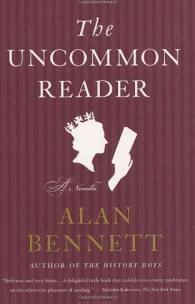
The Uncommon Reader

Alan Bennett has written a delightful little book – a novella – about what happens when an assumed non-reading person discovers books. In this case, the assumed non-reader is Queen Elizabeth II. The story unfolds when she is walking her Corgis on the ground of Buckingham Palace and they take her to an area unfamiliar to her. (It is a big place.) There is a bookmobile, and a young man is coming out of the bus with books in hand. The Queen (who is curious) asks what he is doing and he gives her a book to read.

She reads the book and the story goes on from there. She makes the young man part of her household staff and eagerly awaits his next offerings. There are twists and turns galore, and the Queen reads merrily on. Bennett does a nice job of describing how she is changed by both the act of reading and the content of the books. One of the most delightful sections is when he talks about her conferring knighthoods – OBEs and the like – on the authors in the latest honors list, and several are astonished when she asks them about the latest book of theirs which she has read. And she tells them what she thinks of it!

The book comes to a rather surprising end, but it is as delightful as the rest of the story. Do read The Uncommon Reader.

The Uncommon Reader

Ann Cleeves’ Shetland Mysteries

I recently read the last two of Ann Cleeves Shetland mysteries, featuring detective Jimmy Perez. Cleeves is better known for her series featuring the cranky Vera Stanhope, but these Shetland books are equally fine. (There’s a TV series for these as well.) It’s fun to think about the Shetland Islands in January. They’ve just finished the 2019 version of Up Helly Aa, a festival designed to break up the winter with lots of fire and a lot of men dressed up as Jarls (Viking lords.) You can see some of this year’s festivites at this link: Up Helly Aa

Jimmy Perez grew up on Fair Isle – famous for its sweater patterns – just off the main Shetland archipelago. His name is another nod to the history of these islands that bridge the Atlantic and the North Sea, as “Perez” got there from the Spanish traders that came up that far centuries ago. Cleeves’ stories weave the history of these islands into the daily lives of modern Shetlanders and the ways in which human evil and harship is present anywhere in the world.

I’m sorry she ended this series this year with book number eight, and I don’t think it will be a spoiler to say that the ongoing story through the books comes out okay in the end. It does. And that’s a reminder that these books really must be read in order. If you pick up one down the chain you’ll miss a lot and not quite understand it all. I picked up the last two after having read the sixth one a while before, and I had to go back and take a look a it to remind myself of what had happened.

So here they are in order. The two-word titles are evocative of the Shetland landscape. If you have not read these, you’re in for a treat!

Raven Black (2006)
White Nights (2008)
Red Bones (2009)
Blue Lightning (2011)
Dead Water (2013)
Thin Air (2014)
Cold Earth (2016)
Wild Fire (2018)


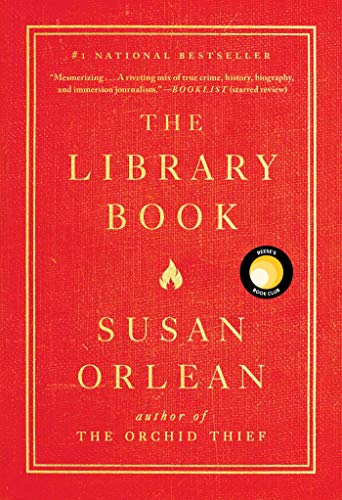
The Library Book

I really enjoyed this book by long-time New Yorker writer Susan Orlean. She takes the terrible 1986 fire at the main Los Angeles Public Library and tells a multi-latered story of libraries, municipal politics, criminal arson and theft, mental illness, and a love for books and reading.  I learned a lot about libraries and about librarians with their passionate devotion to the books in their charge and to the users of the library. The familiar 20th century story of women being discounted is another sad part of this narrative, as is the terrible history of books being burned out of fear.

Throughout the book, Orlean reflects on the power and function of libraries. She came to write the story remembering her childhood journeys to the library with her mother. At the end of the book, the author writes: A library is a good place to soften solitude; a place where you can feel part of a conversation that has gone on for hundreds and hundreds of years even when you’re all alone. The library is a whispering post. You don’t need to take a book off the shelf to know there is a voice inside that is waiting to speak to you, and behind that was someone who truly believed that if he or she spoke, someone would listen. It was that affirmation that always amazed me. Even the oddest, most particular book was written with that kind of crazy courage – the writer’s belief that someone would find his or her book important to read. I was struck by how precious and foolish and brave that belief is, and how necessary, and how full of hope it is to collect books and manuscripts and preseve them. It declares that all these stories matter, and so does every effort to create something that connects us to one another, and to our past and to what is still to come.

Go to your local library and check out The Library Book!

51pmjwgu0bl


Virgil Wander

I never was able to finish Leif Enger’s very popular novel Peace Like a River. It just never really captured my attention. So when my book group picked his new novel Virgil Wander for our January discussion, I waited until the 11th hour to download it on my Kindle and get it read. And what a read it was! I love this book!

The plot centers on the story of Virgil Wander, a young-ish man who owns the old theater in his home town on the North Shore of Lake Superior in Minnesota. He accidentally (maybe) drove his old car off a cliff into the lake, and he’s rescued by another person from the town. He’s in a coma for a while, and when he emerges he can’t quite remember things, including words. Add in the mysterious airplane disappearance a few years before of one of the hometown heroes, and the appearance of that man’s unknown father from Tromsø, Norway who happens to be a fabulous kite maker, and you have a wonderful story. I think the name of the book and the protagonist are totally intentional: Virgil for the Roman poet and the Iliad, and Wander for the way the book roams around through memory, story, relationship, and small town life.

The writing is wonderful, and perfectly evocative of all the wanderings. The women in my book group found the ending abrupt and hence a bit disappointing, and I sort of agree with that assessment. Sometimes endings are a little too neat. But these endings also make sense as arrivals home after all the wanderings of this wonderful novel.

virgil wander

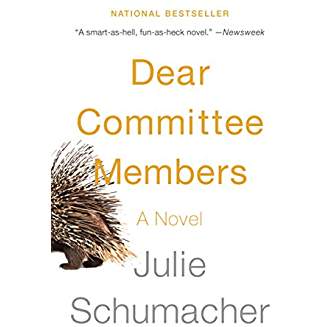
Dear Committee Members

My friend Carol Hinderlie sent me this book  by Julie Schumacher a month ago. It is a hilarious and poignant story told completely through letters of recommendation. The protagonist is a college professor who is continually asked to recommend people. He has become rather famous for his quirky, sometimes rude, sometimes sad but always funny letters – or LORs as he labels them. The couple pages where he tries to fill in online forms from other academic institutions are laugh-out-loud funny.

The story that follows along through the letters has some obvious outcomes, but even when they appear you are sorry things resulted as you expected.

If you’ve ever written LORs (and I have written way too many!) you’ll find this book totally engaging and true to form! (Even the online ones.) But even if you haven’t written these letters, you’ll find this book a great read and a somewhat damning perspective on higher education in America today.’

Dear Committee Members