Building Vocabulary with Bryant and May

I am finally getting back to reading – and writing about it! – after a couple weeks of big schedule stuff! i just finished my second Bryant and May book by Christopher Fowler: The Water Room. These are wonderful books about London, so if you love London (I do) these are for you! The first one is Full Dark House, and it introduces us to John May and Arthur Bryant (who is maybe dead…) and the Peculiar Crimes Unit, a specialty force of the Metropolitan Police. One quickly learns just how “specialty” they are, and the delightful quirks of these two elderly detectives keeps you turning the pages. (And you want to know if Bryant is dead!) The Water Room explores the hidden depths (literally) of London’s ancient rivers that run under the city. The Fleet is the most notable, having sluiced its way through London’s underground for centuries. The Water Room explores not only London’s underground river system, but also Victorian art history and the ongoing tension between Christian and pre-Christian religion.

I titled this “Building Vocabulary with Bryant and May” because in these books I am continually looking up words! Fowler’s vocabulary is huge, and he also uses words in new and interesting ways. He’s a good, if complex, writer, and his plots have the same layers of complexity. He also drops in the occasional Latin phrase without translation, so that also sends me to the dictionary. This is where the blessings of Kindle or other e-readers comes in handy so you can just highlight the word and get the definition. Fowler also has some really good thoughts, like When you’re old, you can afford to take risks. … It just seems perverse to become more safety-conscious just when you have less to lose, and I think we’ve lessened the aura of sanctimonious monotheism, but we can’t get rid of the damp. And then there’s the lovely Do you remember before you had to be grownup every second of the day, John? How it always felt like morning? Do read Bryant and May and develop your vocabulary and your perspective on life. Here they are in order:

Full Dark House (Bryant & May, #1)
The Water Room (Bryant & May, #2)
Seventy-Seven Clocks (Bryant & May, #3)
Ten Second Staircase (Bryant & May, #4)
White Corridor (Bryant & May, #5)
The Victoria Vanishes (Bryant & May, #6)
On the Loose (Bryant & May, #7)
Off the Rails (Bryant & May, #8)
Bryant and May and the Memory of Blood (Bryant & May, #9)
The Invisible Code (Bryant & May #10)
The Casebook of Bryant & May (Bryant & May, #10.5)
Bryant & May and the Bleeding Heart (Bryant & May, #11)
Bryant & May and the Secret Santa (Bryant & May, #11.5)
Bryant & May and the Burning Man (Bryant & May, #12)
London’s Glory (Bryant & May, #12.5)
Strange Tide (Bryant & May, #13)

Full Dark House


Slightly Foxed

In September of 2013 I met our Rick Steves’ tour guide daughter-in-law Sarah Murdoch (check out her blog at adventureswithsarah.net) and our grandson Lucca in London. Sarah had taken Lucca with her for a couple weeks before her Italy tours started, and we met up in London so that I could take him home for school. (Somebody has to do it.) I had found a great flat in Earl’s Court, interestingly in the same street where I stayed in 1984! On my first day there, after quite an adventure to get the key out of a hiding place in a stone wall behind a big ivy plant many blocks away, I was looking through the usual accumulation of brochures and so on that get left in rented flats. One caught my eye right away –  a leaflet for something called Slightly Foxed. On the front was a quote from Alexander McCall Smith, the famous writer of the No. 1 Ladies’ Detective Agency series. He wrote, “Slightly Foxed is the only magazine I receive that I read cover to cover the moment it arrives.” Well, I thought. That’s pretty high praise. It turned out that there was a bookstore by that name, and belonging to that organization, just at the end of the street on the Gloucester Road. So I checked it out. And I ended up being a subscriber.

This is a truly wonderful little reader that comes to your mailbox once a quarter. Their authors write about old books, about books they loved (or hated) when they were younger, or about books that we may have forgotten about or never knew about. And reading it cover to cover each time is a pleasure and a joy. I admit to setting it down from time to time, but I always get back to it and enter again into a world of reading about which I had no idea.

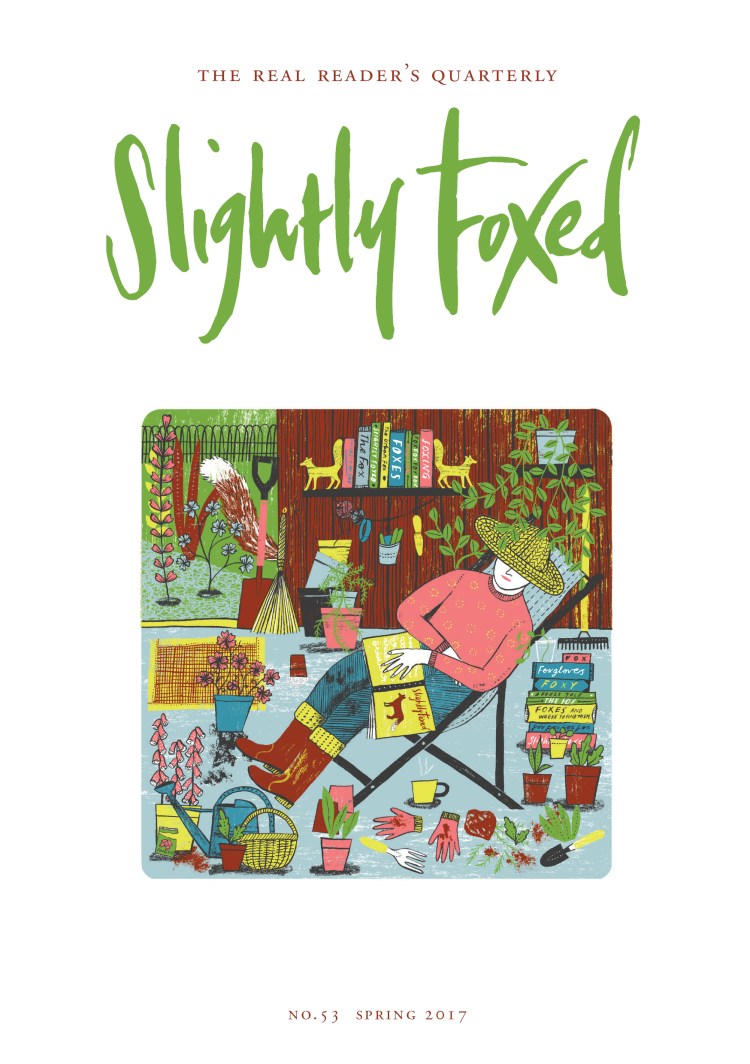
The title Slightly Foxed gives a hint to the content. The phrase in England means just a little used and frayed. Perfect for old books. They do write about newer ones as well. It is a brilliantly well-chosen collection every quarter, all about books and reading. They had  to give up the shop due to lease matters, but they merrily go along with Slightly Foxed and a terrific online store. They also republish out-of-print things that really should be in print again. You can read more about them at https://foxedquarterly.com/products/the-slightly-foxed-online-shop/ The magazine is available digitally as well. And the cover art each time is delightful.

slightly-foxed-issue-53-cover-alice-patullo


Ngaio Marsh

While visiting friends in Port Townsend on Thursday, I noted they were reading Spinsters in Jeopardy by Ngaio Marsh (1895-1982). I read Marsh’s wonderful novels many years ago and most of them reside on my mystery bookshelves. Marsh was a proud and loyal New Zealander who spent much time in England, particularly in the theater scene. She was  very involved with theater in New Zealand as well. She is just at the young end of the group of women detective fiction writers from between the World Wars, writers that included Dorothy L. Sayers, Agatha Christie, and Margery Allingham. And, especially like Sayers and Allingham, she created a young, interesting male lead in Roderick Alleyn. These authors brought particular perspectives to the roles of men and women in a changing society. I’ll be writing a lot more about all of them in coming days.

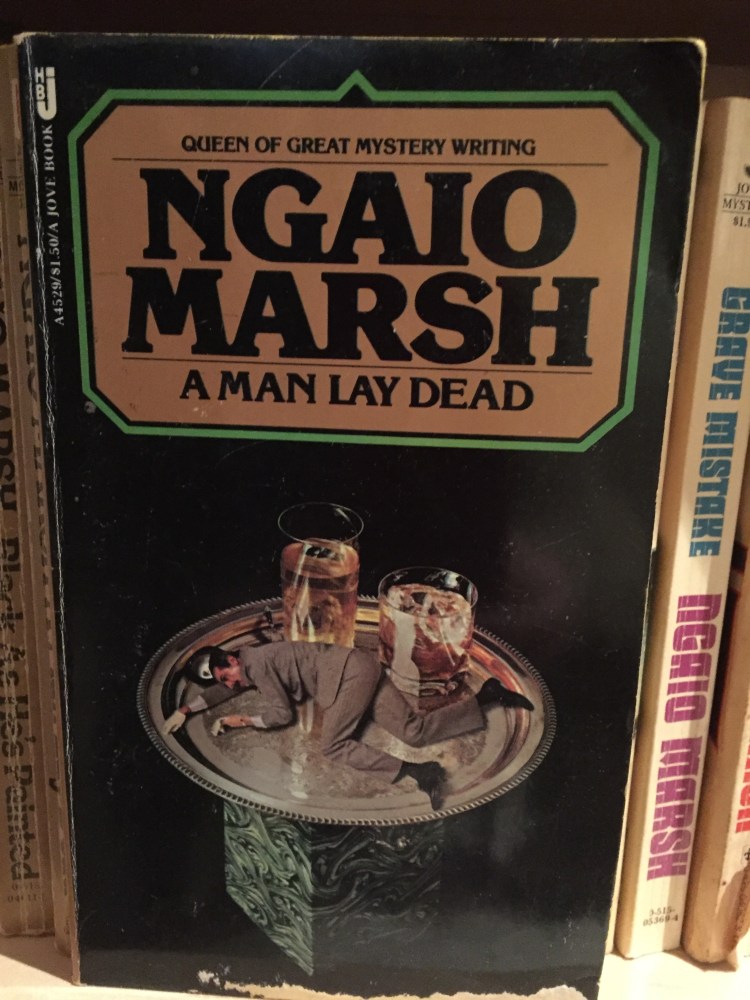
Ngaio Marsh’s novels are terrific, and I’m so happy to be reminded of them. I may even start reading them again from the beginning! Here’s the list if you want to give it a go: A Man Lay Dead (London 1934; New York 1942); Enter A Murder (London, 1935; New York 1942); The Nursing Home Murder with Henry Jellett (London 1935, New York, 1941); Death in Ecstasy. (London: 1936; New York, 1941); Vintage Murder (London: 1937; New York, 1940); Artists in Crime (London and New York, 1938); Death in a White Tie. (London and New York, 1938); Overture to Death (London and New York, 1939); Death at the Bar (London and Boston 1940); Death of a Peer (Boston 1940; pub. as Surfeit of Lampreys. London, 1941); Death and the Dancing Footman (Boston, 1941; London, 1942); Colour Scheme (London and Boston, 1943); Died in the Wool (Auckland, 1944; London and Boston,1945); Final Curtain (London and Boston, 1947); A Wreath for Rivera (Boston, 1949; pub. as Swing. Brother. Swing. London: 1949); Night at the Vulcan (Boston, 1951; pub. as Opening Night, London, 1951); Spinsters in Jeopardy (Boston, 1953; London, 1954; pub. as The Bride of Death, New York, 1955); Scales of Justice (London and Boston, 1955); Death of a Fool (Boston, 1956; pub. as Off with His Head. London, 1957); Singing in the Shrouds (Boston, 1958; London, 1959); False Scent (Boston and London,1960); Hand in Glove (Boston and London, 1962); Dead Water (Boston, 1963; London, 1964); Killer Dolphin (Boston, 1966; pub. as Death at the Dolphin (London, 1967); Clutch of Constables (London, 1968; Boston 1969); When in Rome (London, 1970; Boston, 1971); Tied Up in Tinsel (London, and Boston, 1972); Black as He’s Painted (London and Boston, 1974); Last Ditch. (Boston and London, 1977); Grave Mistake (Boston and London, 1978); Photo Finish (London, and Boston, 1980); Light Thickens. (London and Boston, 1982).img_1484

February Music

I’ll take a little break from books and shift to music. We heard two wonderful concerts on consecutive Thursdays. On February 2 the Seattle Symphony had Emanuel Ax as their soloist. The 67 year-old Ax is one of the great heroes of the piano, a wonderful performer who is also kind, generous and an amazingly engaged musician. The piece was Beethoven’s “Emperor” Concerto which is a big favorite. When I was in college my roommate Shirley Lindberg and I would play a recording of this, especially for the transition from the second movement to the third. We would move the tonearm back again to the spot where that transition begins and listen over and over again. Ax’s playing of the second movement was entrancing. I wondered how many times he has played that concerto. His familiarity with it was so evident in his gentle and beautifully clear expression. In a weird way it made me think of my own long career as a preacher with the repetition that comes there, like the familiarity of reading the Easter gospel from John 20 each year: “Early on the first day of the week while it was still dark, Mary Magdalene came to the tomb…” There is a richness and power to that long relationship of speaking and hearing.  The audience brought Ax back for an encore, Chopin Nocturne in F-sharp Major. You can learn more about Emanuel Ax at emanuelax.com. The Symphony also played Charles Ives’ New England Holidays and included poems by Seattle’s Civic Poet (I didn’t know we had one) Claudia Castro Luna and projected artwork by local homeless people. It was a powerful presentation.

One week later, on February 9, we heard Hilary Hahn play Max Bruch’s Violin Concerto #1. She is by far my favorite violinist. She is so precise and so musical at the same time. We first heard her twenty-plus years ago when she was just a teenager; she is 37 now. Her very first album back when she was a teen was Hilary Hahn Plays Bach, which is all of the unaccompanied Sonatas and Partitas. That often takes age and maturity to play; Bach is so complex. But even as a teen she had such depth of musicianship and a real understanding of the music itself. She also played an encore – the Gigue from Partita #3. What a wonderful evening. You can learn more about Hilary Hahn at hilaryhahn.com

Our symphony is really good and on Wednesday, February 8, they pulled together a concert honoring the music of immigrants. Here’s the link to The Seattle Times article about it: http://www.seattletimes.com/entertainment/classical-music/this-land-is-your-land-seattle-symphony-responds-to-trump-travel-bans-with-music-beyond-borders/

The Nordic Theory of Everything

I was intrigued by this book when I read a brief review of it in The Seattle Times before Christmas. The review was by Melinda Bargreen, who reviews classical music and books and does a grand job of both. Here’s her take on this book: “The Nordic Theory of Everything: In Search of a Better Life” by Anu Partanen(Harper). Highly annoying, to the point where I almost wanted to smack the self-satisfied author, this book nonetheless made me think harder than anything else I’ve read this year about how America could do better for its people in the realms of education, health care, workplace possibilities and … well, attitude. This Finnish immigrant to the USA (by marriage) compares life in the America with the Nordic countries. At first glance this would seem facile, a simple contrast between free-market capitalism and the social democracies of Scandinavia. But it is all very much more complex than that, and the author very helpfully puts us Americans in our place around our general attitudes towards child-rearing, education, health care, business, and the pursuit of happiness.

Her main premise is what she calls “the Nordic theory of love.” She claims that children being nurtured as independent individuals, growing with their needs well met and basics such as education and health care provided, establishes people as more confident and secure for all of their life. I especially appreciate her detailed assemblage of facts comparing the US to the Nordic countries. It does make me, as Bargeen suggested, “think harder” about how we live and what we provide – or don’t provide – so that people can live, learn, grow, and thrive. Although her writing is a little bland, the book is well-researched (copious notes and bibliography at the end) and is a good perspective to enter as we in our country try to decide what government should and shouldn’t do.

I’m not quite done with the book, so I may have some additional comments later on. Share your comments if you’ve read it in all or part. I think it’s an important conversation.

nordic-theory


Mrs. Malory

The mystery novels of Hazel Holt feature a fifty-something widow, Sheila Malory. She is, in many ways, a latter-day Jane Marple, knowing every piece of gossip and bizarre relationship of her small English village. Jane Marple was always a big surprise to the local police and to the other characters in the Christie stories about her. But Sheila Malory is no surprise. Everyone knows she knows everything, and when there are mysterious deaths and the like, the police (the main inspector being her godson) and the rest of the village seek her out. She is an animal lover (her Siamese cat Foss and her dog Tris are serious ongoing characters), and all of her meals and her cooking are described in great detail. And she is a scholar of some repute on eighteenth century literature and is often writing reviews or, in one case, asked to evaluate a library.

In an earlier post I stated my dislike of the word “cozy” to describe novels like these. I think they offer us a real-life look at the things that make people tick, the little annoyances, jealousies, and greed that really to lead to murder. None of that is very “cozy.” And Mrs. Malory always gives us a good view of the moral and ethical dilemmas in all these cases. The solution is not always arrest and bring to trial. Sometimes the murderer is given mercy and opportunity to find their own way out.

Hazel Holt was a good friend of Barbara Pym, and they both lift up the strength, intelligence, and courage of English women who grew up between the wars and knew the sorrow that came from World War II. They offer us much to learn in our own time about resilience and grace, and these novels are one subset of the literature that brings us exactly that.

The setting is contemporary; the first was published in 1992, the last in 2014. Hazel Holt died in 2015. Some of the titles are in print, some out. A publisher in Seattle called Coffeetown Press has reissued the first seven. The books should be read in order, and here it is:

Gone Away (aka  Mrs. Malory Investigates)
The Cruellest Month
The Shortest Journey (aka Mrs. Malory’s Shortest Journey)
Mrs. Malory and the Festival Murders (aka Uncertain Death)
Murder on Campus  (aka Mrs. Malory: Detective in Residence)
Superfluous Death  (aka Mrs. Malory Wonders Why)
Death of a Dean (aka Mrs. Malory: Death of a Dean)
Mrs. Malory and the Only Good Lawyer (aka The Only Good Lawyer)
Mrs. Malory: Death Among Friends (aka Dead and Buried)
Mrs. Malory and the Fatal Legacy (aka A Fatal Legacy)
Mrs. Malory and the Lilies That Fester
Mrs. Malory and the Delay of Execution
Mrs. Malory and Death by Water (aka Leonora)
Death in Practice (aka Mrs. Malory and Death in Practice)
The Silent Killer (aka Mrs. Malory and the Silent Killer)
No Cure for Death (aka Mrs. Malory and No Cure for Death)
Death in the Family (aka Mrs. Malory and a Death in the Family)
Mrs. Malory and a Time to Die
Mrs. Malory and Any Man’s Death
Mrs. Malory and a Necessary End
Mrs. Malory and Death is a Word   ’14 (aka Death is a Word)

gone-away-hazel-holt

Novel Food

The link to the recipe related to the Inspector Montalbano books reminded me of cookbooks based on novels. Here are four that we have in our collection.

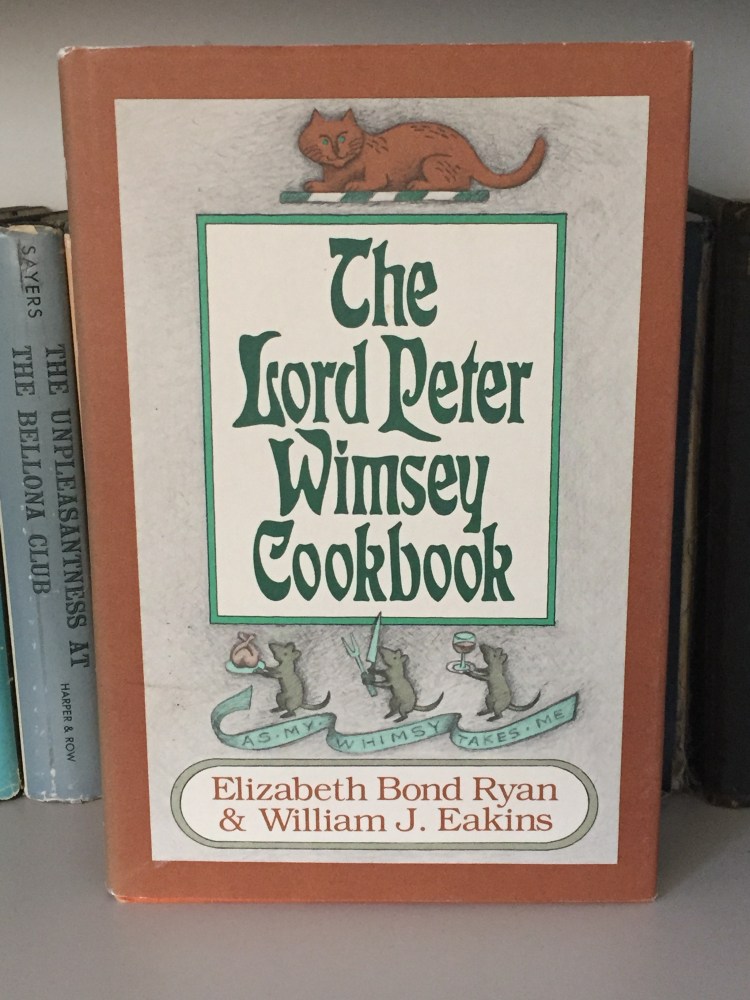
First is The Lord Peter Wimsey Cookbook based on the classic series by Dorothy L. Sayers. These days I’ve noticed that Sayers gets trashed a bit for having a very aristocratic sleuth. I think that’s an unfair assessment and doesn’t give her credit for her detailed character depictions of people who are going through a time of huge social upheaval. I am a lifetime fan of these books, and all of Sayers’ writing, and that will come another day. But today it is the food from the novels that takes center stage. It’s fun journey through the often not very exciting cooking of England in the first half of the twentieth century, but the Sayers quotes and commentary are worth it as well. This is way out of print. I lost my original one and found this one at a used bookstore a few years ago.

img_1476

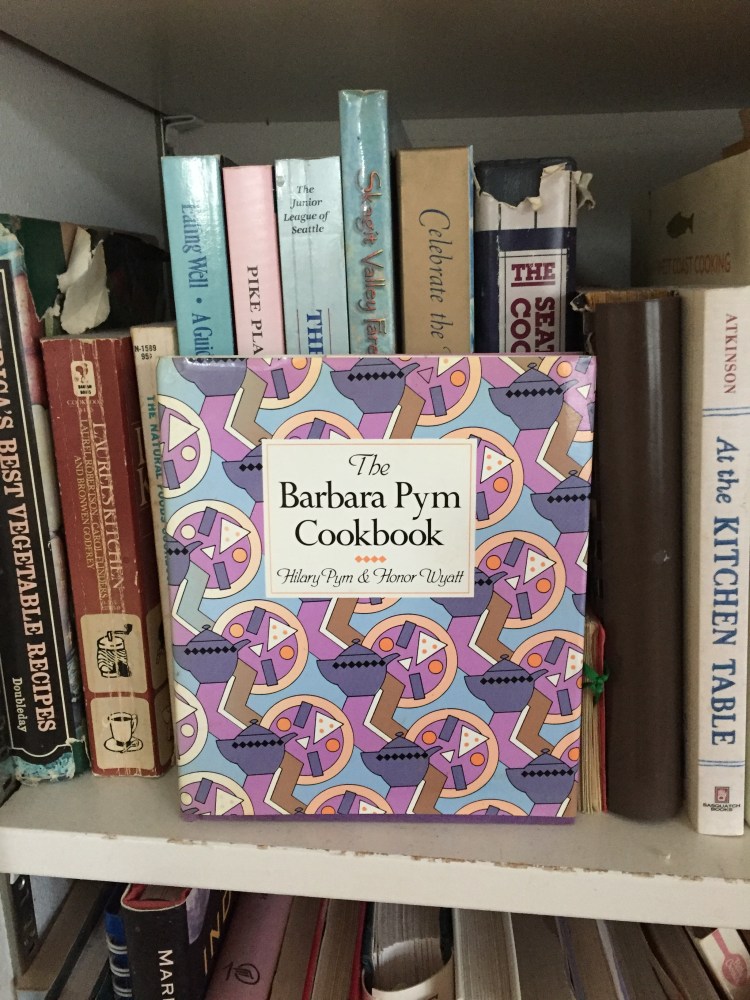
The second book is English as well. If you have never read Barbara Pym, head off to your local library and find Excellent Women. Pym wrote what are often called “social comedies” in the middle of the 20th century. They are beautiful books, very funny and a very astute view of people, relationships and the world. Pym worked at the International African Institute in London. There she met Hazel Holt, who would eventually write Pym’s biography. (Pym died of breast cancer at the age of 66 in 1980.) Holt also wrote a great series of mysteries featuring Mrs. Malory, but that’s for another post! But do read Barbara Pym, and along the way you might want to take another shot at English food from the Barbara Pym cookbook. I do use this book for its Shepherd’s Pie recipe, something that doesn’t really need a recipe, but it is helpful for proportions and all.

img_1473

My husband Larry really likes maritime war stories, and so is devoted to the Patrick O’Brian Aubrey-Marutin books. And there is a cookbook: Lobscouse and Spotted Dog. If you want to dip into the pleasures of preserved food for long sea voyages, this is the book for you! It is rather fun, and has more twists on English cooking again. I was interested that lobscouse,  a kind of stew,  was part of the regime as I grew up eating it as part of my mother’s Norwegian repertoire. She mostly used leftover meat, potatoes, carrots and all, but often did it from scratch as well.

img_1474

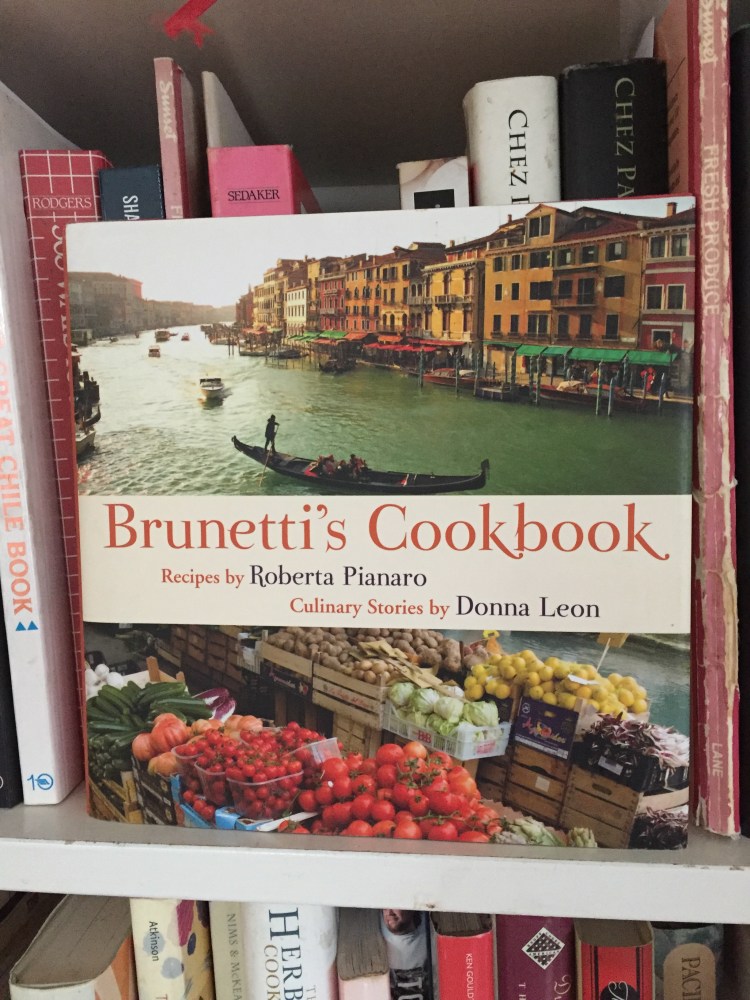
Moving across Europe, the last entry is related to Donna Leon’s wonderful Inspector Brunetti mysteries. Set in Venice, the food descriptions in these books are amazing. You always want to sit down at lunch with Brunetti and his family after you read what his professor wife Paula has prepared. Delicious! This is a great book about Venetian cooking in general, and works well in Seattle’s seafood culture as well.

img_1475

In reference to Louise Penny’s books above, I found this link to recipes related to her Inspector Gamache books: http://us.macmillan.com/static/smp/nature-of-the-feast/ I had to sign up for Macmillan’s email list to get it, but I haven’t received a ton of emails as a result and do indeed have the recipes.


A Little Bit of Sicily

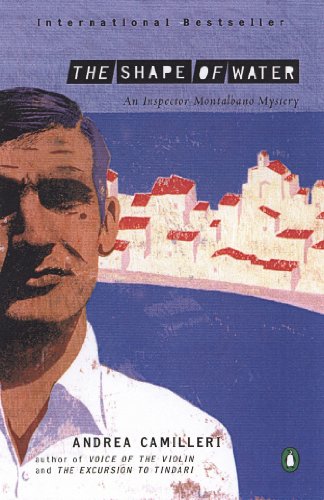
the-shape-of-water

Just to keep things on the lighter side today, I’m reading the latest Andrea Camilleri Inspector Montalbano book, A Voice in the Night. These are terrific police procedural novels set in Sicily. (Once you get into them, “procedural” maybe be just a bit overstated!) Inspector Salvo Montalbano and his team negotiate the more than tricky landscape of Sicily in a wonderful and often hilarious style. There’s also an Italian television series called Inspector Montalbano which is available on DVD here in the USA. There are 22 episodes, and they are really fun. The TV series is so good in depicting the characters in the books that now when I read one of the novels I exactly see the character as the actor in the TV series.

Camilleri, a retired drama professor living in Rome (he’s 91!) doesn’t pull any punches when it comes to the changes in Italian life and the intricacies of the Italian bureaucracy. Once again, order is important as the relationships Montalbano has with his police colleagues, his housekeeper and her family, his professor girlfriend Livia (who lives in Genoa – they talk on the phone a lot), the owner of his favorite restaurant, and even the Mafia are worth learning all about as you make your way through this series. The Stephen Sartarelli  translations are all very good. Here they all are in order:

The Shape of Water  (La forma dell’acqua, 1994) English trans. 2002
The Terracotta Dog (Il cane di terracotta, 1996) English trans. 2002
The Snack Thief (Il ladro di merendine, 1996) English trans. 2003
The Voice of the Violin (La voce del violino, 1997) English trans. 2003
Excursion to Tindari (La gita a Tindari, 2000) English trans. 2004
The Scent of the Night (L’odore della notte, 2001) English trans. 2005
Rounding the Mark (Il giro di boa, 2003) English trans. 2006
The Patience of the Spider (La pazienza del ragno – 2004) English trans. 2007
The Paper Moon (La Luna di Carta – 2005) English trans. 2008
August Heat (La Vampa d’Agosto – 2006) English trans. 2009
The Wings of the Sphinx’s (Le Ali della Sfinge – 2006)  English trans. 2009
The Track of Sand (La pista di Sabbia – 2007) English trans. 2010
The Potter’s Field (Il campo del vasaio – 2008) English trans. 2011
The Age of Doubt (L’età del dubbio) – 2008 English trans. 2012
The Dance of the Seagull (La danza de gabbiano) 2009 English trans. 2013
Treasure Hunt  (La caccia al tesoro) 2010 English trans. 2013
Montalbano’s First Case – 2013
Angelica’s Smile (Il sorriso di Angelica) 2011 English trans. 2014
Game of Mirrors (Il gioco degli specchi) 2011  English trans.2015
A Beam of Light (Un lamo di luce) 2012 English trans. 2015
A Voice in the Night (Una voce di notte) 2012 English trans. 2016

There are newer ones not yet translated, plus a novella or two and a short story collection.

While looking up a couple things about Camilleri I came upon this fun food site and a pasta recipe that Montalbano would have loved. (The food in these novels is amazing!) Here’s the link: https://www.theguardian.com/books/little-library-cafe

More Scotland

Ten days ago or so I was talking reading with a colleague and he said he was reading Arthur Herman’s How the Scots Invented the Modern World.how_the_scots_invented_the_worldI was reminded how much I enjoyed this book when I read it. It gives a lovely history of Scotland and how the basic ingenuity of the Scots led to the development of inventions and ideas that have totally shaped modern western culture.  Adam Smith, whose Wealth of Nations is a foundational book for modern economics, was born near Edinburgh (Kirkaldy) in 1723. I think this passage about him is a useful one – and maybe too true – as we think through how we do business and live with each other in this interesting times. Adam Smith [learned from his merchant father] how human ingenuity will find a way to defy government rules and regulations, suchs as customs tariffs, when they fly in the face of self-interest. Here is how Smith would put it in his Wealth of Nations almost fifty years later: “The natural effort of every individual to better his [or her] own condition … is so powerful a principle, that it is alone, and without any assistance, not only capable of carrying on the society to wealth and prosperity, but of surmounting a hundred impertinent obstructions with which the follow of human laws too often incumbers its operations.”  I think I am going to have to learn a lot more about economics in this time, and I hope it will be helpful in sorting things during what may be a time of pretty serious change. This is a good read, and a fairly breezy one for all its history.

And here is another really good read from last week in the New York Times. President Obama talks about the power reading. It’s great. https://www.nytimes.com/2017/01/16/books/transcript-president-obama-on-what-books-mean-to-him.html


Margaret George

This rather continues the theme of 16th century England with some variation. Margaret George is a wonderful historical novelist. Her research is meticulous and her books are long and very readable. The first one I read was not from the 16th century, but the first: Mary, Called Magdalene. George sets this novel up in the context of the interesting – and totally credible – scholarship that places the Galilean disciples as part of John the Baptist’s community before they became followers of Jesus. She sets Mary Magdalene as part of the group, a childhood friend of them all. The book moves away from the traditional, misogynist view of Mary as prostitute and places her front and center as an important witness to the life and ministry of Jesus, which is exactly where the Gospel writers Matthew, Luke, and especially John, place her. It is a fascinating read and a really good view of Palestine in  the first century.mary-called-magdalene-1

I’m currently reading Mary, Queen of Scotland and the Isles, and it is as good a read and as good a history as Mary Magdalene. It’s a great novel, and really clarifies and illuminates that tumultuous time in English/Scottish history. It helped me out a lot, as I’ve always confused Mary Tudor with Mary Stuart – she’s the Queen of Scots. I’m only about 20% done with it, but Mary, Queen of Scotland and the Isles, is hard to put down. Along with the tribulations of this young queen trying to do her best in a very difficult situation, it also lifts up the story of John Knox and the Calvinist influence in Scotland and how powerful that all was.

mary-queen-of-scotland-and-the-isles

You can read more about Margaret George at http://www.margaretgeorge.com