Book Binding

The Seattle Times book person, Moira MacDonald, sent a request out a couple weeks ago for information on local book groups that had been meeting for over 30 years. She got 175 responses! The Faith Lutheran Church Book Group (35 years old this year) sent their information, but didn’t make the cut. So I wrote a piece about the Faith group.

Thirty-five years ago several women who were part of Faith Lutheran Church in Seattle started a book group. Initially the pastor (that would be me) tried to steer the reading to books about the Bible and faith, so the first book group meeting (then called The Women’s Theological Book Study) in May, 1986, was Braided Streams: Esther and a Women’s Way of Growing by Marjorie Bankson. The group soon moved on to novels and other books and became simply known as the Faith Book Group. (It should be noted that the pastor often referenced novels in her sermons!) I can still remember sitting in Eileen Powelson’s living room talking about how to proceed with it all.

What began as a periodic gathering soon became a monthly event with more and more participants. We met in each other’s homes. The discussion was – and still is – somewhat casual. There’s no requirement to have read the book ahead of time, and there is no specific leader who has prepared questions and so on. The group just meets and talks about that month’s book and about their lives. The books to read are selected through conversation and ongoing lists. Everyone agrees on which book should be next, and books are often assigned a couple months ahead.

Early on, a December Christmas book exchange became an annual event. It started as “White Elephant” giving, and there were a fair amount of old nursing books and English 101 texts that made the rounds. But soon the Christmas gifts became a treasured exchange of favorite and popular books. Good-natured trading from the familiar number drawing method of selecting the gifts makes the whole evening lively and fun. One requirement is that, after a book is opened, the receiver has to read part of the blurb on the book’s jacket or back cover. That is always a pretty hilarious way to learn about these books! Over the years the Christmas books have become the resource to select the books to be read in the coming year. A few years ago the group started an annual Spring retreat, an excellent way to be together and, you guessed it, read! (There’s a lot of walking, laughing, talking, cooking, and wine drinking that happens as well.)

Of the books read, some like them, some don’t. Some read them all, some only a few. There might be the occasional disappointment when an offered favorite doesn’t resonate – that happened to me a few times! But whatever the appreciation of the books offered and discussed, the binding together of lives through these words and plots only deepens with each passing year. Sometimes in church we sang a hymn that went like this: Bind us together, Lord, bind us together with cords that cannot be broken. Bind us together, Lord, bind us together, Lord; bind us together in love. This group is bound in their love of the written word, their community, and their shared life experiences.

One of my most powerful memories of this group is from my last year as pastor at Faith. The gathering was in Lynn Krog’s home and I can picture it still. I looked around the room at the women gathered and realized how much each of them had experienced in their life, both joyous and sad, and how, when joined together in their mutual love of reading the narratives of their lives overflowed into the shared narrative of the books. This group is still so dear to me (they let me come at Christmas and at the summer gathering in August) and I am so grateful that it is such an alive and enduring thing thirty-five years later.

And here is Moira MacDonald’s article: https://www.seattletimes.com/entertainment/books/take-a-peek-inside-the-world-of-longtime-seattle-area-book-clubs/
Winifred Holtby

In an email on an entirely different matter, I was reminded of the wonderful work of Winifred Holtby (1898-1935). She is another who wrote in the 1930’s in England, describing the new and more open world for women after World War I. I first learned of her through the 1979 television adaptation of Vera Brittain’s Testament of Youth (1933). I read Brittain’s memoir right away, and then the next two volumes, the second of which is titled Testament of Friendship (1940) in which she honors her dear friend Winifred Holtby, who died at age 37 in 1935. (Brittain extended her memoir to a third volume, Testament of Experience (1957).)

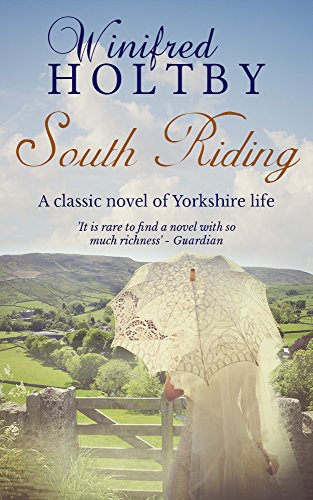
Like Dorothy L. Sayers and her group of friends, Holtby and Brittain attended Somerville College in Oxford a few years after The Mutual Admiration Society. They also wrote their experiences into the complicated history of war, The Great Depression, and the continued struggle for women to be treated equally. Holtby’s most famous novel, published posthumously in 1936, is South Riding. It won the James Tait Black Memorial prize in 1936 and it was recently adapted for television. Holtby didn’t see the acclaim this novel received because of her death the year before. She was buried in Rudstone in the East Riding of Yorkshire, just steps from the house where she was born. This is engraved on her tombstone: God give me work, till my life shall end And life, till my work is done.

40 years ago one of my mentors, Mary Hinderlie, found me a copy of Women and a Changing Civilization by Winifred Holtby, published in 1935. At the end of her description of needed changes, she writes this: “We might, perhaps, consider individuals, not primarily as members of this or that race, sex, and status. We might be content to love the individual, perceiving in him or her a spirit which is divine as well as human and which has little to do with the accident of the body. We might allow individual ability rather than social tradition to determine what vocation each member of our community should follow. And it is possible that in such a world we should find a variety of personality undreamed of to-day, a social solidarity to-day rendered unimaginable by prejudices, grievances, fears and repulsions, a radiance of adventure, of happiness and satisfaction now only hinted at by poets and prophets.” I think Holtby is describing our same needs today.

The book mentioned in the email that got me here is The Crowded Street and it’s on my list to read. South Riding is the most available, so I recommend that to you all.

The Rise by Marcus Samuelsson

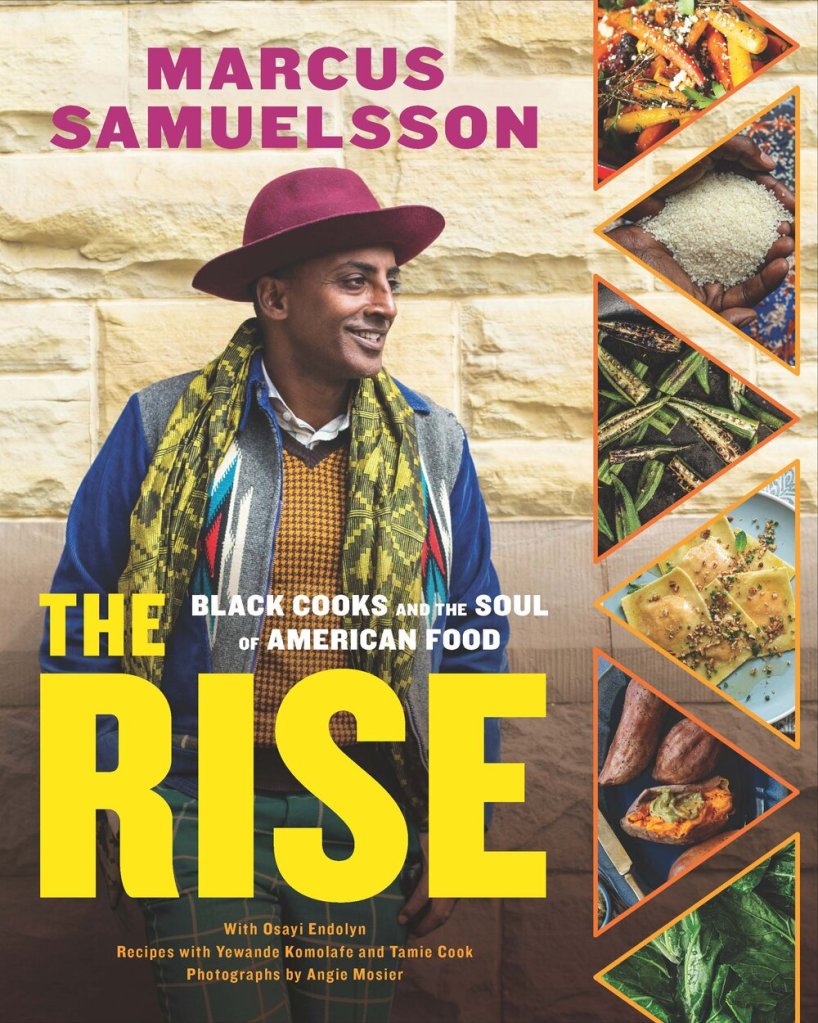
My husband and I both like to cook and we have an extensive cookbook collection. We often buy cookbooks when we travel to remember the places we visited through the food we ate. And we love cookbooks that have stories. In December we saw an interview with Marcus Samuelsson, chef and owner of the famed Red Rooster restaurant in Harlem. He was talking about his new cookbook, The Rise. It is an amazing book highlighting the wonderful Black chefs in our country, including our own local Eduardo Jordan owner of Salare, Junebaby, and Lucinda Grains, all very close to our home. We so enjoy these places, and we’ve done lots of take out from Junebaby during the pandemic.

I bought The Rise for Larry for Christmas. Samuelsson includes with each recipe a story of the chef. Each recipe’s heading is “In Honor of (or sometimes in Memory of)” a chef’s name. It makes us feel honored to read these stories and to make this amazing food. We’ve done some cooking from it and really love it. (The cooking part has had its ups and downs!)

This book was just being completed when the pandemic hit. Marcus Samuelsson let José Andrés’ amazing World Central Kitchen team transform Red Rooster into a community kitchen to feed hundreds of people a day. You can learn more about World Central Kitchen here: www.wck.org The story of these last few months infuses the stories of these Black chefs so that we can all enter more deeply into the experience of this time.

Samuelsson writes this at the end of his note at the beginning of the volume:

The Rise was created to highlight the incredible talent and journey of Black chefs, culinarians, and writers at work today; and to show how the stories we tell can help make a more equitable, just industry. I hope this work, and this moment, leads us to raising up Black winemakers, authors, and farmers. I hope it leads to us supporting the next generation of Black chefs and hospitality workers who will change our industry forever. And I hope that this movement becomes a part of a permanent and much broader social change.

So much beauty and achievement has come has come out of tough times throughout history, and it is inspiring to see communities across the globe coming together to care for one another. We also know that the road “back” from the current crisis will be harder for Black people because of the systemic challenges that disproportionately affect Black restaurateurs and creators of all kinds. That’s why it’s so important for everyone to help bring more equity to this industry. …

We are the Black Food Community: Black chefs, Black servers, Black bartenders, Black food writers, Black culinary historians, Black recipe developers. Our food stems from challenged communities and challenged times. It comprises enslavement, poverty, war, yet our food has soul, and has inspired and fed many. We will rise, we will shine, we are survivors.

Black Food Matters.”

(Marcus Samuelsson, The Rise, Voracious/Little Brown and Company, 2020, p. xv)

Angela Thirkell

Today a friend sent a link to a Washington Post article from December 22, 2020, with recommendations from their book people for “light” reading in these tumultuous times. I put the word “light” in quotations because I think that often we dismiss novels that are fun as of lesser value than more “weighty” tomes. I think that’s unfortunate, as these novels are wonderful, revealing, funny, and the writing is usually splendid.

One author that appeared in this list is Angela Thirkell (1890-1961). I listed her in a blog post on June 3, 2019, when writing about authors on my shelves that I’d be happy to read again. Thirkell was English but lived in Australia for a while during her second marriage, and then returned to England. She was a very prolific writer, and her novels, which she sets in Anthony Trollope’s Barsetshire, are great send-ups of English society between the wars.

There are 29 Barsetshire novels! I haven’t come close to reading them all, but here are the ones that are on my shelf:

  • High Rising (1933)
  • Wild Strawberries (1934)
  • August Folly (1936)
  • Pomfret Towers (1938)
  • Before Lunch (1939)
  • Cheerfulness Breaks In (1940)
  • Northbridge Rectory (1941)

Do enjoy this “light” reading!

Foreign Affairs, Take 2

I finished this book a couple days ago and it was really good! I’m looking forward to what my book group colleagues have to say about it when we Zoom together next week.

The story has one truly surprising turn of events. I literally gasped out loud when I read it! No hints here. Read the book! Check out my first post on 1 January.

I am still trying to process the events of yesterday. What a terrible and difficult time in our country. It made me think about what are the best books to read about the United States. I’d love to hear what some of you have read or would like to read.

Robertson Davies

My post about Steve Burrows Birder Mysteries encouraged me to start reading A Siege of Bitterns yesterday and I am enjoying it! The fun titles of those books reminded me of other similar lists, including the one on my husband’s long-time waste basket that sits by his desk.

These lists also brought to mind the wonderful writing of Robertson Davies (1913-1995). Davies was a Canadian actor, director, drama professor, and prolific novelist. Among his novels are four trilogies:
The Salterton Trilogy [Tempest-Tost (1951), Leaven of Malice (1954), A Mixture of Frailties (1958)]
The Deptford Trilogy [Fifth Business (1970), The Manticore (1972), World of Wonders (1975)]
The Cornish Trilogy [The Rebel Angels (1981), What’s Bred in the Bone (1985), The Lyre of Orpheus (1988)]
The “Toronto Trilogy” (incomplete) [Murther and Walking Spirits (1991), The Cunning Man (1994)]

The Rebel Angels is one of my favorites, featuring Simon Darcourt, an Anglican priest and medieval scholar. Darcourt is asked to investigate a research scientist, Ozias Froats, who is analyzing human feces and making the university’s donors very uneasy. When Darcourt goes to visit Froats in his laboratory, he leaves there musing on the research in terms of human names for the leavings of animals. Here’s the paragraph:

“What a lot we had found out about the prehistoric past from the study of fossilized dung of long-vanished animals. A miraculous thing, really; a recovery of the past from what was carelessly rejected. And in the Middle Ages, how concerned people who lived close to the world of nature were with the faeces of animals. And what a variety of names they had for them: the Crotels of a Hare, the Friants of a Boar, the Spraints of an Otter, the Werderobe of a Badger, the Waggying of a Fox, the Fumets of a Deer. Surely there might be some words for the material so dear to the heart of Ozy Froats better than shit? What about the Problems of a President, the Backward Passes of a Footballer, the Deferrals of a Dean, the Odd Volumes of a Librarian, the Footnotes of a Ph.D., the Low Grades of a Freshman, the Anxieties of an Untenured Professor? As for myself, might it not appropriately be called the Collect for the Day?” (Robertson Davies, The Rebel Angels, Penguin, 1983, p. 113.)

Just reading through the titles makes me excited to re-read Robertson Davies. If you don’t know these novels, you have a real treat ahead. And I’ll start again with The Rebel Angels, just as soon as I finish reading about birds in Norfolk!

The Rebel Angels (Cornish Trilogy Book 1) by [Robertson Davies]
       

Birder Murder Mysteries

When we go to Tofino, BC, which we do every year for at least a month, we always stop in at the local bookstore, Mermaid Tales. We always find fun and interesting reading there, often things we’d miss at our usual US book haunts. I found Iona Whishaw there, and a couple years ago my husband discovered Steve Burrows’ Birder Murder Mysteries. I haven’t had a chance to read these yet, but Larry can hardly put them down! He’s read them all now, so he hopes for a new one soon. I’ve also learned that they’re making a TV series based on the books, which will be fun!

Burrows is a Brit who lives in Canada, and his detective in these books, Domenic Jejeune, is a Canadian living in the UK. Friends who are keen birders (we’re interested beginners) say the books are really good about the whole birding thing. And one of these days the Canadian border will open again and we can go back to Tofino and make other wonderful discoveries.

Here they are in order, with their delightful titles:

A Siege of Bitterns (2014)
A Pitying of Doves (2015)
A Cast of Falcons (2016)
A Shimmer of Hummingbirds (2017)
A Tiding of Magpies (2018)
A Dance of Cranes (2019

Kate Shackleton Mysteries by Frances Brody

Recently I caught up with a mystery series I really enjoy. Frances Brody writes about Kate Shackleton, a WWI widow with good skill for sleuthing. These books match a lot of my favorite reading categories: in England between WWI and WWII, set in Yorkshire (Brody lives there), and a female protagonist. Brody does great research and has captured the time period with its interesting, and sometimes sad, history very well. Her characters are really fun. I highly recommend these. The cover art is cool, too!

  • Dying in the Wool (2009)
  • A Medal For Murder (2010)
  • Murder in the Afternoon (2011)
  • A Woman Unknown (2012)
  • Murder on a Summer’s Day (2013)
  • Death of an Avid Reader (2014)
  • A Death in the Dales (2015)
  • Death at the Seaside (2016)
  • Death in the Stars (2017)
  • A Snapshot of Murder (2018)
  • The Body on the Train (2019)
  • Death and the Brewery Queen (2020)
Dying in the Wool: A Kate Shackleton Mystery (A Kate Shackleton Mystery, 1)

The Mutual Admiration Society by Mo Moulton

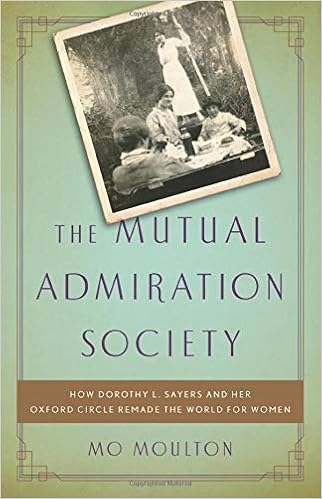
I was supposed to be in England in August attending the annual convention of the Dorothy L, Sayers Society. I haven’t been to one since 1984, so I was looking forward to it! It was scheduled to be at Somerville College in Oxford where Sayers studied. The author Mo Moulton was to be one of the speakers. In lieu of the convention I read her new-ish book The Mutual Admiration Society, and I am so glad I did. The book’s subtitle is “How Dorothy L. Sayers and Her Oxford Circle Remade the World for Women.” Moulton has written what I think is the best book about Sayers. Her research is amazing, and by describing Sayers in her close and supportive circle of friends we learn much more than we knew before.

Sayers’ friends that form the core group from Somerville are Muriel St. Clare Byrne, Charis Barnett, and Dorothy Rowe. As with all long friendships there were times that were closer and better than others, and other of their friends moved in and out of the circle. But this core group not only supported and strengthened each other but critiqued and encouraged one another’s work. They were among the first women to receive their degrees from Oxford University. On October 14, 1920, Sayers, St. Clare Byrne, and Muriel “Jim” Jaeger, celebrated this breakthrough in the lives and careers of women These women are our leaders in so many ways.

Sayers is, of course, most noted for her mystery novels featuring Lord Peter Wimsey and Harriet Vane. The last one, Busman’s Honeymoon, started as a play written by Sayers and some of her friends. Sayers dedicates the book to Muriel St. Clare Byrne, Helen Simpson, and Marjorie Barber. In her longer dedication she includes this paragraph: “…Muriel, … you wrote with me the play to which this novel is but the limbs and outward flourishes; my debt and your long-suffering are all the greater. You, Helen and Bar, were wantonly sacrificed on the altar of that friendship of which the female sex is said to be incapable; let the lie stick i’ the wall!” It is about such friendship that Moulton writes and I cannot recommend The Mutual Admiration Society more highly.

End note: The Dorothy L. Sayers convention was shifted to the exact same time frame at Somerville in 2021 , and I am booked for it! I hope Mo Mouton will still be one of the speakers, but just celebrating these amazing women in their place will be grand.

                                        >’