From today’s The Seattle Times: https://www.seattletimes.com/entertainment/books/seattle-high-school-teacher-shares-the-wonder-of-books-with-students-on-a-different-kind-of-field-trip/
Here is wonderful piece from my beloved Slightly Foxed.
I wanted to call this ‘How Children’s Literature Saved My Life’, but the simple truth is that my life was never in any real danger. My imaginative life, however, was in grave peril. It hovered on the brink. This is the story of how it was resuscitated in the simplest of ways – by reading children’s books.
I have degrees in English literature and library science. I have been an English teacher and a librarian. My love of reading has shaped my life. And yet, a few years back, I almost stopped reading. When given the choice between turning on the television and opening a good book, I would invariably reach for the remote control.
How this sad state of affairs came to be is all too easily told, and I don’t suppose I am the only sufferer. I’ll bet it happens all the time. For you see, my life had simply become too full to read. I was working six days a week, I had three young children to care for, and that left little time for anything else. If I was lucky I was able to read two books a month – in a good month. Often I read only one. Strange as it may seem, the real crisis came when I joined a book club. You can begin to see the problem. If you only have time to read one or two books a month, it becomes irksome to have your choices dictated for you. They were excellent choices – critically acclaimed, prize-winning novels most of them – but they weren’t my choices. Reading had once been fun; now it was work. I began to resent these books. And so I stopped reading.
But the desire to read never entirely went away. I was handling books all day long in the library, and I found myself making lists of books I would like to read when I had the time. Needless to say, the lists got longer and the books remained unread. Then one day I was rescued from my melancholy by our Children’s Librarian. This was at about the same time that the fourth book in the Harry Potter series was due to be released, and J. K. Rowling was scheduled to do the world’s largest book reading at the Skydome in Toronto. I asked our Children’s Librarian what all the fuss was about.
‘You mean to tell me you haven’t read Harry Potter?’ she asked. I had to confess that I was totally ignorant of Harry Potter. I had no idea who he was. Had he written many books, I asked. She rolled her eyes and went to the stacks, where she found Harry Potter and the Philosopher’s Stone. ‘Here,’ she said, ‘read that.’
I did. I read it that night, after the children had gone to bed, in one long, delirious sitting. I devoured the book. I stayed up much too late and was exhausted the next morning, but I had achieved an epiphany of sorts. I had rediscovered my love of reading.
I had also discovered that the fault wasn’t really in me, but in the books I had chosen to read. With so little time to read, I had decided that my reading time could not be wasted on frivolous books. I would only read serious books, modern literary masterpieces. But the truth was these books bored me. I could only take so many consciously literary novels of childhood trauma or family dysfunction or the immigrant experience. I felt bad about it. If I wasn’t appreciating what was on offer, then it was obviously my fault, there was something lacking in me.
What I discovered on reading Harry Potter was that many of these acclaimed modern authors had forgotten one of the most basic premises of telling a story – they had forgotten how to tell a story. Literary artifice had gotten in the way of good plotting and character development. I also discovered that I was not alone in this assessment. Philip Pullman once said, in a speech when accepting the 1995 Carnegie Medal for his children’s story The Golden Compass, that in adult literary fiction ‘stories are there on sufferance. Other things are felt to be more important: technique, style, literary knowingness . . .
The present-day would-be George Eliots take up their stories as if with a pair of tongs. They’re embarrassed by them. If they could write novels without stories in them, they would. Sometimes they do.’
Hearing this was very reassuring. I devised a plan. I would make reading fun again. I would take a book cure, and I would begin by casting my mind back to my childhood and by rereading those books that I had discovered and loved and that had inspired my love of reading ever since. I began with The Hobbit and quickly moved on to Kim and The Jungle Books. With some difficulty I located copies of Walter R. Brooks’s witty Freddy the Pig stories: Freddy the Detective, Freddy Goes Camping, Freddy Goes to Florida. These were the first chapter books I had read on my own. They were better than I re-membered. I tracked down a copy of Ronald Welch’s The Gauntlet, a time-travelling fantasy about a boy who finds an old gauntlet which transports him back to the Welsh Borders at the time of the Middle Ages. I read and I read and I read, and a strange thing began to happen: the number of books I read each month began to rise, from two to four to twelve.
I found allies in my book cure. Once I told the Children’s Librarian what I was up to, she began to recommend titles that I had never come across before: Philip Pullman’s Dark Materials trilogy, Neil Gaiman’s Coraline, L. M. Boston’s Green Knowe books, Susan Cooper’s Dark Is Rising sequence. I began to branch out and try books that I had somehow missed in my childhood: The Wind in the Willows, Swallows and Amazons and The Wouldbegoods.
My daughter also helped. She had progressed beyond the picture-book stage, and we began reading chapter books together at bedtime. We started with the Little House books, books I’d avoided as a boy because, well, they were for girls. We found them fascinating. We moved on to the Chronicles of Narnia. These were more problematic. While we enjoyed The Lion, the Witch and the Wardrobe and The Horse and His Boy, we found The Last Battle simply baffling. Then we began to read the Harry Potter series together. We could hardly wait each night for the day to end, so we could begin a new chapter. We have now finished Harry Potter and we are debating where to turn next. Should we try Anne of Green Gables, Elijah of Buxton or The Secret Benedict Society?
Now don’t misunderstand me. I am not saying that we should all give up on adult fiction. Children’s books exist in a fairly simple moral universe which doesn’t always reflect adult reality (although, to be fair, some children’s books are surprisingly sophisticated). I have gone back to reading books written for adults, but I am more discriminating now. I want substance over style. I am no longer afraid to give up on a book if I find it dull – even if it has won the Booker prize. I expect a good story.
If you are in the same situation as I was, if you have grown weary of reading, try my book cure. What were the stories you loved as a child, the ones you couldn’t bear to finish because they were so good? Track them down. Read them again. You may rediscover your love of reading.
KEN HAIGH, Slightly Foxed Issue 53
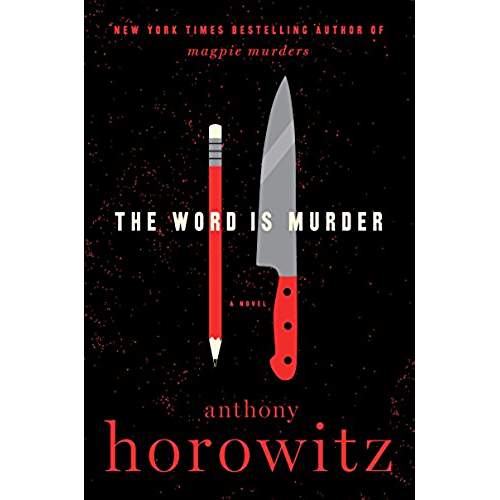
I really enjoy the work of Anthony Horowitz. (See The Magpie Murders in a previous entry.) As the originator of Foyle’s War, that wonderful BBC series set in Hastings during World War II, I’ve eagerly looked for any and all of his writing and productions. His work includes children’s fiction – the very popular Alex Rider – and he likes to write sequels to popular detectives like Sherlock Holmes (The House of Silk, Moriarity) and James Bond (Forever and a Day).
I am not so sure about the current one. In The Word Is Murder, Horowitz introduces us to a new detective, the somewhat disgraced former police officer Daniel Hawthorne, and includes himself as one of the characters. As Horowitz follows Hawthorne around London (that would be an accurate description – he never knows where they are going until Hawthorne tells him) Horowitz makes the larger context his own writing projects. Although it’s interesting on one level, on another I kept wondering why he was doing this. I finished rather unsatisfied. No spoiler here, but the somewhat stormy ending referenced a rather obscure part earlier in the plot and it took me some thought to figure it out.
There is a sequel, The Sentence Is Death, which is out sometime this Fall. I’ll read it, and I hope it clarifies some of the unanswered questions. Horowitz writes Hawthorne as a man with a lot of secrets, and maybe more will be revealed. We’ll see. I can always watch Foyle’s War again!
This book by Tayari Jones is one of Oprah’s Book Club’s 2018 selections, so it’s beem a very popular read. For me this was another one of those cultural immersions, not so much about entering the lives and a marriages of young, African-American characters, but entering the culture of the Southeastern United States. I live in the Pacific Northwest, and I am continually interested in just how different the regions of our country are from one another. This book opened my eyes to some of the conventions and patterns of the contemporary Southeast.
It also reminded me, sadly, of the continual issue of racism in our whole country. It might be more pronouced in the Southeast, but it is equally as present here in the Northwest. It is very interesting to me why human beings need other human beings to look and act exactly like them. It is much more fun to live in a diverse culture than in one where everyone behaves exactly the same. Perhaps it is about fear of things going wrong, or the need to have our every action confirmed by our environment and community. This book lifts up these issues as it follows one marriage as it affects the lives of everyone around it.
I don’t want to say too much about the plot itself, as there are surprises and twists and turns with every new chapter. The author does a really nice job of distinguishing each characters personality so you’re always clear who is speaking. But it also jumps back and forth from past to present, and those distinctions aren’t as clear.
This is worth reading, and I hope you’ll pick it up!

Olivia Manning’s Balkan Trilogy: The Great Fortune, The Spoilt City, and Friends and Heroes is a home-and-hearth look at the difficulties of expatriate workers in the early days of World War II. Harriet and Guy Pringle, newly married, arrive in Bucharest for Guy to assume his teaching post with the English Council, something thousands did throughout the British Empire/Commonwealth. Guy has his work, and Harriet has little to do but wait in their small apartment and commiserate with their friends. The whole 1000 page story, told from Harriet’s perspective, turns on this group of people and how they manage as the war begins and expands.
In Eastern Europe they thought they would escape the worst of things. As the Germans close in on one side and the Russians on the other, these people make their way to Greece, Egypt, and finally Bulgaria with nothing being easy or certain anywhere.
I recently re-read this trilogy, remembering how much I had enjoyed it 30+ years ago. Written between 1960 and 1965, the three novels that comprise the story are compelling, and you read along cheering for Harriet (and sometimes the hapless Guy – he always thinks they can put on a play and it will all be fine) and wondering how everyone will emerge. This is timely reading in our day of multiple refugees and the implications of this movement for all of Central and Eastern Europe.
Olivia Mann wrote these based on her own experience during the war. There is a second set, The Levant Trilogy: The Danger Tree, The Battle Lost and Won, and The Sum of All Things. Both trilogies are now identified with the title Fortunes of War, as that was the title of a BBC/Masterpiece Theatre series based on the books in 1987.

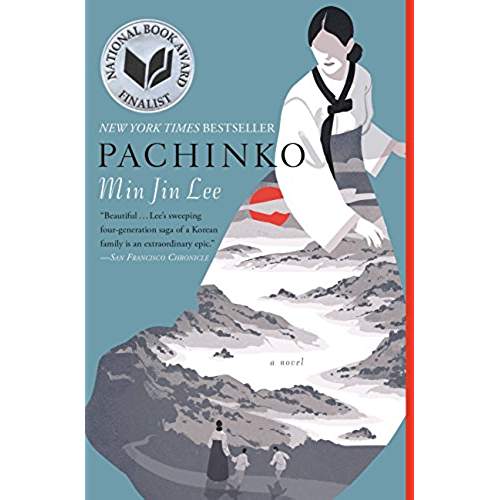
I’ve always been easily caught in long sagas. I’ve read Sigrid Undset’s Kristin Lavransdatter twice! (I’ll save that for another day.) So when my new book group decided to read Pachinko by Min Jin Lee, I was pleased to note that it is, indeed, a long saga.
Now Kristin Lavransdatter, being from the land of my people (that would be Norway) is a much likelier choice for me. We do like to read about ourselves and the things we we know, right? Pachinko is about three generations of a Korean family, stretching from the turn of the 20th century and the Sino-Japanese war into the 1960’s in Japan and the US. It’s difficult reading at times because of the harsh relationships and the strict rules of family and Christianity that bind these people, rules that seem all too familiar to us in the West as well. We follow this Korean family out of Japanese-induced poverty in Korea into virtual slavery in Japan, and cheer with some of them as succesful and become educated and even, in one case, wealthy. But the old ties of honor cause as much grief and hurt as they maintain the close bonds of family.
The title comes from a kind of gambling machine (sits upright) with little balls. The balls that are won are traded for cash. In Japan, a huge number of people play Pachinko all the time. The Korean connection is that 80% of the Pachinko parlors are owned by Koreans.
This is a well-written and powerful story of family and culture, and worth the whole length of it!
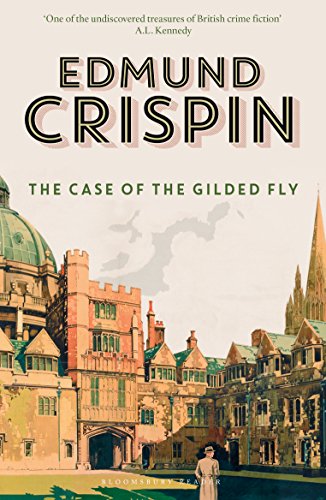
I was reminded of the novels of Edmund Crispin (Robert Bruce Montgomery, 1921-1978) in a recent reader’s catalog (sort of) from the Bas Bleu Society. (Check them out at www.basbleu.com). He wrote 9 novels and two short story collections featuring an Oxford don, Gervase Fen, as his protagonist. Fen is an interesting and somewhat bumbling and annoying character, but this is very entertaining reading, especially if you’re fond of Oxford. (I am!)
I had only read The Moving Toyshop (his most famous book) before, so I thought it would be nice to read them all in in order. I downloaded the Kindle version of the first one, The Case of the Gilded Fly and started in. This is really fun reading! The prologue takes us on the slow train from London to Oxford (check out this Flanders and Swann song sung by The King’s Singers: The Slow Train ) and introduces us to the main characters based on their reactions to how long the journey takes. It made me laugh out loud!
I’m enjoying the book and all of its literary and Oxonian allusions. As the plot revolves around the production of a play, all of you who enjoy drama will enjoy this book. It will be lots of fun to read them all!
Here are the novels in order:
The Case of the Gilded Fly (1944)
Holy Disorders (1945)
The Moving Toyshop (1946).
Swan Song (1947)
Love Lies Bleeding (1948)
Buried for Pleasure (1948)
Frequent Hearses (1950) (also published as Sudden Vengeance)
The Long Divorce (1951)
The Glimpses of the Moon (1977)
Go, Went, Gone is a novel by the German author Jenny Erpenbeck, translated by Susan Bernofsky. It is a beautiful book, and another powerful and moving story about the immigrant and refugee crisis in Europe. The novel’s protagonist, Richard, is a retired and widowed academic, trying to find a new pathway in his new life. In the midst of his own journey, he walks by the African refugees camped out in Berlin, news from the headlines of our times. He decides to make an effort with them, and the story unfolds from there.
Erpenbeck writes a gentle and compelling story. It reflects the humanity on all sides, and reminds us of the strength of relationships. Richard’s thoughts about himself in retirement are also useful reflections on all parts of our lives.
Here are some quote from this novel:
Much of what Richard reads on this November day several weeks after his retirement are things he’s known most of his life, but today, thanks to this bit of additional knowledge he’s acquired, its all seems to come together in new, different ways. How many times, he wonders, must a person relearn everything he knows, rediscovering it over and over, and how many coverings must be torn away before he’s finally able to truly grasp things, to understand them to the bone? Is a human lifetime long enough? His lifetime, or anyone else’s? (p. 142)
At exactly midnight when the corks start popping, guests hug and kiss, rockets are fired off and sparklers waved around. Richard just stands there, wondering what the beginning of a new year really means. He’s never quite understood what’s supposed to be departing in that final decisive second, while at the same time something new – something you can’t know yet – suddenly presents itself. Sometimes in past years he’s tried to concentrate on this future that was apparently arriving at just this moment. But how do you concentrate on something you don’t know yet? Who’s going to die? Who’ll be born? The older he gets, the more grateful he is to have just as little idea as anyone else what is in store. (p. 207)
Could these long years of peacetime be to blame for the fact that a new generation of politicians apparently believes we’ve now arrive at the end of history, making it possible to use violence to suppress all further movement and change? Or have the people living here under untroubled circumstances and at so great a distance from the wars of others have been afflicted with a poverty of experience, a sort of emotional anemia? Must living is peace – so fervently wished for throughout human history and yet enjoyed in only a few parts of the world – inevitably result in refusing to share it with those seeking refuge, defending it instead so aggressively that it almost looks like war? (p. 241)
Here also are a couple great reviews about this novel: https://www.newyorker.com/magazine/2017/09/25/a-novelists-powerful-response-to-the-refugee-crisis; https://www.nytimes.com/2017/12/12/books/review/go-went-gone-jenny-erpenbeck.html
Another great book for conversation.
A couple years ago I read a wonderful novel by Derek B. Miller, an American married to a Norwegian. They live in Norway. The book is Norwegian by Night. It’s about a Jewish man from Brooklyn who goes to live in Norway with his daughter and her Norwegian family. The premise is delightful from that aspect, but this funny, endearing, and sad novel is a terrific read. Miller is a great writer, and he takes us not only into the obvious stress of an older American living in a country where he doesn’t speak the language, but also into the immigrant tensions that are all over Scandinavia. Sheldon Horowitz gets to know his neighbor, a Palestinian immigrant who is living there with her young son. When she is stalked and attacked by some people from her first world, Sheldon helps the boy escape and they head off into the night being hunted both by the Norwegian police and the gang that killed the boy’s mother.
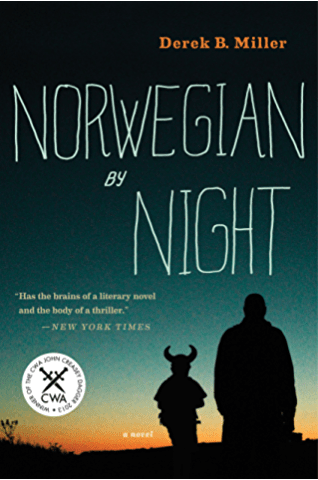
Now a new book has just come out (April 3, 2018) by Miller titled American by Day. This is easily the best book I have read this year. Dedicated to Sheldon Horowitz, the protagonist of Norwegian by Night (I love that!), American by Day features Sigrid Ødegård, the detective inspector from Norwegian by Night. This time she is looking for her own brother. He has lived in the US for many years, and he has now not been heard from for a couple weeks. So she goes to upstate New York where he has last been known to live to look for him.
With his characteristic wryness and humor (it’s pretty funny to read about her helping people pronounce her name correctly), Miller tells a powerful story that matches the headlines of our time – the police killing of an innocent black child, and the racial tensions and political divides of our time. Add into that a person new to American culture, and it is a powerful story. His writing about race and difference are amazing, and they open up endless possibilities for conversation.
Here are some excerpts:
Life has always seemed more real when you’re contending with gravity. Because in the end that’s what’s gonna get you. (p. 141)
He is the kind of person who is plugged in and becomes nervous when he is not. Marcus has students like him. The more they strive to express their uniqueness in those machines, the more conformist they become. (p. 189)
The longer he stared into her skin the more he wondered why humans – his humans – ever migrated from Africa to the Arctic; the ones with such a chronic sense of discontentment that they were led directly into Lutheranism. (p. 213)
People of color cry out, saying that we’re in pain, but they deny the pain and say it’s an individual pain, not a group one. They see the entire world through this individualism prism – or that’s what I call it in the article, anyway. It negates discussions of race and racism. In my view, this perspective is overpowering and insurmounyable naybe because it’s deeper than race. It’s deeper than politics. It’s a culturally organizing system. It’s how we achieve Americanness. It’s how we do Americanness. It’s a kind of performance. If this is true, America can win battles against racism in court or in passing new laws an adopting new policies, but we’ll never win the war on history and circumstance because it requires people seeing with different eyes; eyes that would force them to unravel and redefine their American selves. And that’s the one thing we can’t do, because it’s the only thing that binds us all together. One can’t escape the observation that America historically enslaves groups, but only frees individuals. (p. 217)
He could have shouted something, but his Lutheranism ran too deep. His edges had filed off and the stumps worn down by a culture that didn’t know how to sin and then repent and so suppressed everything and hoped that God wouldn’t notice. (p. 306)
You needn’t have read Norwegian by Night to get into American by Day. Both are exceptionally worthy ways to spend your reading time!

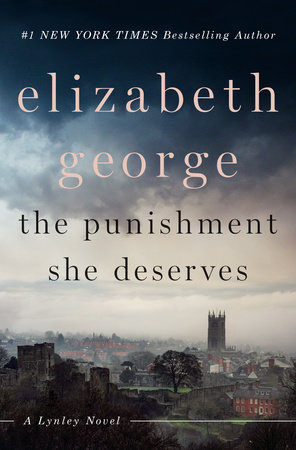
I just read the latest in the series of Inspector Lynley novels by Elizabeth George. I was introduced to these three decades ago when a friend was working at Random House in New York and shared proof copies. And so I read A Great Deliverance. I’m always a little suspicious of Americans writing stories set in the UK ( a little odd for me, as an American who loves all things British!) but I was impressed with the research and detail. And all of these novels have a lot of detail – maybe too much, sometimes – but it is usually fairly straight-forward to follow the plot. And, if you’ve seen the adaptations on PBS with the dark-haired Nathaniel Parker (very good) you’ll need to wrap your mind around the blonde Lynley in the novels!
The Punishment She Deserves is the twentieth book in the series. This one is less about Lynley and more about his partner Barbara Havers. Havers and Lynley come from different classes in Britain, Lynly being a peer and Barbara just someone who grew up in lower-class London. Throughout the books, George makes a lot of Barbara feeling less than adequate – often, more than should be done, I think. One can grow a bit weary of her wondering if she’s done the right thing and so on. But in this book, Havers really shines and George does a lovely job of bringing Havers forward. I always want to cheer for Barbara in any of the books, but in this one I was really on the edge of my imaginary seat as I followed her though this convoluted case that she champions when her superiors want to put it aside.
But this book is not only about Havers. It is also about Isabelle Ardery, Havers and Lynley’s direct superior who really wants to get rid of Havers. She keeps threatening to transfer her to Berwick-upon-Tweed, way in the NE of England on the North Sea. She tries to find every way possible to make sure Havers messes up in some way. This story is also about Isabelle’s alcoholism, and George does a very fine job of describing Ardery’s illness and its consequences.
And this book is about families. Along with Havers and Ardery, George has us wondering about, and finally rooting for, four women in three generations in one family. (To tell more at this point would be a spoiler.)
If you haven’t read these novels, here is the list in order:
A Great Deliverance (1988)
Payment in Blood (1989)
Well-Schooled in Murder (1990)
A Suitable Vengeance (1991)
For the Sake of Elena (1992)
Missing Joseph (1992)
Playing for the Ashes (1993)
In the Presence of the Enemy (1996)
Deception on His Mind (1997)
In Pursuit of the Proper Sinner (1999)
A Traitor to Memory (2001)
A Place of Hiding (2003)
With No One as Witness (2005)
What Came Before He Shot Her (2006)
Careless in Red (2008)
This Body of Death (2010)
Believing the Lie (2012)
Just One Evil Act (2013)
A Banquet of Consequences (2015)
The Punishment She Deserves (2018)
If you are already a fan, get started on The Punishment She Deserves. You’ ll be wondering which “she” is deserving of punishment.
 The Incomplete Reader